
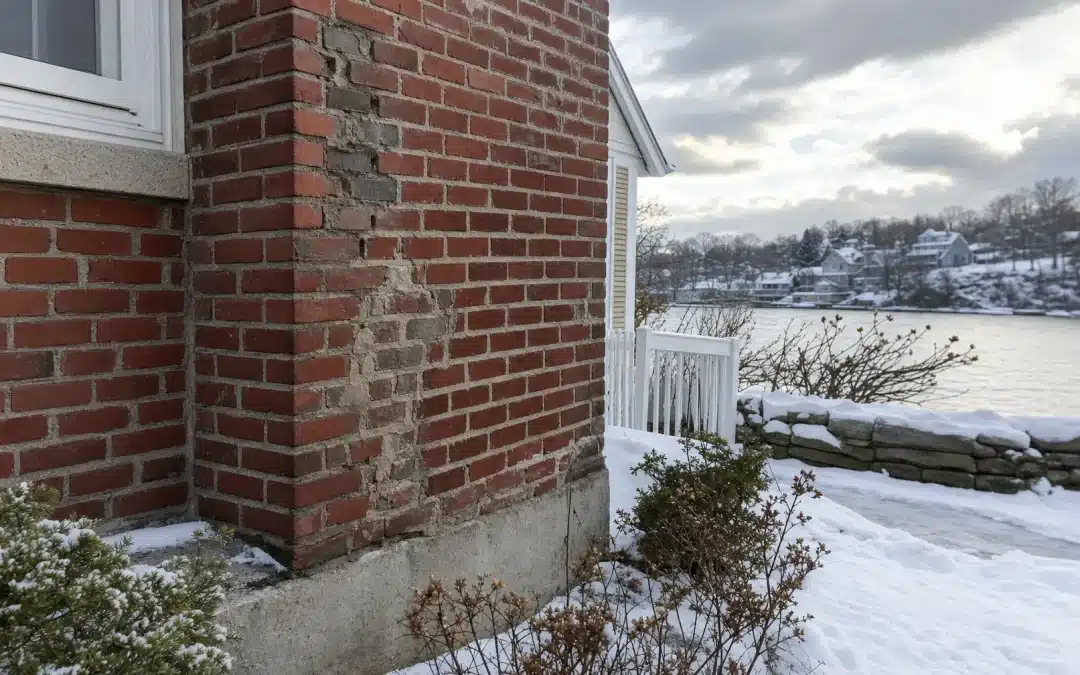
Brick masonry repairs may be possible in cold weather, but a calendar date alone cannot establish whether a particular job should proceed. The answer needs to come from a site-specific assessment, the proposed repair and the requirements for installing and protecting the selected materials.
For a Massachusetts homeowner, the useful question is not simply “Do you work in winter?” Ask instead: “What conditions would allow this repair to proceed, and what would make you postpone it?” Before accepting a start date, resolve the following points.
Clarify the work before discussing the weather window
Ask the contractor to describe what will be removed, repaired or replaced, and what still needs assessment. Do not choose a repair method just to fit an available date. Whether the masonry needs localized work or a broader intervention is a separate assessment question.
If the proposed scope remains provisional, ask which findings could change it and whether those changes would also affect scheduling. An appointment to inspect the brickwork should not be mistaken for confirmation that installation can begin.
For help organizing the initial conversation, use the guide to preparing for a brick masonry repair consultation. Keep the scheduling discussion focused on what can be confirmed after that assessment.
Ask what governs installation and curing
Rather than relying on a general temperature rule, ask the contractor to identify the applicable technical guidance and product requirements for the proposed work. Request an explanation that covers installation and curing, not just conditions when the crew arrives.
- Which materials are proposed, and what requirements govern their use in the expected conditions?
- What will you check at the actual repair location before deciding to proceed?
- How will you evaluate temperature, moisture, exposure and the condition of the existing masonry?
- What conditions must be maintained after installation, and how will you determine when protection is no longer needed?
The goal is a project-specific explanation, not a promise that a certain month or a mild afternoon makes the work suitable.
Resolve protection, monitoring and weather changes
If cold-weather protection is proposed, ask what the plan includes and who is responsible for it. Do not assume that a particular enclosure, heating method or mortar modification is appropriate or included. Ask the contractor to explain the approach for your repair.
Clarify who will monitor conditions, including when the crew is away, and what happens if the required conditions cannot be maintained. Also ask how unfinished work will be left if weather interrupts the job. These responsibilities should be clear before work begins, rather than becoming decisions made during a weather change.
Separate a tentative date from permission to start
Ask whether the proposed date is an assessment visit, a tentative work slot or a confirmed start subject to a final conditions check. Then agree on who makes the proceed-or-postpone decision and how you will be notified.
Discuss the fallback plan as well: how rescheduling will be handled, whether changed conditions could require a revised scope, and what arrangements remain in place while you wait. If the protection plan or suitability of the materials remains unresolved, ask for clarification before approving the start.
Plan access separately from repair completion
If the repair affects an entrance, steps or a regularly used path, explain that dependency before scheduling. Ask which areas must remain off limits during work and afterward, what alternative access is appropriate, and who will confirm when normal use can resume. Do not assume that the crew leaving means the area is ready for use.
Note Do not push, tap, climb on or step on questionable masonry to test it. Keep away from loose or unstable areas and arrange an on-site assessment. Ask a qualified professional about temporary precautions rather than attempting to brace, dismantle or stabilize the masonry yourself.
Before confirming the schedule
- Is the repair scope settled, with unresolved assessment questions identified?
- Have installation requirements, curing conditions and protection responsibilities been explained?
- Is there a clear decision process for postponement or interruption?
- Are access restrictions and arrangements for any waiting period understood?
Nehemias Landscaping & Construction offers brick masonry repair. When discussing your project, ask for a site-specific scheduling explanation rather than assuming cold-weather availability or a particular protection method.