
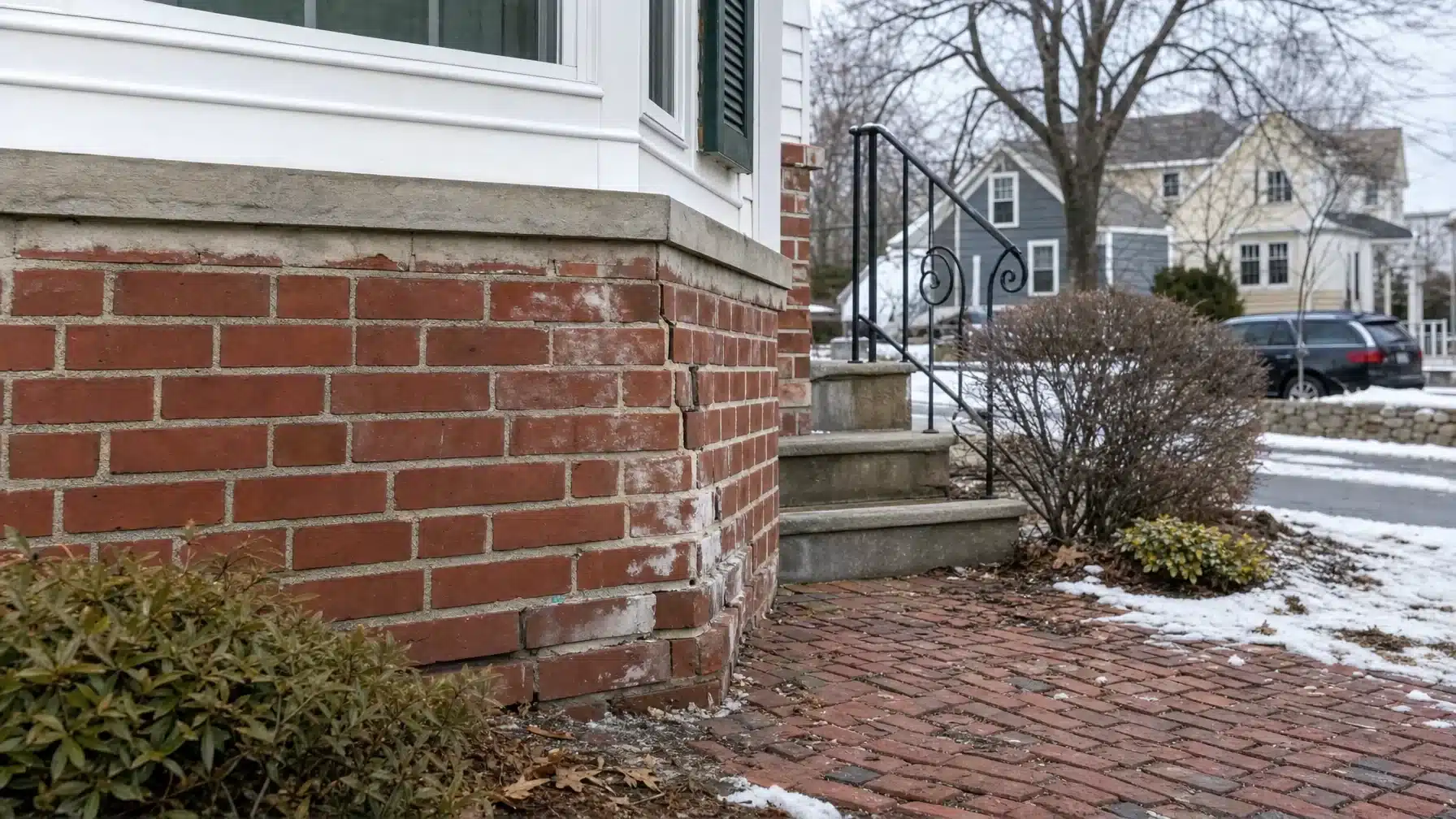
Preparing for a brick masonry repair consultation means organizing what you can see, what you know about the area and what you need to ask. You do not need to identify the cause of damage or choose a repair method before the conversation.
Gather photos from safe positions, notes about the affected feature, any available repair history and details about access. Keep observations separate from guesses. This information provides context for a discussion; it does not establish structural safety or guarantee that a repair can be priced remotely.
Identify the feature and the exact location
Start by naming the brick feature you are concerned about and where it sits on the property. Describe the affected portion using nearby fixed landmarks, such as a doorway, corner or walkway. Use the same location description in your notes and photo labels so the contractor can connect them.
Describe visible conditions in ordinary language: a crack across a brick, a gap between bricks, a chipped edge or a discolored area. Avoid assigning a cause, declaring the feature stable or naming the repair it needs. If you are unsure what you are looking at, say so.
Gather photos without disturbing the masonry
- Take an overview that shows the feature and its surroundings, not just the visible concern.
- Add closer views only where you can photograph from a safe, accessible position. Use camera zoom rather than approaching questionable masonry.
- Include a recognizable fixed landmark to help locate the concern. Do not place objects against damaged material for scale.
- Label photos with their location and when they were taken. Keep original files available rather than relying only on cropped images.
Note Do not climb onto the affected feature, use a ladder to reach a concern, remove material or push, tap or step on masonry to test it. If getting a photo would require unsafe access, leave that view out and describe the limitation instead.
Record what you noticed and what is uncertain
Write down when you first noticed the concern. That is not necessarily when it began. If you cannot remember, mark the timing as uncertain rather than assigning a precise starting point.
Separate changes supported by earlier photos or records from changes you only recall. If a mark, gap or damp-looking area appears under particular conditions, record those conditions without treating them as proof of the cause. There is no need to wait for another weather event or return to an unsafe area to complete your notes.
Collect known repair history
Look for earlier photos, invoices, written scopes or other records of work on the affected feature. Preserve the wording in those records instead of translating it into a repair term you are unsure about. Note whether the information comes from a document, your own recollection or a previous owner’s account.
Unknown history is useful to identify, too. If you do not know whether the brickwork has been repaired, write “repair history unknown.” Missing records should become a question for the consultation, not a reason to guess.
Describe access and normal use
Explain how the affected area is normally reached and used. Mention gates, narrow passages, nearby parked vehicles, pets or permission needed to enter an adjoining area. If the feature is part of a regularly used route into the home, flag that dependency.
Describe any access limitation without trying to solve it yourself. Ask what arrangements may be needed before a visit; do not assume you must move heavy objects, remove barriers or expose hidden masonry.
Prepare questions that leave room for assessment
- What still needs to be assessed before a repair recommendation can be made?
- What can these photos help explain, and what cannot be established from them?
- Is any information missing from my notes or repair records?
- How will the proposed scope distinguish confirmed findings from unresolved questions?
- What next steps or access arrangements may be needed before the scope is settled?
A reusable consultation brief
Copy these prompts into a note and complete only what you know. Leave unknown items clearly labeled.
- Affected feature and location:
- Visible concerns, without assumed causes:
- When first noticed and how certain that timing is:
- Documented changes and separate recollections:
- Photo labels, capture dates and views unavailable because of access:
- Known repair history and available records:
- Relevant conditions observed, without conclusions about cause:
- Access constraints, normal use and questions for the consultation:
Nehemias Landscaping & Construction offers brick masonry repair. For service information, visit the brick masonry repair page. Your completed brief can help organize the conversation without deciding the repair in advance.
If your question specifically concerns whether brick steps need repair or rebuilding, see the separate guide to brick-step repair versus rebuilding. That decision is distinct from gathering information for a consultation.