Do You Have to Clear the Public Sidewalk in Front of Your Massachusetts Home? A Winter Guide
You'll learn how to find out whether your town expects you to clear the public sidewalk, and how to set up a plan so it gets done after every storm this winter.
The short answer
- Responsibility for the public sidewalk is usually set by your city or town, so check your local bylaws, DPW or town website before the first storm.
- When you read the rule, look for timing, ice treatment, corner ramps, hydrants and where you're allowed to put the snow.
- If you hire snow removal, confirm in writing that the public sidewalk is included, not just your driveway and front walk.
- Prep in late fall: mark sidewalk edges, clear obstacles and pick an ice melt that won't harm your surfaces.
The answer depends on your town
The answer often depends on where you live. Sidewalk snow clearing expectations often vary from place to place, so the expectations in Cambridge or Somerville may look very different from those in Carlisle or Wenham. Some communities expect property owners to clear the sidewalk along their frontage after a storm. Others clear certain sidewalks with town equipment. Plenty of rural roads have no sidewalk at all.
Nehemias provides residential snow removal across a long list of Massachusetts towns, from Lowell and Woburn to Marblehead and Gloucester. In all of them, the question of who clears the public sidewalk comes back to your local rules. It's usually quick to find out what yours says, and it's much easier to do in late fall than in the middle of a storm.
Where to find your town's rule
- Your city or town website. Search for "snow removal," "sidewalk," or "winter parking." The rule is often in the general bylaws or city ordinances, and many towns also post a winter guide for residents.
- The Department of Public Works or highway department. This office usually runs winter operations. It can tell you whether the town plows any sidewalks on your street.
- The town or city clerk. The clerk keeps the official bylaws and can point you to the right section.
- Your city's 311 or resident services line, if it has one.
Bookmark or screenshot your town's sidewalk rule now so you can check it mid-winter without hunting for it.
What to look for when you read the rule
Local rules are written in legal language and are easy to skim past. As you read, try to answer these questions:
- Does it apply to homes, or only to businesses? Some rules treat residential and commercial properties differently.
- Is there a time window? Look for wording about how soon after snowfall ends the sidewalk must be clear, and whether overnight storms are handled differently.
- Does it cover ice as well as snow? Some rules ask owners to treat or remove ice. Others only mention snow.
- How wide a path is expected? If a width is listed, write it down.
- What about corner lots? On a corner, you may be expected to clear the curb ramp at the crosswalk, and possibly two sidewalk frontages.
- Are hydrants or storm drains mentioned? Some towns ask residents to keep nearby hydrants and catch basins uncovered.
- Where can the snow go? Many communities don't want snow pushed into the street. It creates a hazard for drivers and gets in the plows' way.
- Are there penalties or exemptions? Some towns run help programs or volunteer shovel lists for older or disabled residents.
If anything is unclear, call the DPW and ask. Questions about legal liability, such as what happens if someone slips in front of your house, belong with your homeowner's insurance agent or an attorney. A snow contractor can't settle those for you.
Corner lots often carry the most sidewalk responsibility, so read your town's rule closely if you're on one.
Renters, condo owners and people who travel
Ownership adds another layer. When the town says "the owner" or "the occupant," it still matters who actually picks up the shovel.
If you rent
Check your lease. Some leases put snow removal on the landlord. Others hand certain areas to tenants, such as a front walk or a single-family home's sidewalk. If the lease doesn't mention it, ask your landlord in writing before winter so nobody assumes the other person is handling it.
If you own a condo or live in a multi-family
Associations usually hire one contractor for common areas, but the public sidewalk isn't always listed in that contract. Ask your board or manager whether it's covered, and who to call when it's missed.
If you travel in winter
The sidewalk still needs clearing while you're away. A neighbor, a family member or a hired service should be lined up before you leave. Our guide to keeping snow removal running while you're away walks through the handoff.
Prep the sidewalk before the first storm
A few late-fall chores make every storm afterward easier, whether you shovel yourself or hire it out.
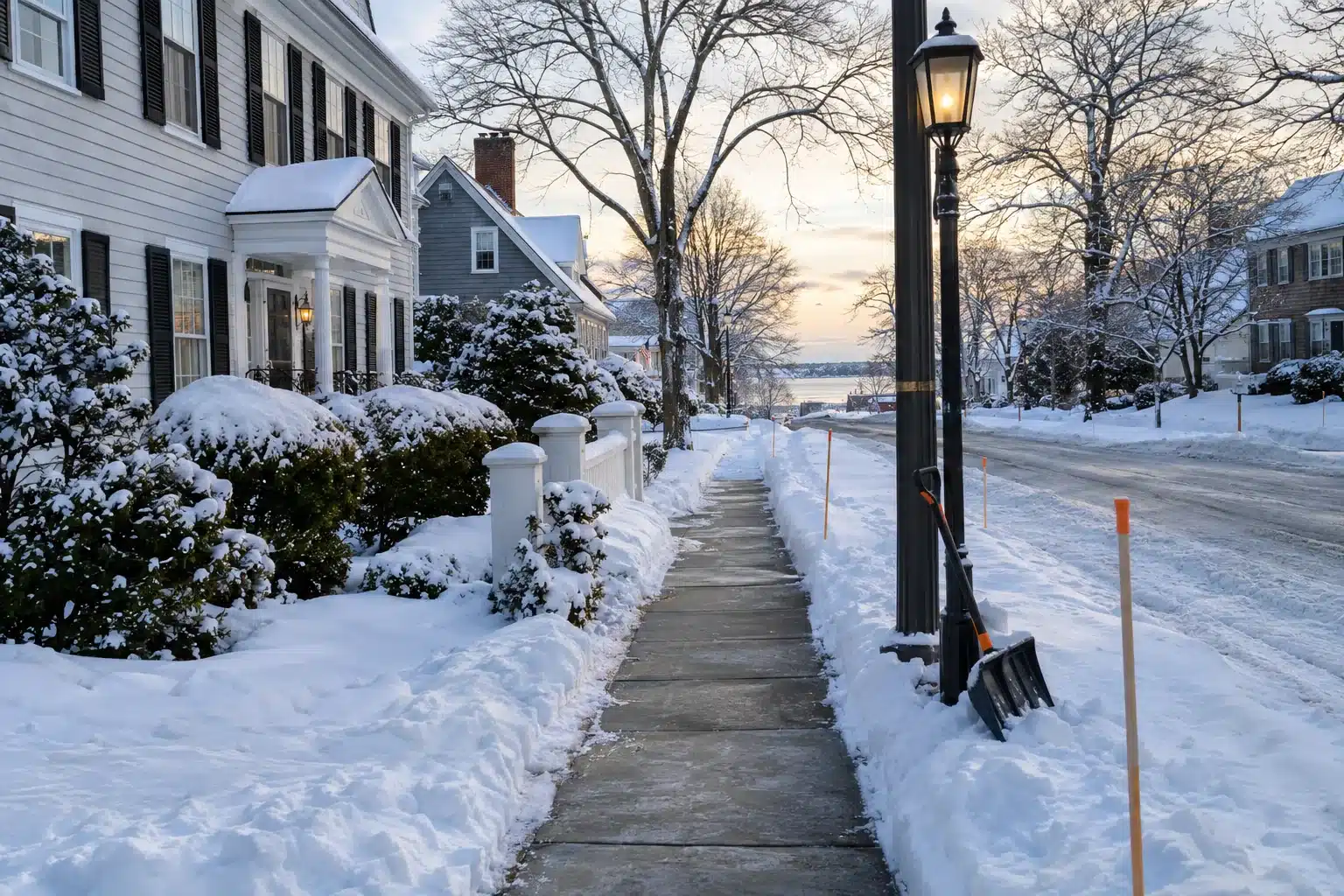
- Mark the edges. Put tall reflective stakes along the sidewalk's edges and at the curb, especially where it meets your driveway. Once snow covers everything, stakes keep a shovel or plow from chewing up the lawn or catching the curb. If the ground has already frozen, ask whoever clears your sidewalk how they'd like the edges marked.
- Walk the sidewalk and note trip hazards. Heaved slabs, raised edges and broken pieces will catch a shovel blade and can trip people under a dusting of snow. Report damaged public sidewalk to your DPW. Mark the spots for anyone clearing it.
- Clear out obstacles. Hoses, decorations, loose bricks and the usual trash barrel spot are all easy to bury and break.
- Choose your ice melt now. Some products can be hard on concrete, pavers, brick and nearby plantings. Our post on ice melt for pavers and brick steps covers what to consider.
- Decide where the snow will go. Pick spots on your own property for sidewalk snow, away from the street, hydrants and drains. Our snow storage planning guide can help.
- Line up a backup. Decide who clears the sidewalk if you're sick, injured or snowed in somewhere else.
Stakes go in most easily before the ground freezes, so make them one of your first late-fall chores.
Confirm the sidewalk is part of your snow removal service
People often assume a plowing service covers everything out front. Then after the first storm they find a clean driveway next to a sidewalk that's still buried. Snow removal services define scope differently, so get it confirmed in writing.
Nehemias offers residential snow removal that covers paths, driveways and sidewalks, and services are tailored to each residential property. You can read more on our residential snow plowing service page. Whoever you hire, ask these questions before the season starts:
- Is the public sidewalk along my frontage included, or only the driveway and front walk?
- On a corner lot, are both sidewalk sides and the curb ramp included?
- Will you clear around the hydrant, if one is on my frontage?
- What happens when the town plow pushes a snowbank back across the sidewalk or the end of the driveway?
- Is ice treatment included, and what product will you use near my pavers, brick or new concrete?
- Where will you put the snow from the sidewalk?
- How do I let you know about a missed spot?
For more questions to ask before you sign, see what to ask before signing a residential snow removal contract. If you're in one of the towns we serve and want to talk through your property, you can send a request to Nehemias.
Write down the exact words "public sidewalk" in your agreement. A phrase like "walkways" can be read more than one way.
If you clear it yourself, do it safely
Plenty of homeowners handle the sidewalk themselves and leave the driveway to a plow. That works well if you set a few habits:
- Go out more than once in a long storm. Several light passes are easier on your body than one pass through heavy, packed snow.
- Push when you can. A wide pusher shovel moves a lot of snow without lifting. When you do lift, bend your knees, keep the load small and turn your feet instead of twisting your back.
- Know your limits. Wet New England snow is heavy. If you have heart, back or breathing concerns, ask your doctor before shoveling, and hire out the work if you're unsure.
- Keep snow off the street. Throw it onto your own yard, away from hydrants and drains.
- Watch for refreeze. Meltwater from banks often runs across the sidewalk and freezes overnight. Check that spot each evening and treat it before dark.
- Dress for traction. Boots with good tread, or ice cleats you slip on, help a lot on packed surfaces.
A snow blower can make the job faster, but keep hands and feet away from the chute and auger. Always shut the machine off before clearing a clog, and use a clearing tool rather than your hand.
Never reach into a snow blower chute, even with the engine idling. Shut it off and use a clearing tool.
Keep a simple storm log
One small habit pays off all winter: a quick record of each storm. Make a note on your phone or a sheet on the fridge, with a few lines per event:
- When the snow stopped and when the sidewalk was cleared
- Who cleared it: you, a family member or your service
- Whether ice melt went down, and where
- A quick photo of the cleared sidewalk, which gets a timestamp automatically
This log helps if a neighbor or the town asks about the sidewalk, if your insurer has questions, or if you need to show your snow service which spots keep getting missed. It also shows you patterns. Maybe the corner ramp keeps refreezing, or the town plow buries the sidewalk on every pass. Once you can see the pattern, you can fix it. For damage to lawn edges, curbs or walkways, our guide on documenting possible plow damage covers what to photograph.
Find your town's rule, prep the edges, confirm what your service covers and keep a few notes. With those four steps done early, clearing the sidewalk becomes part of your routine.
A quick photo right after clearing is the easiest record you can keep.
Common questions
Does my town plow the sidewalks?
Some communities clear certain sidewalks, and others may not clear residential sidewalks at all. Your DPW or highway department can tell you whether your street is on a town route. Even where the town does clear some sidewalks, ask whether property owners are still expected to handle anything.
The town plow buried the sidewalk I just cleared. Do I have to clear it again?
This is common on busy streets, and your town's rule may or may not address it. Check the wording or call your DPW. If you use a snow service, ask before winter whether return visits for plow berms are part of the agreement.
Who's responsible if someone slips on the sidewalk in front of my house?
That's a legal and insurance question, and the answer can depend on the facts and on local rules. Talk with your homeowner's insurance agent or an attorney. Keeping the sidewalk cleared and treated, and keeping a simple storm log, are sensible habits either way.
Does Nehemias clear sidewalks?
Yes. Nehemias offers residential snow removal in Massachusetts that covers paths, driveways and sidewalks, with service tailored to each residential property. Service towns include Lowell, Woburn, Peabody, Salem, Marblehead, Andover, Newton and many others listed on the site.