
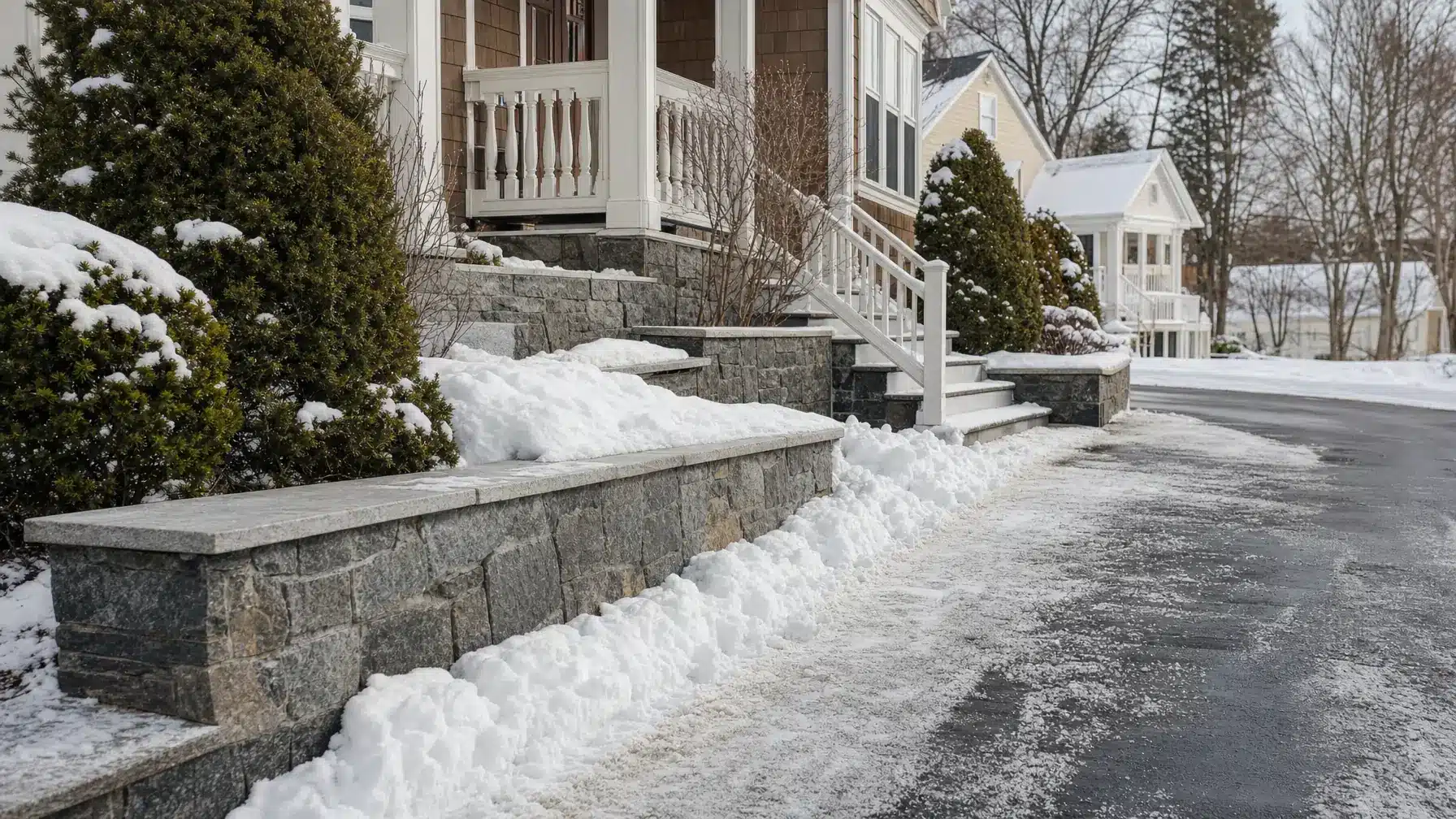
If you notice possible property damage after residential snow plowing, document what you can see from a safe position, record when you noticed it and contact the provider with a concise, factual report. Keep the visible condition separate from your assumptions: noticing something after clearing does not, by itself, establish when it happened or what caused it.
Start with safe observation, not investigation
Do not enter an unsafe area or approach operating snow-clearing equipment to get a closer look. If you cannot observe the concern safely, report its location and explain that closer photos are not available.
Note Do not dig around utilities, enter traffic, test an unstable surface or structure, or attempt a hazardous repair to investigate a concern. If there is an immediate danger, seek appropriate emergency help rather than waiting for a routine service reply.
Build an observation log
Use a note or document to keep the observations and related files together. Record what you know, and mark anything uncertain as unknown rather than filling in the gaps.
- Location: Identify the property address and the specific area, using a fixed landmark and a clear viewing direction.
- Visible condition: Describe what is visible without diagnosing the cause or deciding whether repair is needed.
- Discovery: Record when you first noticed the concern. Keep that separate from when you believe it occurred.
- Service information: Include the relevant visit information you actually have, distinguishing a provider message from your own recollection or estimate.
- Visibility limits: Note whether snow, poor light or an unsafe approach prevented you from seeing the whole area.
- Related records: List current photos, any existing earlier photos and relevant messages so you can find them again.
Take context and detail photos safely
From a safe position, take an overview showing where the concern sits on the property, then a closer view of the visible condition if you can do so without approaching a hazard. Do not move or uncover anything just to improve the picture.
Retain the original files. If you make a cropped or annotated copy to point out the concern, keep it separate from the original. Note when the photos were taken and use file labels that connect them to your observation log.
Gather earlier records without overstating them
Look for existing pre-service or pre-season photos of the same area, along with relevant property instructions and service communications. Keep their original files and message history. If you do not have an earlier view, say so; there is no need to reconstruct a condition you did not record.
Describe what each image actually shows. If the area is obscured or outside the frame, note that limitation. Earlier and later images can accompany your report without being presented as proof of a particular cause.
Send a neutral report and a clear question
Use the contact method identified in your agreement or existing provider communications. Check the applicable agreement for any reporting instructions rather than assuming a universal process or deadline. For broader communication and scope questions, see our guide to residential snow-removal agreement questions.
Use this message with your completed observation log and available attachments. Edit it to match what you know, and include the property address in the subject line.
Note Subject: Property concern noticed after snow clearing. I am reporting a visible property concern noticed after snow clearing. My attached observation log identifies the property, specific location, visible condition, when I noticed it and the service information available to me. It also notes any limits on what I could safely observe and identifies the supporting files. I do not know when or how the condition occurred. Please confirm receipt and let me know what additional information you need, who I should communicate with and how follow-up will be handled.
Keep the follow-up record together
Keep a dated communication log showing what you sent, the recipient, any acknowledgment and the response. After a phone conversation, write down what was discussed and ask for clarification of any next step that remains unclear. Distinguish a request for an assessment from an assessment the provider has agreed to arrange.
If the condition needs evaluation, seek an appropriate qualified assessment rather than testing or repairing it yourself to establish a cause. Questions about fault, legal rights or insurance coverage require the applicable agreement and appropriate qualified advice; this documentation checklist does not decide those issues.
Nehemias Landscaping & Construction, based in Lynn, MA, specializes in residential snow removal throughout Essex County. For information about the offering, visit our residential snow plowing service page. For an existing property concern, gather your observation log and use your established service contact to ask what information is needed next.