
Finding the right patio cover contractor is key to changing your outdoor space into an extension of your home. For busy homeowners in Massachusetts, upgrading your patio not only improves your backyard’s appearance but also boosts its functionality, offering a perfect spot for grilling, entertaining, or relaxing.
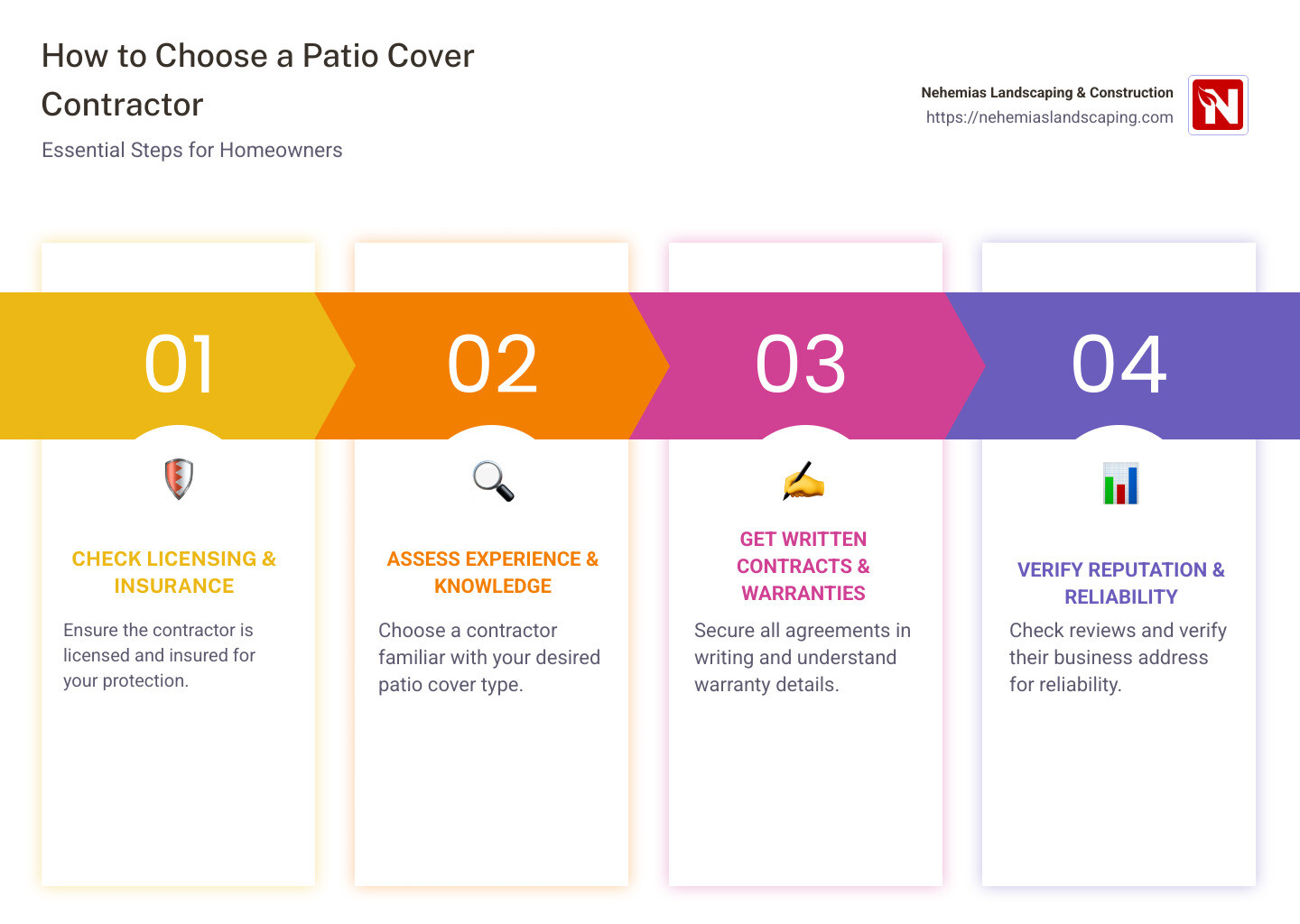
To choose the best patio cover contractor, here’s what you should prioritize:
- Licensing and Insurance: Ensure the contractor has a valid license and carries both worker’s compensation and liability insurance.
- Experience and Product Knowledge: Opt for a contractor familiar with the type of patio cover you want.
- Written Contracts and Warranties: Get all agreements in writing and inquire about warranty details.
- Reputation and Reliability: Check online reviews and verify their business address to gauge reliability.
Selecting the right contractor helps you avoid common pitfalls and secures a beautiful, durable patio cover that fits your needs. Read on to find more about patio covers, types, and how to make the best choice for your outdoor space.
Glossary for patio cover contractor:
– outdoor covered patio contractors
– porch remodeling contractors
– alumawood patio installers
Understanding Patio Covers
When considering a patio cover for your outdoor space, it’s important to understand the different types available. Each type offers unique benefits and can transform your patio into a functional and appealing area.
Patio Roof Types
Patio roofs are a popular choice for those seeking full shade and protection from the elements. You can choose between insulated roofs, which provide complete shade and help in temperature regulation, or translucent options that allow some sunlight to filter through, brightening your patio while still offering protection.
Shade Trellis
A shade trellis is an open framework that provides partial shade and allows climbing plants to grow, offering a natural and aesthetically pleasing cover. It’s perfect for those who enjoy a blend of sun and shade, and it adds a touch of green to your patio.
Gazebo
A gazebo is a freestanding structure, often octagonal, that offers shelter and a place to relax. It’s a great option if you’re looking for a decorative and functional space separate from your main house. Gazebos can be customized with screens or curtains for added privacy and protection from the weather.
Pergola
Pergolas are similar to gazebos but are typically rectangular and attached to your home or freestanding. They feature a lattice roof that provides partial shade and can support climbing plants. Pergolas add a touch of elegance and are ideal for defining spaces in your garden or patio area.
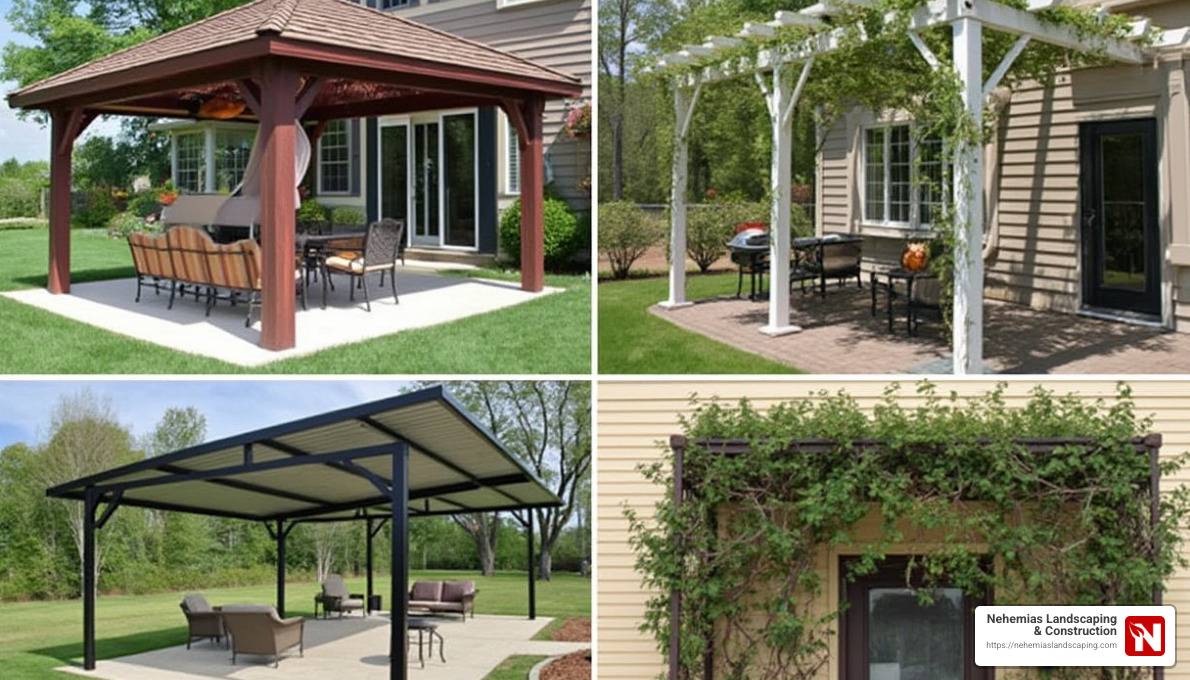
Understanding these options will help you decide which type of patio cover best suits your needs and aesthetic preferences. Whether you choose a patio roof, shade trellis, gazebo, or pergola, each offers its own set of benefits that can improve your outdoor living experience.
Next, we’ll explore how to choose the right patio cover contractor to ensure your project is completed professionally and to your satisfaction.
How to Choose the Right Patio Cover Contractor
Selecting the best patio cover contractor is crucial to ensuring your project is done right. Here are some key factors to consider when making your choice:
License and Insurance
First, make sure that your contractor has the necessary license if your state requires one. A licensed contractor is more likely to be familiar with building codes and regulations, ensuring your project is up to standard.
Don’t forget about insurance. The contractor should carry both worker’s compensation and liability insurance. This protects you from any potential damages or accidents that might occur during the installation.
Product Familiarity
Your contractor should be well-versed in the type of patio cover you want. Whether it’s an insulated roof, shade trellis, gazebo, or pergola, they should understand the installation requirements and nuances of each option. Contractors certified by manufacturers often undergo specialized training to ensure they can represent and install the product correctly.
Written Contract
Never settle for a handshake agreement. A written contract is essential. It should detail the work to be done, start and finish dates, cleanup requirements, price, and payment terms. This document serves as a mutual understanding and can prevent disputes down the line.
Warranty
A reliable contractor will offer a warranty on their work. Make sure you get the details in writing, including what’s covered and for how long. This shows confidence in their workmanship and provides you with peace of mind.
Reliability and Stability
Check online reviews and ratings to gauge the contractor’s reliability. Avoid those with a history of lawsuits or unresolved complaints. A stable contractor will have a real business address, not just a pickup truck. This stability indicates that they are established and likely to be around if any issues arise later.
Summary Table
| Factor | Why It Matters |
|---|---|
| License | Ensures compliance with regulations and standards. |
| Insurance | Protects you from liability during the project. |
| Product Familiarity | Guarantees proper installation of your chosen patio cover type. |
| Written Contract | Provides a clear agreement on the scope, cost, and terms of the project. |
| Warranty | Offers assurance of quality and a recourse if issues arise. |
| Reliability | Indicates a track record of customer satisfaction and successful projects. |
| Stability | Suggests the contractor is established and dependable. |
By focusing on these factors, you can select a patio cover contractor who will not only meet but exceed your expectations, ensuring a smooth and successful installation process.
Next, we’ll dive into cost considerations for patio covers to help you plan your budget effectively.
Cost Considerations for Patio Covers
When planning for a patio cover, understanding the cost factors is essential. Let’s break down what you need to know to budget effectively.
Cost Factors
Material Choices
The material you select for your patio cover significantly impacts the cost. Options range from natural wood, which offers a classic look but requires maintenance, to aluminum, known for its durability and low upkeep. Each material has its price range and maintenance needs, so choose wisely based on your long-term goals.
Size Impact
The size of your patio cover directly influences the overall cost. Larger covers require more materials and labor, increasing the price. It’s crucial to balance your desire for space with your budget constraints. Consider starting with a smaller cover and expanding later if needed.
Affordable Options
If you’re looking for more budget-friendly solutions, consider materials like vinyl or aluminum. These materials can mimic the appearance of wood but offer lower maintenance costs. Kits are available for those interested in a DIY approach, which can further reduce expenses.
Material Choices
Here’s a quick comparison of popular patio cover materials:
| Material | Pros | Cons |
|---|---|---|
| Wood | Natural look, customizable | High maintenance, can be costly |
| Aluminum | Durable, low maintenance | May lack warmth of natural wood |
| Vinyl | Affordable, mimics wood appearance | Less durable than aluminum |
Size Impact
A 20×20 patio cover will generally cost more than a smaller one, simply because of the extra materials and labor involved. However, larger covers offer more shade and space for outdoor activities, which might be worth the investment for your lifestyle.
Affordable Options
For those on a budget, aluminum and vinyl are excellent choices. They provide a good balance of durability and cost-effectiveness. Additionally, opting for a simpler design without elaborate features can reduce costs.
By considering these factors, you can make informed decisions that align with your budget while still achieving a functional and attractive outdoor space. Next, we’ll explore the pros and cons of DIY installation versus hiring a professional patio cover contractor.
DIY vs. Hiring a Patio Cover Contractor
When it comes to installing a patio cover, deciding between a DIY approach and hiring a professional patio cover contractor is a crucial step. Each option has its benefits and challenges. Let’s break it down.
DIY Kits
DIY kits for patio covers are becoming increasingly popular. They offer a cost-effective way to improve your outdoor space without the expense of hiring professionals. These kits typically include all necessary materials and instructions, making them a great option for those who enjoy hands-on projects.
Pros of DIY Kits:
- Cost Savings: You save on labor costs, which can be a significant portion of the overall expense.
- Flexibility: You can work on your schedule and make adjustments as needed.
- Satisfaction: There’s a rewarding feeling in completing a project with your own hands.
Cons of DIY Kits:
- Skill Requirement: You’ll need some level of carpentry skill and comfort with tools.
- Time-Consuming: DIY projects often take longer than professional installations.
- Risk of Errors: Mistakes can be costly, both in time and materials.
Professional Installation
Hiring a professional patio cover contractor ensures expertise and efficiency. Professionals bring experience, tools, and a team to handle the installation process smoothly.
Pros of Hiring a Contractor:
- Expertise: Contractors have the experience and knowledge to handle complex installations.
- Time Efficiency: Projects are completed faster with a skilled team.
- Quality Assurance: Professionals often provide warranties and guarantees on their work.
Cons of Hiring a Contractor:
- Cost: Professional services can be more expensive due to labor costs.
- Less Control: You may have less flexibility in the project timeline and design adjustments.
Skills Required
For DIY enthusiasts, basic carpentry skills and familiarity with power tools are essential. You’ll need to understand measurements, leveling, and secure fastening techniques to ensure a safe and stable structure.
If you lack these skills or prefer not to invest time in learning, hiring a professional is likely the better choice. Contractors bring specialized skills and tools, reducing the risk of errors and ensuring a high-quality finish.
In conclusion, your choice between DIY and hiring a contractor depends on your budget, skill level, and time availability. Both options can lead to a beautiful patio cover, so consider what suits your situation best. Next, let’s address some common questions about patio cover costs.
Frequently Asked Questions about Patio Cover Contractors
How much does it cost to cover a 20×20 patio?
Covering a 20×20 patio can vary widely in cost, depending on several factors. Generally, the price range is between $3,000 to $10,000. This variation is due to the materials used, the complexity of the design, and labor costs if you hire a patio cover contractor.
Material Choices: Opting for aluminum or vinyl can be more budget-friendly compared to wood or custom steel structures. Each material has its own aesthetic and durability, impacting the overall cost.
Size Impact: The larger the patio, the more materials and labor required, increasing the total cost. A 400 square foot area like 20×20 is substantial, so expect higher costs compared to smaller patios.
What is the cheapest way to cover a patio?
If you’re looking for affordable options, consider these cost-effective materials and designs:
- Pergola Kits: These provide partial shade and are less expensive than full covers.
- Shade Sails: Simple and stylish, these are one of the cheapest ways to cover a patio. They offer flexibility in design and installation.
- Aluminum Covers: Lightweight and durable, aluminum can mimic the look of wood without the high maintenance or cost.
These options can significantly reduce expenses while still offering protection and style.
Why are patio covers so expensive?
Several factors contribute to the high cost of patio covers:
- Material Costs: High-quality materials like wood or custom metals come with a higher price tag. These materials offer durability and aesthetic appeal but increase the project’s total cost.
- Size Impact: Larger patios require more materials and labor, which naturally raises the price.
- Labor Costs: Hiring a professional patio cover contractor involves paying for their expertise and labor. This ensures quality and longevity but adds to the expense.
In summary, while patio covers can be a significant investment, they improve outdoor living spaces, add value to your home, and provide a comfortable environment. Next, let’s conclude by highlighting the exceptional services offered by Nehemias Landscaping & Construction and how they can transform your outdoor area.
Conclusion
At Nehemias Landscaping & Construction, we take pride in offering top-notch patio cover contractor services that transform your outdoor spaces into beautiful, functional areas. Our experienced team in Essex County, Massachusetts, is dedicated to bringing your vision to life with exceptional craftsmanship and attention to detail.
Whether you’re looking to improve your backyard with a stylish pergola or need a durable patio cover to protect against the elements, we have the expertise to deliver quality solutions at affordable prices. Our commitment to quality service means we guide you through every step of the process, from initial design to final installation, ensuring a seamless and satisfying experience.
Outdoor changes can significantly boost the value and enjoyment of your home. With our help, you can create a stunning outdoor environment that suits your lifestyle and preferences.
Ready to take the next step? Transform your outdoor space with us today. Contact Nehemias Landscaping & Construction to start your project and experience the difference quality service makes.