
Mason Construction: 10 Powerful Tips for Success in 2025
Understanding the Craft Behind Mason Construction
Mason construction refers to the building, repair, and renovation of structures using materials like brick, stone, concrete blocks, and mortar. If you’re considering a masonry project, here’s what you need to know at a glance:
| Mason Construction Basics | Description |
|---|---|
| Common Materials | Brick, stone, concrete blocks (CMUs), mortar |
| Typical Projects | Walls, patios, fireplaces, chimneys, foundations |
| Average Cost Range | $48-$85 per square foot (varies by project type) |
| Professional Title | Mason or Mason Contractor |
| Key Benefits | Durability, fire resistance, energy efficiency, aesthetic appeal |
Mason construction stands as one of the oldest and most reliable building methods in history. Dating back thousands of years, this craft continues to deliver structures that withstand the test of time while providing aesthetic appeal that few other construction methods can match.
When you hire a mason contractor, you’re not just getting someone who lays brick or stone. You’re engaging a skilled tradesperson who understands the complex interplay between materials, design, structural integrity, and environmental factors. The average mason in the United States earns between $33,590 and $78,810 annually—a reflection of the specialized skill set required for quality masonry work.
What makes mason construction particularly valuable for homeowners is its versatility and longevity. Whether you’re looking to build a stunning outdoor kitchen, create a durable retaining wall, or add character to your home with a brick facade, masonry provides solutions that are both functional and beautiful.
More than two-thirds of business for established mason construction companies comes from returning clients—a testament to the satisfaction and trust these skilled professionals build through their craft. Like the structures they create, relationships with quality masons tend to stand the test of time.
Glossary for mason construction:
– brick and mortar near me
– masonry restoration massachusetts
– stone and masonry restoration
Mason Construction 101: Roles, Materials, Techniques
At its core, mason construction is about building with individual units bound together by mortar. But anyone who’s watched a skilled mason at work knows it’s far more than that—it’s a craft that has been refined over centuries, blending technical precision with artistic expression.
As one mason with over 30 years of experience once told me: “Masonry isn’t just about stacking bricks. It’s about creating something that will outlast you—a legacy in stone and mortar.”
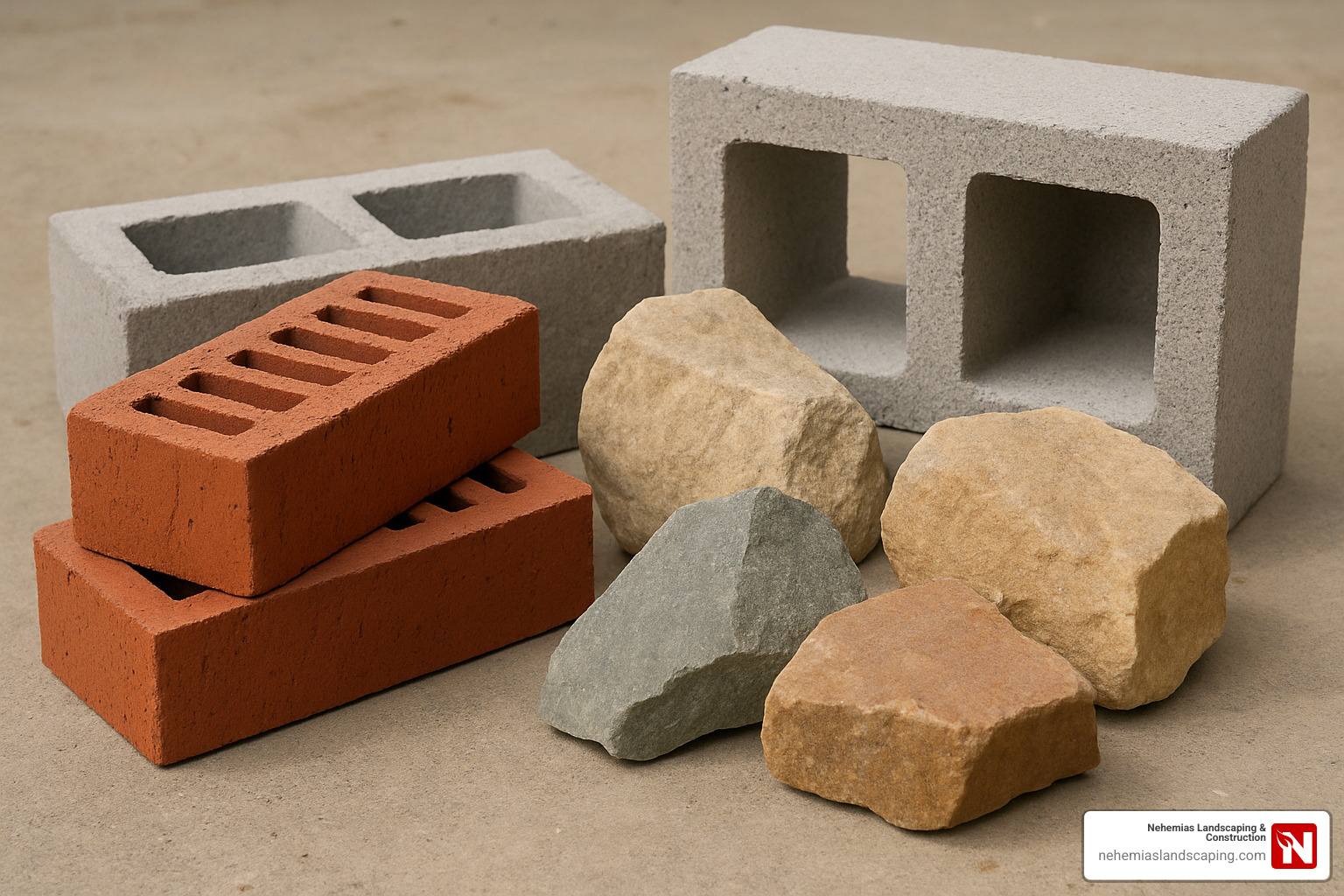
The materials in mason construction range from traditional clay brick to natural stone, concrete masonry units (CMUs), and specialized mortars. Each brings its own personality to a project—affecting not just how it looks, but how it performs, how long it lasts, and what it costs.
What Does a Mason Do in Mason Construction?
A mason’s day starts long before the first brick is laid. “I awake around 4 a.m. and lie there for a moment, wondering what the day may hold,” one contractor noted in an industry publication. This early rise speaks to the careful planning behind quality masonry.
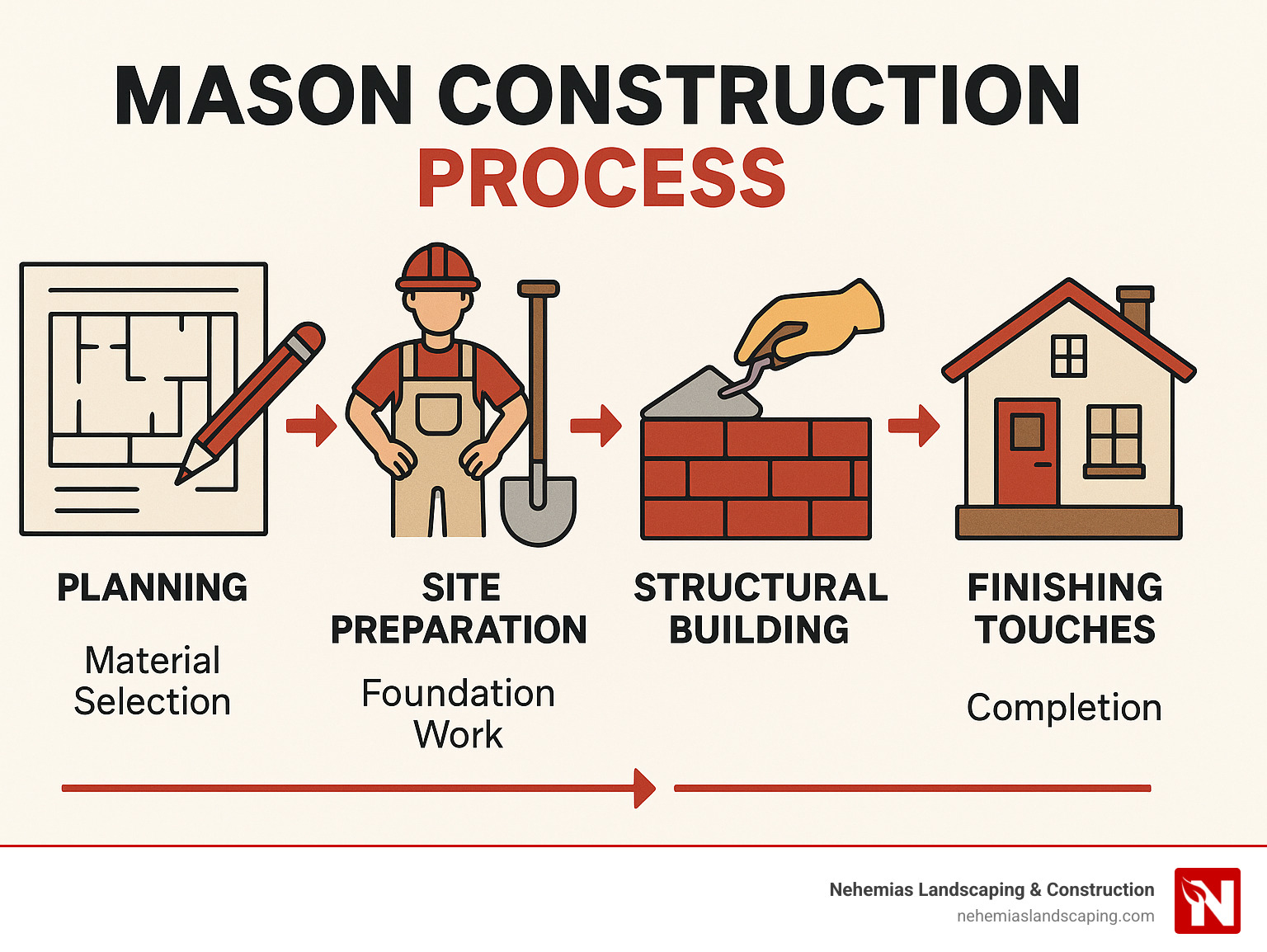
The mason’s role begins with blueprint and layout reading—translating architectural plans into real-world dimensions. Before any materials arrive, they’re already visualizing how everything will fit together.
Surface preparation comes next, ensuring foundations are level, plumb, and ready to support the structure. A mason knows that even the most beautiful stonework will fail if built on a poor foundation.
When materials arrive, the mason becomes both scientist and artist—selecting and cutting each piece for its specific place in the project. They mix mortar to just the right consistency, applying it with practiced hands to create strong bonds between units.
As they place each brick, block, or stone, they maintain level lines and consistent joint widths, frequently stepping back to check their work from different angles. The best masons have an almost supernatural ability to spot when something is even slightly off.
Joint finishing is where craftsmanship really shows—striking and tooling mortar joints not just for appearance but for weather resistance. A properly finished joint can significantly extend a wall’s lifespan.
Throughout the process, quality control is constant. As one mason at Nehemias Landscaping & Construction puts it, “I check my work three times: once in my head before I start, once while I’m doing it, and once when I think I’m finished.”
Masons also serve as doctors for ailing structures, diagnosing issues like cracked mortar joints, efflorescence, or structural weaknesses through Stone and Masonry Restoration services.
Key Materials in Mason Construction
The heart of mason construction lies in its materials, each with distinct characteristics and applications.
Brick remains one of the most versatile masonry units. Face brick is manufactured for beauty in visible applications, while common brick serves where appearance matters less. Fire brick withstands the intense heat of fireplaces and chimneys, and engineering brick offers superior strength and moisture resistance.
Natural stone brings best character to masonry projects. Granite delivers extreme durability and strength. Limestone carves easily but requires protection from acid rain. Sandstone offers warm, varied colors. Marble provides luxury but demands careful maintenance. Slate excels in water resistance for exterior projects.
For practical applications, manufactured stone and CMUs provide consistent options. Standard concrete blocks offer economy and versatility, while split-face blocks add texture for decorative uses. Stone veneer provides a lightweight alternative to natural stone, and pavers create durable surfaces for walkways and patios.
The unsung hero of masonry is mortar—available in different types for specific uses. Type N serves as a general-purpose mortar for above-grade work. Type S provides higher strength for below-grade applications. Type M delivers maximum strength for heavy loads, while Type O offers lower strength ideal for repointing historic masonry.
“Mortar doesn’t just bind units together,” explains one mason from Nehemias, “it compensates for irregularities and improves weather resistance. The right mortar can make the difference between a wall that lasts 20 years and one that lasts 200.”
Tried-and-True Mason Construction Techniques
The techniques used in mason construction have stood the test of time, with certain patterns and methods proving their worth through generations.
Bond patterns determine both strength and appearance. The running bond—where each unit centers over the joint below—is most common for its simplicity and reliability. The Flemish bond alternates headers and stretchers for decorative effect, while the English bond alternates entire courses for maximum strength. The stack bond aligns units vertically and horizontally for a modern look.
Construction methods vary by project needs. Solid masonry represents the traditional approach with load-bearing walls. Cavity wall construction uses two wythes with an air space between for insulation and moisture protection. Veneer techniques attach a non-structural facing to a structural backup. Dry-stack methods use precision-cut units assembled without mortar.
Specialized techniques showcase a mason’s highest skills. Arch construction creates self-supporting curved structures that have fascinated humans for millennia. Corbelling projects successive courses to create decorative features. Tuck-pointing repairs mortar joints in existing masonry, while reticulated masonry creates net-like patterns for visual interest.
These techniques require not just technical skill but an understanding of how materials interact with each other and the environment. As one mason at Nehemias put it, “We’re not just builders—we’re problem solvers who work with materials that have been shaped by nature over millions of years.”
At Nehemias Landscaping & Construction, we apply these time-tested techniques while incorporating modern advancements to deliver Masonry Work that combines traditional durability with contemporary performance standards.
Planning, Budgeting & Hiring: Navigating Mason Construction Services
Planning a mason construction project doesn’t have to be overwhelming. With the right approach, you can transform your outdoor space into something truly special that adds both beauty and value to your property.

Define Your Scope & Timeline
Before you pick up the phone to call a contractor, take some time to clarify what you’re hoping to achieve. Having a clear vision will save you time, money, and potential headaches down the road.
Start by creating a simple design brief that captures your ideas. What style are you drawn to? Do you prefer the rustic charm of natural stone or the clean lines of modern brick? Are you dreaming of a cozy backyard fireplace or a sturdy retaining wall to create more usable space?
Don’t forget to walk your property with a critical eye. Notice things like how water flows when it rains, where delivery trucks might need to access, and whether there are any existing structures that could complicate your project. As Tom, one of our longtime clients in Essex County put it, “I wish I’d spent more time thinking about how materials would be delivered before we started. It would have saved us having to replant part of the garden!”
Material selection is another crucial early decision. Some specialty stones or bricks may have longer lead times than others, which could affect your project schedule. And speaking of schedules, timing matters in mason construction.
“We always tell our clients that masonry work needs temperatures between 40-90°F for the mortar to cure properly,” explains our lead mason at Nehemias Landscaping & Construction. “In New England, that weather window is precious, so planning your project for the right season can make all the difference.”
Finally, don’t overlook permits. Even seemingly simple projects may require approval from your local building department, especially if they’re structural or affect drainage patterns. A quick call to your town offices can save you from potential fines or having to undo completed work.
Estimating Costs and ROI
When it comes to mason construction, you generally get what you pay for – but that investment typically pays dividends for decades to come. Based on industry averages (note that these are average costs based on internet data and not actual costs for Nehemias Landscaping & Construction), here’s what you might expect to budget:
| Project Type | Average Cost Range | Premium/Custom Range |
|---|---|---|
| Brick Wall | $15-$30 per sq ft | $30-$100 per sq ft |
| Stone Veneer | $20-$50 per sq ft | $50-$150 per sq ft |
| Concrete Block Wall | $10-$25 per sq ft | $25-$75 per sq ft |
| Brick Patio | $15-$25 per sq ft | $25-$80 per sq ft |
| Stone Fireplace | $3,500-$7,500 | $7,500-$25,000 |
| Retaining Wall | $30-$60 per sq ft | $60-$200 per sq ft |
Why such wide ranges? Masonry is incredibly labor-intensive, with skilled craftspeople often spending hours on details that might seem small but make a huge difference in the final result. Material quality varies dramatically too, from basic concrete pavers to hand-cut natural stone imported from specialty quarries.
Site conditions play a major role as well. A perfectly flat, easily accessible backyard will cost less to work with than a steep hillside where materials need to be carried in by hand. And regional differences matter – labor rates in Boston’s suburbs typically run higher than in more rural areas.
The good news? Mason construction offers exceptional long-term value. While the upfront cost might exceed other building methods, the durability is best. A well-built stone wall or brick patio can easily last a century with minimal maintenance, while wood alternatives might need replacement every 15-20 years.
As Sarah from Ipswich told us after we completed her bluestone patio and outdoor kitchen: “It was definitely more expensive than wood or composite decking, but five years later, it looks better than when it was installed, while my neighbor’s deck has already been refinished twice.”
Beyond durability, masonry adds tangible value to your property. Real estate professionals consistently report that quality stone and brickwork can increase home values by 5-10%, making it one of the smarter exterior investments you can make.
How to Vet and Hire a Mason Contractor
Finding the right mason contractor makes all the difference between a project you’ll love for decades and one that causes years of frustration. Here’s how to find the perfect match for your project:
Start by verifying the basics: proper licensing, insurance (both liability and workers’ compensation), and bonding. In Massachusetts, legitimate contractors should have at minimum a Home Improvement Contractor (HIC) registration. Don’t be shy about asking for documentation – reputable companies like Nehemias Landscaping & Construction expect these questions and have this information readily available.
Next, dig into their portfolio. Look beyond pretty pictures to examine the details that reveal craftsmanship: straight, consistent mortar joints; clean transitions between materials; and thoughtful design solutions. Ask to see projects similar to yours, and if possible, projects that are several years old to see how their work stands up to time and weather.
References speak volumes. When you talk to previous clients, ask specific questions: Did the crew arrive when promised? How did they handle unexpected challenges? Was the final cost close to the estimate? Was the site kept clean and safe? And perhaps most importantly: Would you hire them again?
When you meet potential contractors, pay attention to how they communicate. Do they listen carefully to your ideas? Can they clearly explain different material options and construction techniques? Do they point out potential challenges specific to your property? The best masons are both skilled craftspeople and effective communicators.
Collect at least three detailed estimates for your project, but the lowest price rarely delivers the best value. As our project manager often reminds clients, “The most expensive part of a masonry project is having to do it twice.”
Before signing anything, review the contract carefully. It should include detailed specifications about materials (including brands and types), a clear payment schedule, realistic timeline, warranty information, and procedures for handling any changes that might come up during construction.
You can find qualified mason contractors through our Masonry Contractors Near Me service or explore specific services like Retaining Wall Construction and Concrete Work.
Residential vs Commercial Mason Construction Considerations
The approach to mason construction differs significantly between home projects and commercial work, and understanding these differences can help set proper expectations.
Residential masonry typically puts a premium on aesthetic appeal and personalization. When we work on a home project, we’re creating something that becomes part of someone’s daily life and personal environment. There’s often more room for creative touches and custom details that reflect the homeowner’s taste.
The scale tends to be more manageable too, with projects that can often be completed in days or weeks rather than months. This allows for more flexibility in timing and approach. Homeowners usually work directly with the mason throughout the process, making adjustments and decisions as the project unfolds.
Commercial mason construction, by contrast, operates under stricter parameters. Code requirements are more rigorous, with specific testing protocols and documentation needed at various stages. The focus shifts more toward structural performance, longevity, and precise adherence to architectural specifications.
The approval process becomes more formal, often involving architects, engineers, and general contractors in addition to the property owner. Schedules are typically tighter and more contractually binding, with penalties for delays that could affect other trades working on the project.
“Residential projects allow more creativity and personal touches, while commercial work demands precision to exact specifications,” explains our senior mason who has worked in both sectors for over 20 years. “Both require mastery of the craft, just with different priorities.”
For homeowners in Essex County looking to improve their properties, working with a contractor experienced in residential masonry ensures you’ll get both the artistic eye for detail that makes your project unique and the technical knowledge that ensures it will stand the test of time.
Whether you’re planning a simple garden wall or a complete outdoor living space, you can explore options through resources like the Find a Contractor directory or by contacting our team at Nehemias Landscaping & Construction directly.
Safety, Sustainability & Industry Innovations
Modern mason construction balances traditional craftsmanship with contemporary concerns for safety, environmental impact, and technological advancement.
Essential Safety Protocols
The weight of a single concrete block can exceed 30 pounds, and a day’s work might involve lifting thousands of pounds of materials. This physical reality makes safety not just a regulatory requirement but a practical necessity in mason construction.
“In masonry, there’s no shortcut that’s worth a worker’s health,” says one veteran safety director. “When we implement proper safety protocols, we not only protect our team but also deliver better quality work.”
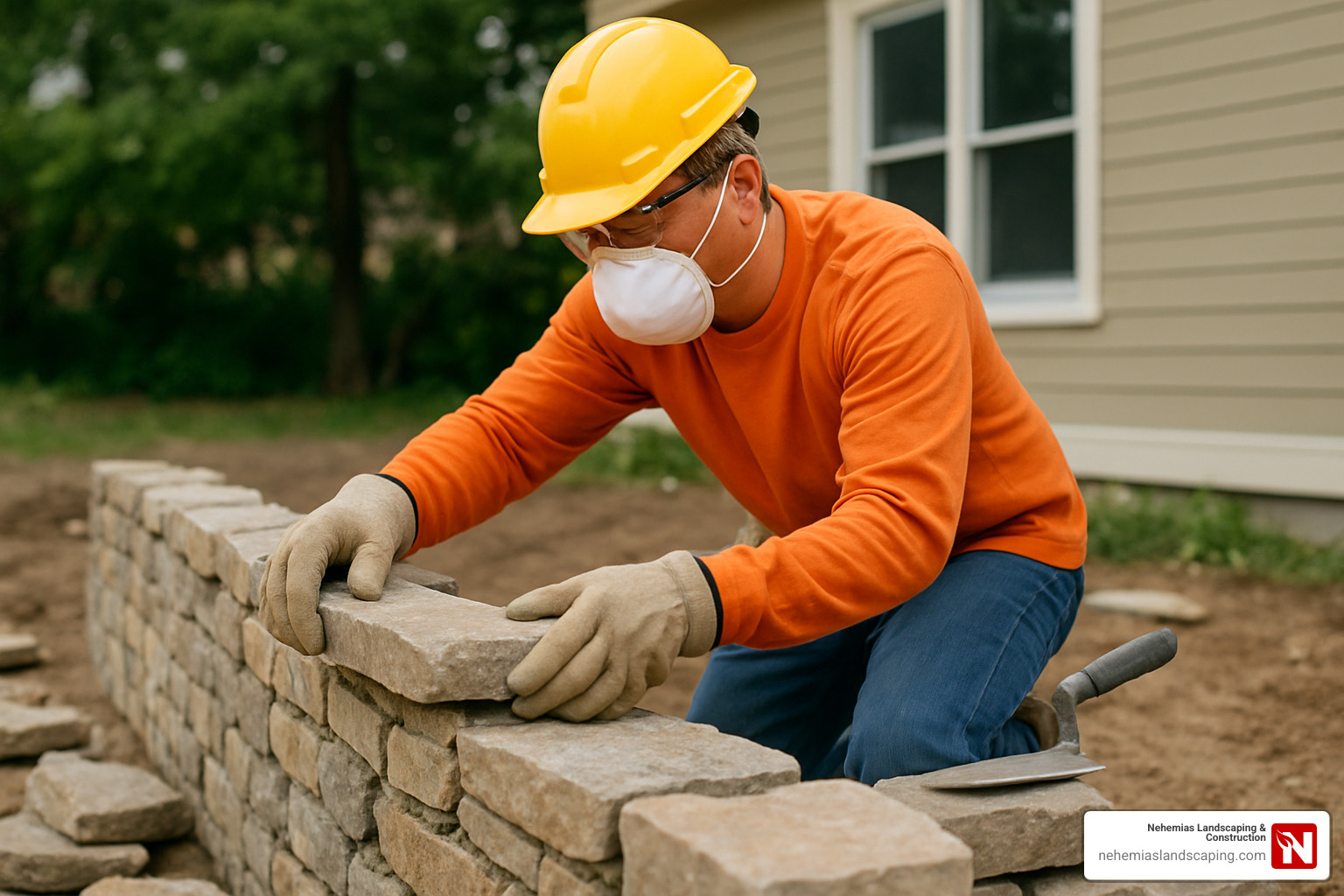
Professional mason contractors like Nehemias Landscaping & Construction prioritize safety through comprehensive programs that go beyond basic compliance. Hard hats, safety glasses, and steel-toed boots are just the starting point. When cutting or grinding materials, proper respiratory protection becomes essential to prevent silicosis, a serious lung disease caused by inhaling silica dust.
OSHA regulation 1926 specifically addresses construction safety requirements, with several sections dedicated to masonry operations. These include detailed guidelines for scaffolding safety, which is critical since masons often work at height. Properly constructed platforms with guardrails and regular inspections help prevent falls, which remain one of the leading causes of construction injuries.
Silica dust management has become increasingly important in recent years, with wet cutting methods and vacuum systems now standard practice at quality masonry companies. The fine dust created when cutting brick, stone, or concrete contains crystalline silica that can cause permanent lung damage when inhaled regularly.
Weather considerations also play into safety planning. Extreme temperatures affect both worker safety and material performance, while high winds can destabilize scaffolding and create dangerous working conditions. Professional masons monitor these conditions carefully and adjust work schedules accordingly.
Building for Durability & Sustainability
When we think about sustainable building practices, new technologies often get the spotlight. Yet mason construction offers inherent sustainability benefits that have stood the test of time.
The most obvious advantage is exceptional longevity. While many modern building materials require replacement every 15-30 years, properly constructed masonry structures regularly last a century or more. This durability translates directly into reduced resource consumption and waste over time.
“When you consider the entire life cycle—from raw material extraction through manufacturing, use, and end-of-life—masonry often outperforms seemingly ‘greener’ alternatives that require frequent replacement,” explains one environmental building consultant.
The thermal mass properties of masonry contribute significantly to energy efficiency. Brick, stone, and concrete absorb heat during warm periods and release it slowly when temperatures drop, helping to moderate indoor temperature fluctuations. This natural property can reduce heating and cooling demands by 10-15% in properly designed buildings.
Low maintenance requirements further improve masonry’s sustainability profile. Unlike wood, vinyl, or composite materials that may need regular painting, sealing, or replacement, quality masonry typically requires minimal upkeep. One homeowner shared, “We installed our brick patio eight years ago, and beyond occasional sweeping and rare repointing, it’s been virtually maintenance-free.”
Innovation continues to improve these inherent benefits. Permeable pavers now allow stormwater to infiltrate into the ground rather than contributing to runoff, supporting groundwater recharge and reducing flood risks. Manufacturers are increasingly incorporating recycled content into masonry units, including crushed glass, reclaimed concrete, and industrial byproducts.
Perhaps most exciting are emerging carbon-sequestering materials that actually absorb CO2 over their lifetime, potentially changing masonry from a carbon-neutral to a carbon-negative building option in the future.
Emerging Technologies and Regulations
The romance of mason construction lies in its connection to ancient traditions, but today’s masonry professionals aren’t stuck in the past. They’re embracing technologies that improve precision, reduce physical strain, and improve efficiency.
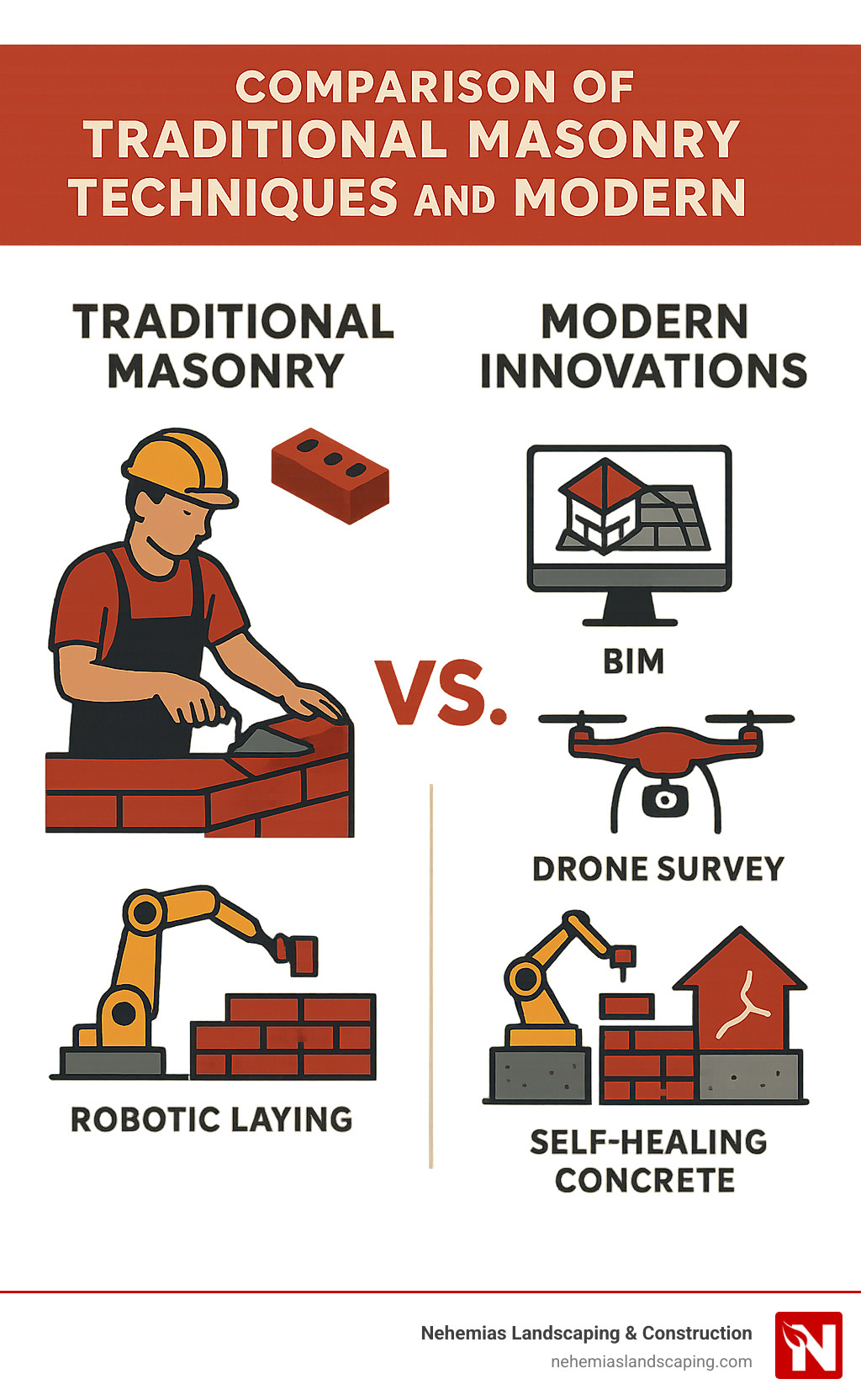
Building Information Modeling (BIM) has revolutionized how complex masonry projects are planned and executed. These sophisticated 3D models allow precise coordination of masonry elements with other building systems, reducing costly conflicts and ensuring perfect fit. For restoration projects, 3D scanning of existing structures enables perfect matching of historical features.
On job sites, technology is making the physically demanding work of masonry more sustainable for workers’ bodies. Robotic assistance for repetitive tasks helps reduce fatigue while maintaining quality. Some companies are even testing exoskeletons that help masons lift and place heavy materials with less strain on their backs and shoulders.
“The best masonry work happens when you combine the wisdom of tradition with the advantages of innovation,” reflects one industry veteran with 40 years of experience.
Material science continues to advance as well. Self-healing concrete incorporates dormant bacteria that activate when cracks form, secreting limestone to repair damage automatically. Low-carbon cement alternatives are reducing the environmental footprint of mortar and concrete, addressing one of the few sustainability challenges in traditional masonry.
Regulatory frameworks are evolving to better recognize masonry’s benefits. Modern energy codes increasingly account for thermal mass in performance calculations rather than focusing solely on R-value. Updated seismic design requirements are improving masonry’s performance in earthquake zones, expanding its applicability in regions previously dominated by other construction methods.
At Nehemias Landscaping & Construction, we believe in honoring masonry traditions while embracing innovations that improve safety, sustainability, and quality. Our commitment to Professional Masonry Services means staying current with industry best practices while never losing sight of the craftsmanship that makes masonry timeless.
Frequently Asked Questions about Mason Construction
What training and certifications are needed to become a mason?
The journey to becoming a skilled mason follows several paths, each with its own advantages for different learning styles and circumstances.
Many successful masons begin through apprenticeship programs, the time-honored tradition where newcomers learn alongside experienced craftspeople. These programs typically span 3-4 years, combining hands-on work with classroom instruction. As one veteran mason told me, “I learned more in my first year as an apprentice than I ever could have from a book. There’s something about feeling the mortar in your hands that can’t be taught any other way.”
Vocational and technical schools offer another entry point, with focused masonry programs lasting 1-2 years. These provide structured learning environments where students master fundamental techniques before entering the workforce. For those who prefer a more formal educational setting, this approach builds confidence before facing real-world projects.
Some masons take a more direct route through on-the-job training, starting as laborers or helpers and gradually taking on more responsibility as they demonstrate aptitude. While this path might take longer to reach full proficiency, it allows immediate income and learning in the exact environment where you’ll eventually work.
Regardless of your starting point, certain credentials lift your professional standing in the industry:
NCCER Masonry Certification provides nationally recognized validation of your skills across multiple levels of expertise. The Mason Contractors Association of America (MCAA) Certification demonstrates professional knowledge specific to the industry. For those working on commercial projects, OSHA Safety Certifications are often required, while specialized material certifications open doors to working with specific products or systems.
“The learning never stops,” shared a masonry instructor with three decades of experience. “Even after 30 years, I still find new approaches and solutions to challenges. That’s what keeps this craft exciting.”
How much do masons earn in 2024 and what affects pay?
Mason construction professionals enjoy compensation that reflects their valuable skill set, though earnings vary considerably based on several factors.
In the United States, masons earn an average annual salary of $51,590, with the range typically spanning from $28,000 for those just starting out to $84,000 for highly experienced specialists with sought-after skills. Across the Atlantic, UK masons see similar patterns, with average earnings of £34,095 and a typical range from £26,336 to £39,168.
Geographic location plays a major role in determining pay scales. Urban centers and regions experiencing construction booms naturally offer higher wages to attract talent. Similarly, specialization significantly impacts earning potential – masons who master complex techniques like stone carving, historical restoration, or specialty brick patterns can command premium rates for their expertise.
Union membership often translates to higher wages and better benefits packages compared to non-union positions. The type of project also matters, with commercial and industrial work typically paying more than residential jobs due to scale, complexity, and tighter schedules. Not surprisingly, experience level creates substantial pay differences, with journeyman masons earning significantly more than apprentices, while those who advance to foreman or supervisor positions reach the highest compensation tiers.
Beyond base salary, many masons receive valuable benefits including health insurance, retirement plans, paid training opportunities, and performance bonuses. During busy seasons, overtime can substantially boost annual income.
“It’s a career where your income grows with your skill,” explained one contractor I spoke with. “The craftspeople who take pride in their work and continue developing their abilities are always in demand and compensated accordingly.”
How can I start a career or find jobs in mason construction?
Breaking into mason construction requires determination, but the industry welcomes newcomers who demonstrate genuine interest and work ethic. Several paths can lead you into this rewarding field.
Entry-level positions provide practical starting points. As a mason’s helper or laborer, you’ll assist experienced craftspeople while learning the basics of material preparation, tool usage, and job site protocols. Material handlers gain valuable familiarity with the various supplies used in masonry work, while formal apprenticeships combine structured classroom learning with supervised on-the-job training.
Educational resources can accelerate your progress. Vocational schools offer hands-on masonry programs that build fundamental skills in controlled environments. Some community colleges provide construction technology degrees with masonry components, while industry associations like the Mason Contractors Association of America offer specialized training resources and connections to apprenticeship opportunities.
When searching for job opportunities, consider multiple approaches. Apprenticeship programs administered through unions or contractor associations provide structured training with clear advancement paths. Construction-specific job boards list openings at various skill levels, while direct outreach to mason contractors can uncover positions that haven’t been advertised. Don’t underestimate the power of networking through industry events or social media groups where professionals share information about openings.
“The key is to find someone willing to teach you,” shared a successful mason who started as a helper 15 years ago. “Show up early, work hard, ask questions, and demonstrate a genuine interest in learning the craft. Good masons are always looking for people with the right attitude to bring into the trade.”
For those in Essex County, Massachusetts looking to begin a career in masonry, Nehemias Landscaping & Construction occasionally offers opportunities for motivated individuals to learn this timeless craft. Our team values enthusiasm and dedication in newcomers who want to build a future in mason construction.
Looking to expand your knowledge? The On Demand Education resources from the Mason Contractors Association provide valuable learning materials for those at any stage of their masonry career.
Conclusion
Navigating mason construction services for your project doesn’t have to be overwhelming. With the right knowledge and a trusted partner, you can create beautiful, durable structures that improve your property for generations to come.
Throughout this guide, we’ve explored the rich world of masonry—from understanding the materials and techniques to planning, budgeting, and finding the right professionals for your project. We’ve examined the safety protocols that protect workers, highlighted the impressive sustainability benefits of quality masonry, and showcased the innovations shaping this ancient craft’s future.
As you consider your next project, masonry offers best benefits that few other construction methods can deliver. Quality mason construction creates structures that typically last a century or more, significantly improving your property value while reducing long-term maintenance headaches. The versatility of masonry allows it to adapt to any aesthetic, from classically traditional to strikingly contemporary designs.
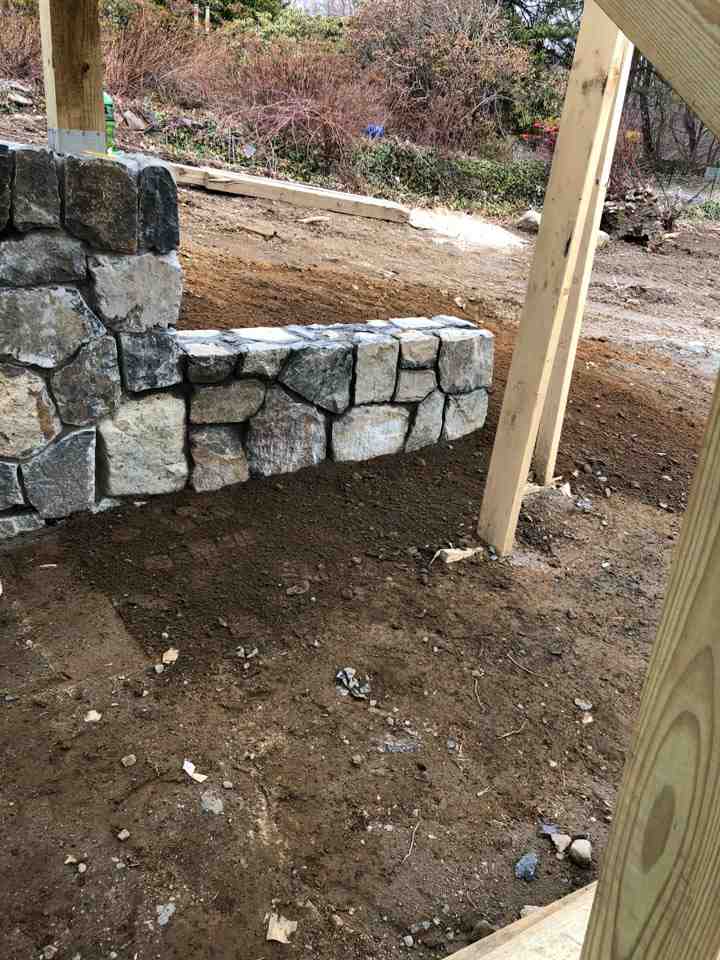
The natural variation and texture found in brick and stone create visual interest that manufactured alternatives simply can’t match. And when you consider the environmental responsibility that comes with masonry’s long lifespan and impressive thermal mass properties, it’s easy to see why this building method has endured for thousands of years.
At Nehemias Landscaping & Construction, we bring these benefits to every project we undertake throughout Essex County, Massachusetts. Our team blends traditional craftsmanship with modern techniques to deliver mason construction work that consistently exceeds expectations in both appearance and performance.
Whether you’re dreaming of a simple garden wall, an elaborate outdoor kitchen, or a complete exterior renovation, we’re here to help transform your vision into reality. Our unwavering commitment to quality, safety, and customer satisfaction has made us a trusted partner for homeowners throughout Beverly, Danvers, Essex, Georgetown, Gloucester, and all of Essex County.
The structures we build today will stand as a testament to quality craftsmanship long after we’re gone. That’s the true magic of mason construction—creating something beautiful that improves lives now while leaving a lasting legacy for future generations.
Ready to explore how mason construction can transform your property? Contact us today to schedule a consultation and find the remarkable difference that professional masonry can make in your next project. Your outdoor space deserves nothing less than the timeless beauty and best durability that only quality masonry can provide.