
Masonry work is the art and science of building with bricks, stones, and other similar materials, masterfully held together by mortar. It’s a craft that marries functionality with elegance, offering both structural integrity and aesthetic appeal. Whether you’re dreaming of a sturdy retaining wall or a charming stone patio, masonry work provides the perfect blend of durability and beauty.
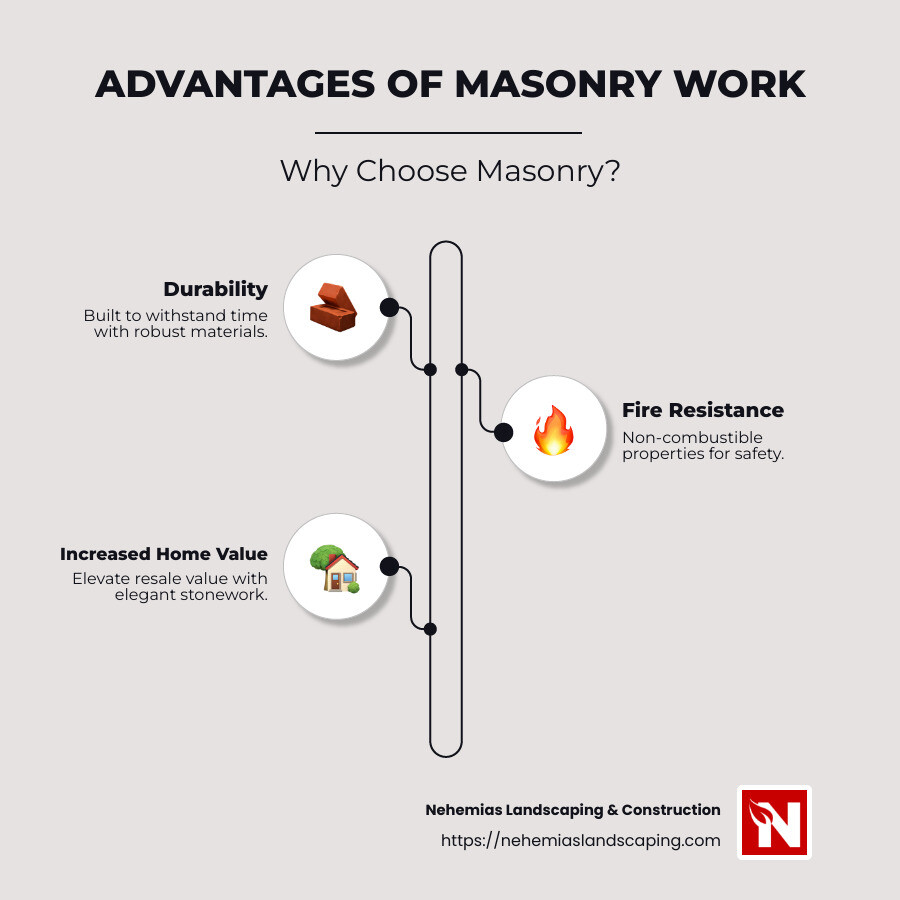
- Durable construction: Masonry structures stand the test of time, thanks to their robust materials.
- Fire resistance: Non-combustible properties make masonry ideal for fire protection.
- Increased home value: Neat stonework can improve your property’s resale value.
In this guide, we’ll dig into the different types of masonry work, the essential materials used, and the expert techniques involved. Whether you want a new fireplace or a decorative garden wall, understanding the basics of masonry will help you make informed decisions.
Simple guide to masonry work:
– masonry contractors near me
– masonry restoration massachusetts
– masonry services Massachusetts
Types of Masonry Work
When it comes to masonry work, there are three main types to consider: brick masonry, stone masonry, and concrete block masonry. Each has its unique characteristics and applications, making them suitable for various projects.
Brick Masonry
Brick masonry is one of the oldest and most popular forms of masonry. It involves the use of bricks, which are small rectangular blocks, typically made of clay or shale. These bricks are laid in a specific pattern and bonded together with mortar. Brick masonry is known for its durability and classic aesthetic appeal. It’s commonly used in building walls, fireplaces, and chimneys.
- Advantages: Bricks are fire-resistant and provide excellent thermal insulation, which can help regulate indoor temperatures.
- Disadvantages: They can be heavy and require a solid foundation to prevent settling and cracking.
Stone Masonry
Stone masonry uses natural stones, such as granite, marble, or limestone, to create structures. This type of masonry is often chosen for its neat and timeless appearance. Stone masonry can be found in historical buildings, retaining walls, and decorative facades.
- Advantages: Stone is extremely durable and resistant to weathering and erosion.
- Disadvantages: The weight of stone requires careful planning and skilled labor for installation.
Concrete Block Masonry
Concrete blocks are large, hollow units made from cement, water, and aggregates. These blocks are versatile and can be used for both load-bearing and non-load-bearing walls. Concrete block masonry is popular in modern construction due to its strength and cost-effectiveness.
- Advantages: Concrete blocks offer excellent compressive strength and are suitable for seismic areas when reinforced with steel.
- Disadvantages: They may not provide the same aesthetic appeal as brick or stone and can require additional finishing for a polished look.
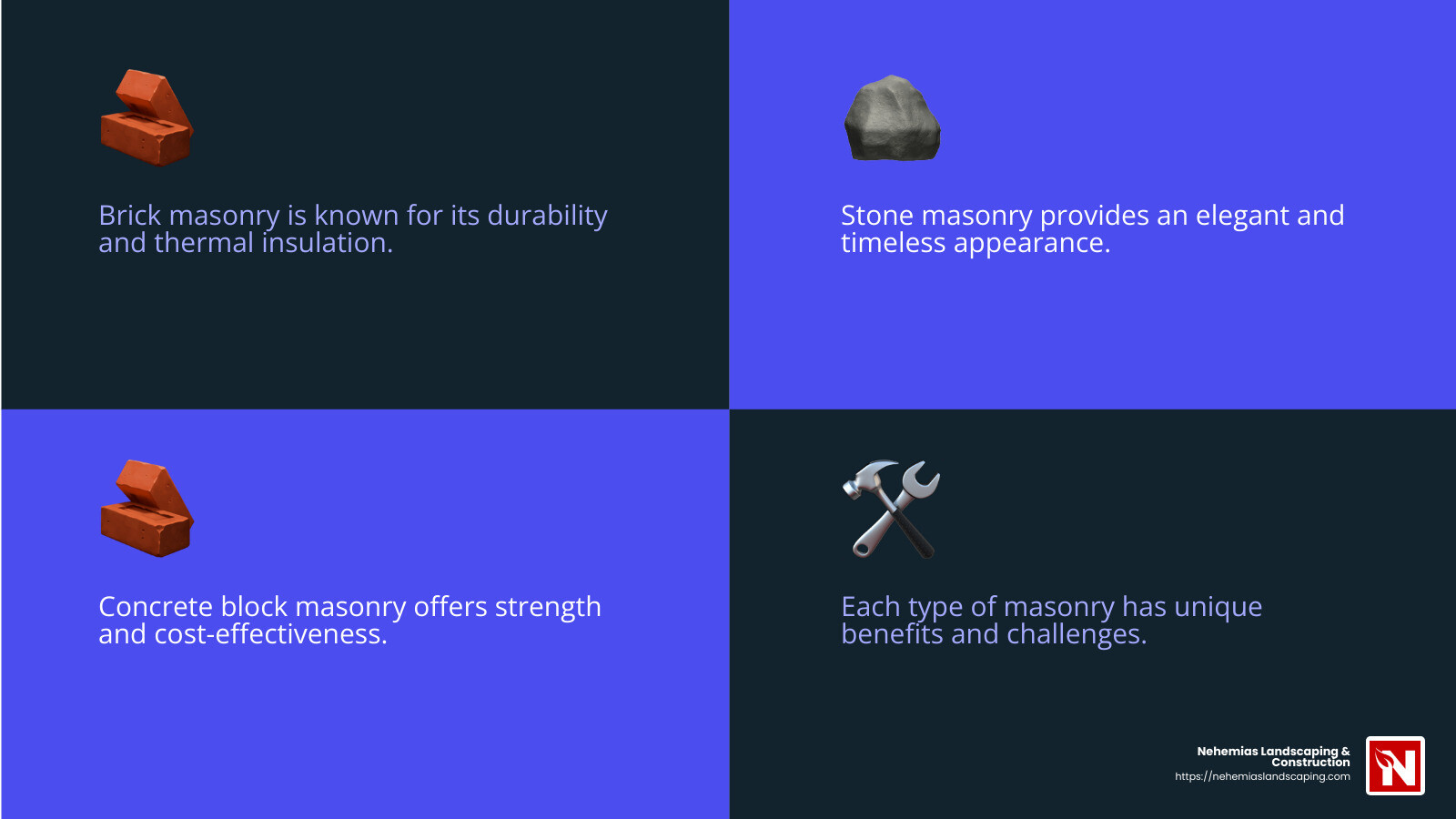
Each type of masonry work has its own set of benefits and challenges. When selecting a type for your project, consider factors such as aesthetics, budget, and the specific needs of your structure. Understanding these options will help you choose the best materials for your masonry project.
Essential Masonry Materials
When diving into masonry work, understanding the materials is key. Each material brings its own strengths, uses, and charm to a project. Let’s explore the essentials: brick, stone, mortar, and concrete.
Brick
Bricks are small, rectangular blocks made from clay or shale. They’re known for their classic appearance and have been used for centuries. Bricks are versatile and can be used in various structures, from homes to chimneys.
- Strengths: Bricks are fire-resistant and provide good thermal mass, helping to regulate indoor temperatures.
- Uses: Commonly used in walls, fireplaces, and pathways.
Stone
Stone masonry uses natural stones like granite, marble, and limestone. Stones bring a timeless elegance to any construction. They are often seen in historical buildings and decorative structures.
- Strengths: Stones are extremely durable and weather-resistant.
- Uses: Ideal for facades, retaining walls, and monuments.
Mortar
Mortar is the glue that holds masonry units together. It’s a mix of cement, lime, sand, and water. Mortar plays a crucial role in the stability and longevity of masonry structures.
- Strengths: Provides a strong bond and can be adjusted for different textures and colors.
- Uses: Essential in binding bricks and stones, filling gaps, and enhancing the overall look.
Concrete
Concrete is a mix of cement, water, and aggregates like sand and gravel. It’s a versatile material used in various forms, such as poured concrete or concrete blocks.
- Strengths: Offers excellent compressive strength and can be reinforced with steel for added durability.
- Uses: Suitable for foundations, walls, and load-bearing structures.
Understanding these materials helps in making informed decisions about your masonry work projects. Each material has unique properties that can improve the function and aesthetics of your construction.
Masonry Work Techniques
Masonry work is not just about the materials; it’s also about the techniques used to bring those materials together. Let’s explore some essential techniques: laying bricks, tuck-pointing, and stone veneers.
Laying Bricks
Laying bricks is a foundational skill in masonry work. It’s the process of placing bricks in a pattern and securing them with mortar. This technique is used in building walls, fireplaces, and other structures.
- Step-by-Step Process:
- Preparation: Start with a solid foundation. Ensure the surface is clean and level.
- Mortar Application: Spread a layer of mortar on the foundation and on the sides of each brick.
- Brick Placement: Place the brick firmly in the mortar, ensuring it’s level with the others.
- Joint Finishing: Once the bricks are in place, smooth out the mortar joints for a clean finish.
- Pro Tip: Maintain consistent spacing between bricks for strength and aesthetic appeal.
Tuck-Pointing
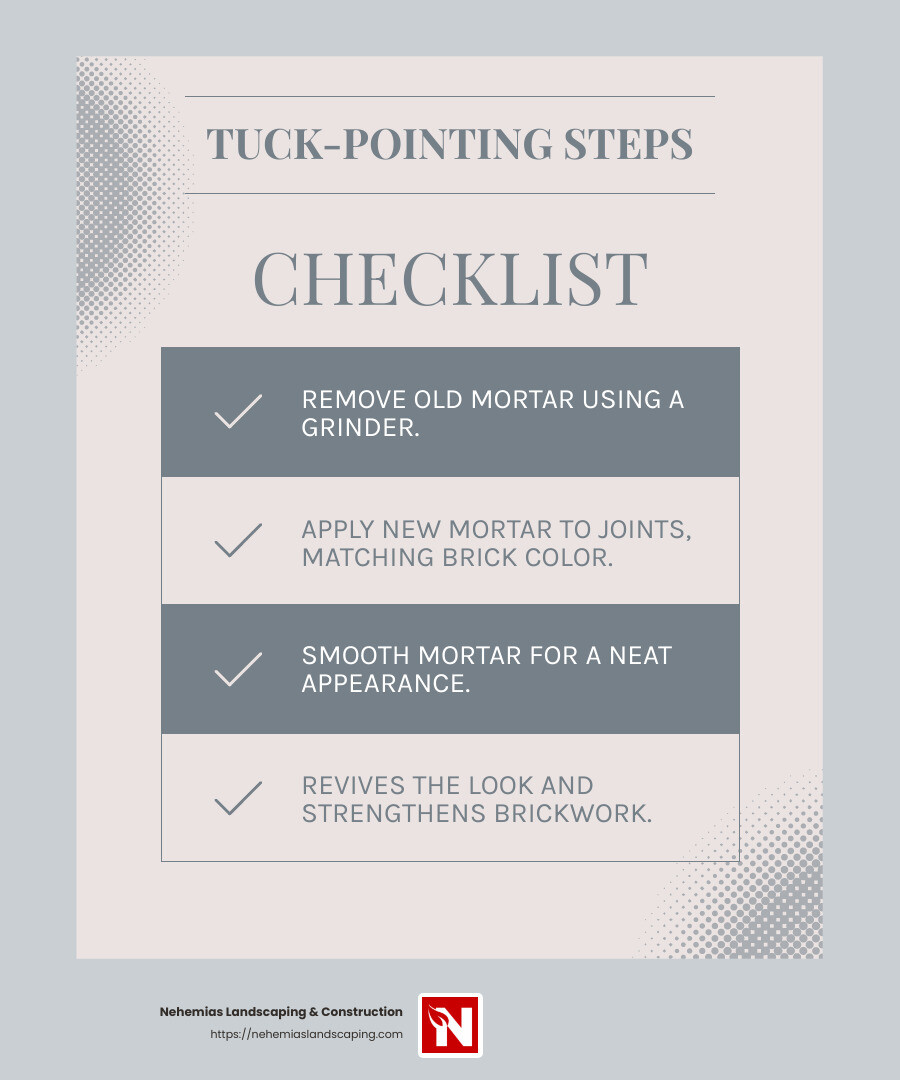
Tuck-pointing is a technique used to repair or improve the appearance of brickwork. It involves removing old mortar and applying new mortar to the joints.
- Benefits of Tuck-Pointing:
- Restoration: Revives the look of old brickwork.
- Strengthening: Increases the structural integrity of the wall.
- Process:
- Remove Old Mortar: Use a grinder to take out damaged mortar.
- Apply New Mortar: Fill the joints with fresh mortar, matching the color of the bricks.
- Finishing Touches: Smooth the mortar for a neat appearance.
Stone Veneers
Stone veneers are thin layers of stone applied to surfaces for decorative purposes. They offer the beauty of natural stone without the weight.
- Applications:
- Interior Walls: Add elegance to living spaces.
- Exterior Facades: Improve curb appeal.
- Installation Steps:
- Surface Preparation: Ensure the surface is clean and structurally sound.
- Adhesive Application: Apply a bonding agent to the surface.
- Stone Placement: Press the stone veneer onto the adhesive, starting from the bottom and moving up.
- Grouting: Fill the gaps with grout for a polished look.
By mastering these techniques, you can achieve beautiful and durable masonry structures. Whether you’re laying bricks for a new wall, tuck-pointing to restore an old facade, or applying stone veneers for a neat finish, each technique adds unique value to your construction project.
Benefits of Masonry Work
Masonry work offers a range of benefits that make it a popular choice for both residential and commercial construction. Let’s explore the key advantages: durability, aesthetics, and functionality.
Durability
One of the standout features of masonry work is its durability. Structures built with materials like brick, stone, and concrete blocks are known to withstand the test of time. Here’s why:
- Resistance to Elements: Masonry is highly resistant to weather, rot, and pests. This makes it an excellent choice for areas prone to harsh weather conditions, such as hurricanes or tornadoes.
- Fire Resistance: Masonry is non-combustible, providing an extra layer of protection against fire hazards. This is particularly beneficial for buildings where safety is a top priority.
In fact, many ancient structures, like the Egyptian pyramids and Roman aqueducts, are still standing today, showcasing the long-lasting nature of masonry work.
Aesthetics
Masonry work is not just about strength; it also adds aesthetic value to buildings. The use of natural materials like stone and brick can improve the visual appeal of any structure.
- Versatility in Design: Whether you’re aiming for a rustic look with stone or a more modern feel with sleek bricks, masonry can be custom to fit various architectural styles.
- Customization: Different patterns, colors, and textures allow for a high degree of customization, making it easy to match the design preferences of homeowners or architects.
Masonry’s ability to blend beauty with functionality makes it a preferred choice for creating visually stunning buildings.
Functionality
Beyond looks and longevity, masonry work also offers practical functionality.
- Thermal Mass: Masonry materials have high thermal mass, meaning they can absorb and store heat. This helps keep buildings cooler in the summer and warmer in the winter, leading to potential energy savings.
- Sound Insulation: The density of masonry materials provides excellent sound insulation, making them ideal for buildings in noisy environments.
In summary, the durability, aesthetics, and functionality of masonry work make it a smart choice for any construction project. Whether you’re building a new home, restoring an old one, or adding decorative elements, masonry offers both practical and aesthetic benefits that are hard to beat.
Frequently Asked Questions about Masonry Work
What are examples of masonry work?
Masonry work encompasses a wide range of construction activities. Here are a few common examples:
- Brick Laying: This involves placing bricks in a specific pattern to form walls, pathways, or other structures. Bricklaying is a fundamental aspect of many building projects and requires precision and skill.
- Chimney Building: Chimneys are often crafted from brick or stone, using masonry techniques to ensure they are both functional and aesthetically pleasing. The durability of masonry materials makes them ideal for withstanding the heat and smoke associated with chimneys.
- Stone Stacking: This technique involves arranging stones without mortar to create walls or decorative features. The weight and shape of the stones provide stability, making it a popular method for garden walls or rustic designs.
What are the three types of masonry?
Masonry work can generally be classified into three main types based on the materials used:
- Brick Masonry: This is the most common form of masonry. It involves the use of bricks and mortar to build structures. Brick masonry is valued for its strength and versatility, providing both structural support and decorative appeal.
- Stone Masonry: Stone masonry uses natural stones like granite, limestone, or marble. This type is known for its durability and timeless beauty. Stone masonry can be seen in historical buildings and is often used for decorative purposes in modern architecture.
- Concrete Blocks: These blocks are larger than bricks and often have hollow cores. Concrete block masonry is popular for its cost-effectiveness and excellent load-bearing capacity. It’s frequently used in both residential and commercial construction.
What is the difference between masonry and concrete?
While both masonry and concrete are essential in construction, they serve different roles:
- Construction Material: Masonry involves building with individual units such as bricks, stones, or concrete blocks, which are typically bound together by mortar. It allows for intricate designs and is often used for both structural and decorative purposes.
- Concrete: Concrete is a composite material made from cement, water, and aggregates like sand or gravel. Unlike masonry, concrete is poured into molds and hardens into a solid mass. It is often used for foundations, slabs, and large structures where uniformity and strength are critical.
Masonry work uses discrete units to form structures, while concrete is a continuous material that can be molded into any shape. Both have unique advantages and are chosen based on the specific needs of a construction project.
Next, we’ll dig into how Nehemias Landscaping & Construction applies these principles in their projects, ensuring quality and craftsmanship every step of the way.
Conclusion
At Nehemias Landscaping & Construction, we take pride in changing outdoor spaces into stunning, functional environments. Our commitment to quality and craftsmanship sets us apart in masonry work.
Whether you’re looking to improve your backyard with a custom patio or start on a large-scale renovation, our skilled team is here to guide you from start to finish. We understand that every project is unique, and we tailor our approach to meet your specific vision and needs.
Our masonry services include everything from brick laying to stone masonry, each executed with precision and care. We use high-quality materials to ensure that your outdoor space not only looks beautiful but also stands the test of time.
At Nehemias, we believe that great craftsmanship can transform an ordinary space into something extraordinary. Our goal is to bring your vision to life, creating an outdoor area that improves your lifestyle and adds value to your home.
Ready to change your outdoor space with expert masonry work? Contact us today to get started on your next project. Let us show you how quality and craftsmanship can make all the difference.