
Water feature installation transforms your outdoor space into a serene sanctuary. Imagine a backyard where the gentle trickle of water not only improves the beauty but also brings a sense of peace to your surroundings. Whether it’s a charming fountain, an neat waterfall, or a tranquil pond, water features can drastically improve the aesthetics and ambiance of your outdoor area.
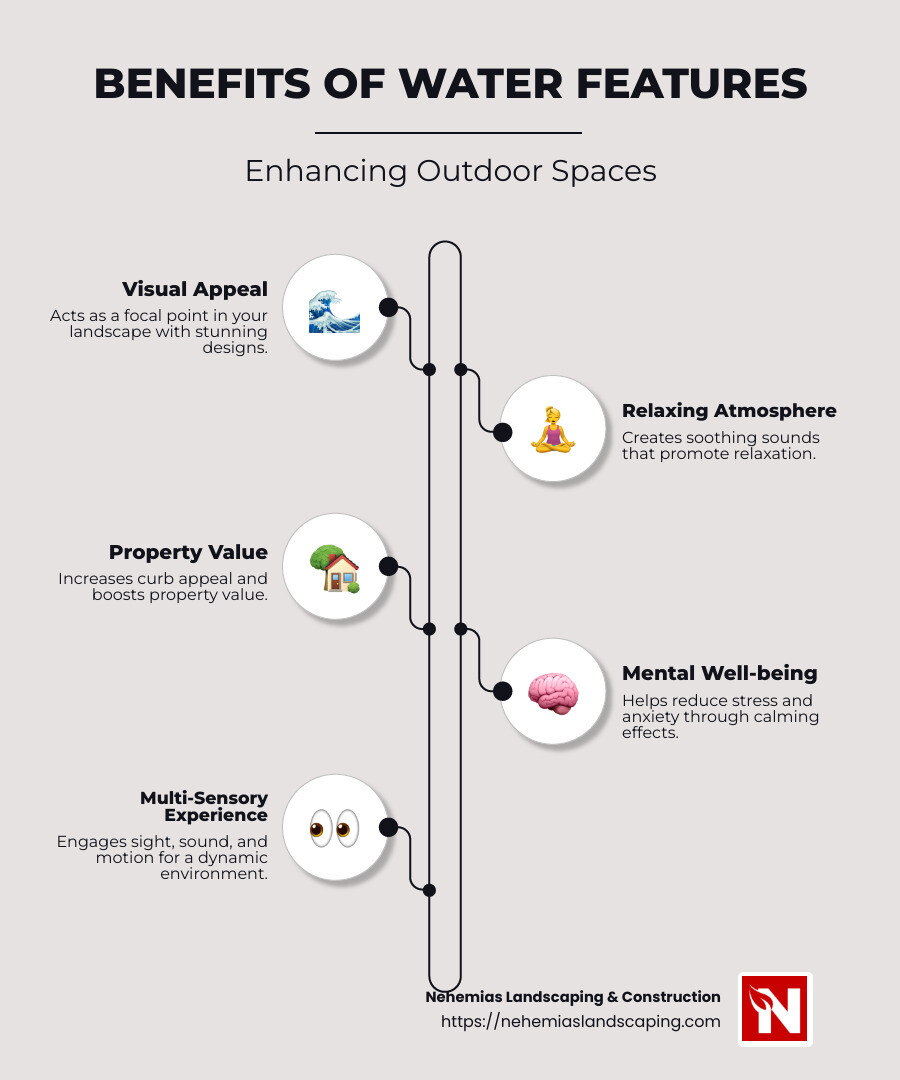
- Benefits:
- Adds visual appeal and a focal point to your landscape
- Creates a relaxing and refreshing atmosphere
- Increases property value and improves curb appeal
- Promotes mental well-being by reducing stress and anxiety
Outdoor aesthetics are not just about looks; they’re about creating a space that feels like a true extension of your home. Water features do more than just look pretty — they engage multiple senses with the sight and sound of flowing water. As Demi Fortuna from Atlantic Water Gardens mentions, water is all about “sight, sound, and motion,” bringing a dynamic element to your garden. With thoughtful placement, like under a kitchen window or beside a patio, you can enjoy these benefits from indoors as well.
If you’re considering adding a water feature to your backyard, think of it as investing in a year-round staycation. As Brian Helfrich of Aquascape Construction notes, water elements offer relaxation akin to natural bodies of water, right at home.
Water feature installation terminology:
– Landscape design and installation
– Hardscape maintenance services
– Professional masonry services
Choosing the Right Water Feature
Selecting the perfect water feature for your outdoor space can be an exciting journey. With various options available, consider your preferences, the space available, and the desired impact on your landscape.
Fountain Types
Fountains come in many styles, from classic tiered designs to modern, sleek structures. Tiered fountains are timeless and add an neat touch to gardens. They are particularly suitable for traditional settings. On the other hand, contemporary fountains offer minimalist designs with clean lines, perfect for modern landscapes.
Consider the size of the fountain as well. A small tabletop fountain might be ideal for a patio, while larger, freestanding fountains can serve as a dramatic focal point in a garden.
Pond vs. Waterfall
When deciding between a pond and a waterfall, consider the effect you want to achieve. Ponds create a tranquil atmosphere and can support aquatic plants and fish, like koi. They offer a habitat for wildlife and can be a delightful addition for nature lovers.
Waterfalls, however, provide dynamic movement and sound, which can help mask noise from traffic or neighbors. They don’t require as much space as ponds and can be integrated into a sloped garden for a natural look. Brian Helfrich from Aquascape Construction highlights that waterfalls bring an element of relaxation and refreshment, similar to a natural body of water.
Recirculating Systems
Recirculating systems are an efficient way to maintain water features without the need for constant water supply. These systems use a pump to circulate water, reducing waste and keeping the feature running smoothly. They are particularly useful for fountains and waterfalls, ensuring a continuous flow that improves the sensory experience.
Recirculating systems also simplify maintenance, a crucial factor for those who prefer minimal upkeep. Automated systems are available for those willing to invest a bit more, offering ease of use with features like self-cleaning mechanisms.
By understanding the different types of water features and the benefits of each, you can make an informed decision that suits your landscape and lifestyle. Choose a feature that not only complements your outdoor aesthetics but also aligns with your personal preferences and maintenance capabilities.
Step-by-Step Water Feature Installation
Installing a water feature can transform your outdoor space into a serene oasis. Here’s a simple guide to help you through the process, from start to finish.
Fountain Kit
Start by selecting a fountain kit that matches your desired style and size. Kits usually include essential components like the fountainhead, basin, and pump. These kits simplify the installation process by providing everything you need in one package. A well-chosen fountain kit can save you time and ensure all parts are compatible.
Excavation
Once you’ve got your kit, it’s time for excavation. First, determine the best location for your water feature, considering factors like sunlight, visibility, and proximity to electrical outlets. Mark the area with spray paint or stakes. Then, clear the site by removing grass, rocks, and debris. Dig a hole deep enough to accommodate the basin, ensuring it’s level and stable.

Plumbing and Pump Setup
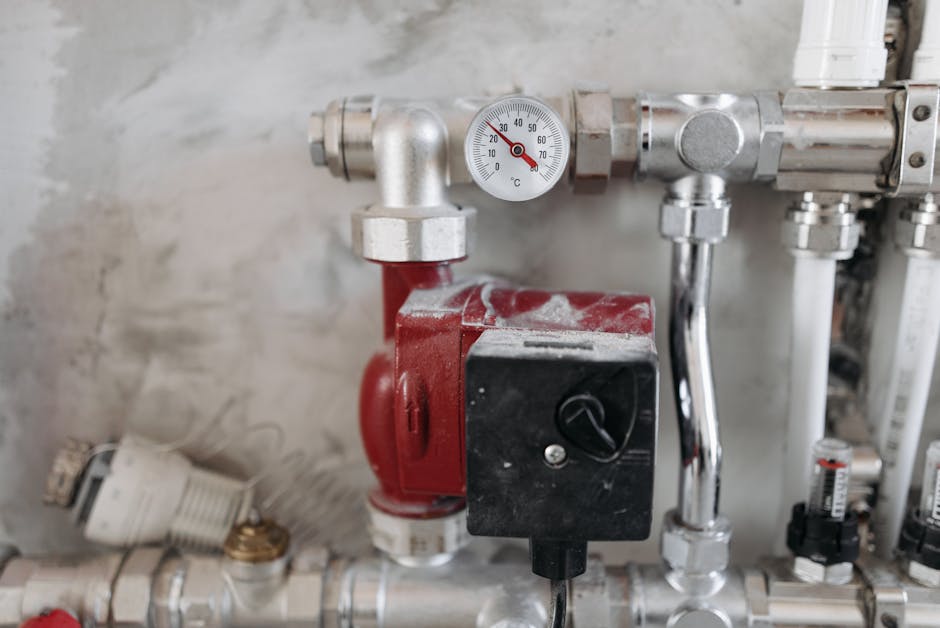
Next, focus on the plumbing and pump setup. Install the pump as per the manufacturer’s instructions, connecting it to the garden hose or PVC pipe. This step is crucial for maintaining water flow. Make sure the pump is submerged in the basin and test it by filling the basin with water. Turn on the pump to check for proper water circulation.
Decorative Elements
Finally, improve your water feature with decorative elements. Use gravel or sand to cover the plumbing and provide a stable base. You can also add decorative stones or plants around the fountain to boost its aesthetic appeal. These elements not only beautify the space but also help integrate the water feature into your landscape seamlessly.
By following these steps, you’ll create a stunning water feature that complements your outdoor environment and offers a peaceful retreat. As Demi Fortuna from Atlantic Water Gardens notes, water features provide visual and auditory delight, making your garden a year-round staycation spot.
Next, we’ll explore how to keep your water feature in top condition with Maintenance and Care tips.
Maintenance and Care
Keeping your water feature in top condition ensures it remains a beautiful and relaxing part of your outdoor space. Let’s explore some essential maintenance tips.
Algae Control
Algae can quickly turn your serene water feature into a green mess. To control algae, regular cleaning is key. Use a soft brush to scrub the basin and fountainhead. You can also add a small amount of algaecide to the water, but check that it’s safe for any aquatic plants or animals you might have.
Another effective method is to introduce aquatic plants. They not only improve the look of your water feature but also compete with algae for nutrients, helping to keep it at bay.
Seasonal Maintenance
Seasonal changes can impact your water feature, especially in areas with harsh winters. As part of your winterizing routine, drain all the water to prevent freezing damage. Disconnect the pump and store it indoors. Cover the basin with a tarp to keep out debris and protect it from the elements.
In spring, it’s time to revitalize your water feature. Clean the basin, check for any damage, and reconnect the pump. Refill with fresh water and ensure everything is functioning smoothly.
Automated Systems
Consider using automated systems to simplify maintenance tasks. These systems can include timers for your pump and lights, ensuring they run only when needed to save energy. You can also install an automatic water leveler to keep the water at the right height without manual intervention.
Automated systems not only reduce your workload but can also extend the lifespan of your water feature by preventing common issues like pump burnout due to low water levels.
With these maintenance and care tips, your water feature will remain a stunning focal point in your garden for years to come.
Next, we’ll address some Frequently Asked Questions about Water Feature Installation to help you with common concerns.
Frequently Asked Questions about Water Feature Installation
How much does it cost to install a water fountain?
The cost of installing a water fountain can vary widely depending on several factors. Material and size are the primary considerations. A small, self-contained fountain made from resin or fiberglass might cost a few hundred dollars, while a large, custom stone fountain could run into the thousands. Installation costs also depend on whether you hire professionals or tackle it as a DIY project. Professional installation often includes site preparation, plumbing, and electrical work, which can add to the overall expense.
Do water features need to be plumbed in?
Not all water features require plumbing. Many modern fountains are self-contained systems. These systems have a built-in pump and reservoir, meaning they recycle the same water continuously. This setup is ideal for smaller fountains and makes installation simpler. However, larger fountains or those integrated into a pond may require more extensive plumbing to connect to a water source. In these cases, consulting with a professional can ensure proper installation and operation.
What do you put in the bottom of a water feature?
The bottom of a water feature can be improved with various elements to improve both function and aesthetics. Aquatic plants are a popular choice. They not only beautify the fountain but also help control algae by consuming nutrients in the water. When adding plants, ensure they are suitable for your climate and water conditions.
For a more decorative touch, consider using a planting medium like gravel or small stones. This provides a natural look and can help anchor plants. However, avoid any materials that could clog the pump or harm aquatic life. Always ensure that any additions to your water feature are compatible with the system’s pump and filtration setup.
By understanding these aspects of water feature installation, you can make informed decisions that improve your outdoor space while keeping maintenance manageable.
Conclusion
At Nehemias Landscaping & Construction, we believe that a well-designed water feature can transform any outdoor space into a serene and beautiful oasis. Our team is dedicated to providing quality craftsmanship that meets your unique vision. Whether you desire a tranquil pond, a lively waterfall, or a stylish fountain, we have the expertise to bring your ideas to life.
Water features not only improve the aesthetics of your garden but also create a relaxing atmosphere that you and your family can enjoy year-round. From the soothing sounds of water to the visual appeal of shimmering reflections, these installations offer a touch of nature that can lift your outdoor living experience.
Our commitment to changing outdoor spaces is rooted in our attention to detail and our passion for creating functional and beautiful environments. We understand that each project is unique, and we work closely with our clients to ensure that every aspect of the installation meets their needs and preferences.
When you choose Nehemias Landscaping & Construction, you are choosing a partner who values quality and customer satisfaction. Let us help you create a stunning outdoor retreat that reflects your personal style and improves your home’s value.
For more information on how we can assist with your water feature installation or to explore our other hardscaping services, visit our hardscaping services page. Contact us today to start your journey towards a more beautiful and functional outdoor space.