
Lawn Watering System: 10 Powerful Ways for Amazing Results 2025
Why an Effective Lawn Watering System Matters
Feeling of rushing home after work to rescue your wilting garden, only to spend your evening dragging heavy hoses across the yard? If you’re nodding in agreement, you’re not alone. Many Massachusetts homeowners find themselves trapped in this exhausting cycle, but there’s a better way.
A lawn watering system isn’t just a luxury—it’s a smart investment that transforms how you care for your outdoor space. Whether you have a modest yard in Danvers or an expansive landscape in Essex County, the right watering solution can save you time, reduce water waste, and keep your lawn looking its best throughout our changeable New England seasons.
“If you are tired of hassling with hose and sprinklers, and getting poor results from manual watering, an automatic system is a perfect solution,” shared one happy Rain Bird system owner whose sentiments echo what we hear from clients every day.
The beauty of modern lawn watering systems lies in their versatility. Automatic in-ground sprinklers provide that seamless, hidden solution that works while you sleep. For garden beds and water-conscious homeowners, drip irrigation delivers moisture directly to plant roots with minimal waste. Renters and budget-conscious folks often prefer hose-end sprinklers that offer flexibility without permanent installation. Tech enthusiasts love smart watering systems that adjust to weather forecasts automatically, while many properties benefit from hybrid solutions that combine different approaches for optimal coverage.
Cost considerations vary widely, with simple DIY setups starting under $100 while professional installations typically range from $1,500 to $6,000 or more, depending on your property size and system complexity. The investment often pays for itself through water savings, as smart systems can reduce consumption by up to 50% compared to manual watering.
Water conservation isn’t just good for your wallet—it’s increasingly important for our environment. Many Massachusetts communities face seasonal water restrictions, making efficient irrigation more valuable than ever. The newest systems incorporate everything from real-time weather data to soil moisture readings, ensuring your landscape receives precisely what it needs, when it needs it.
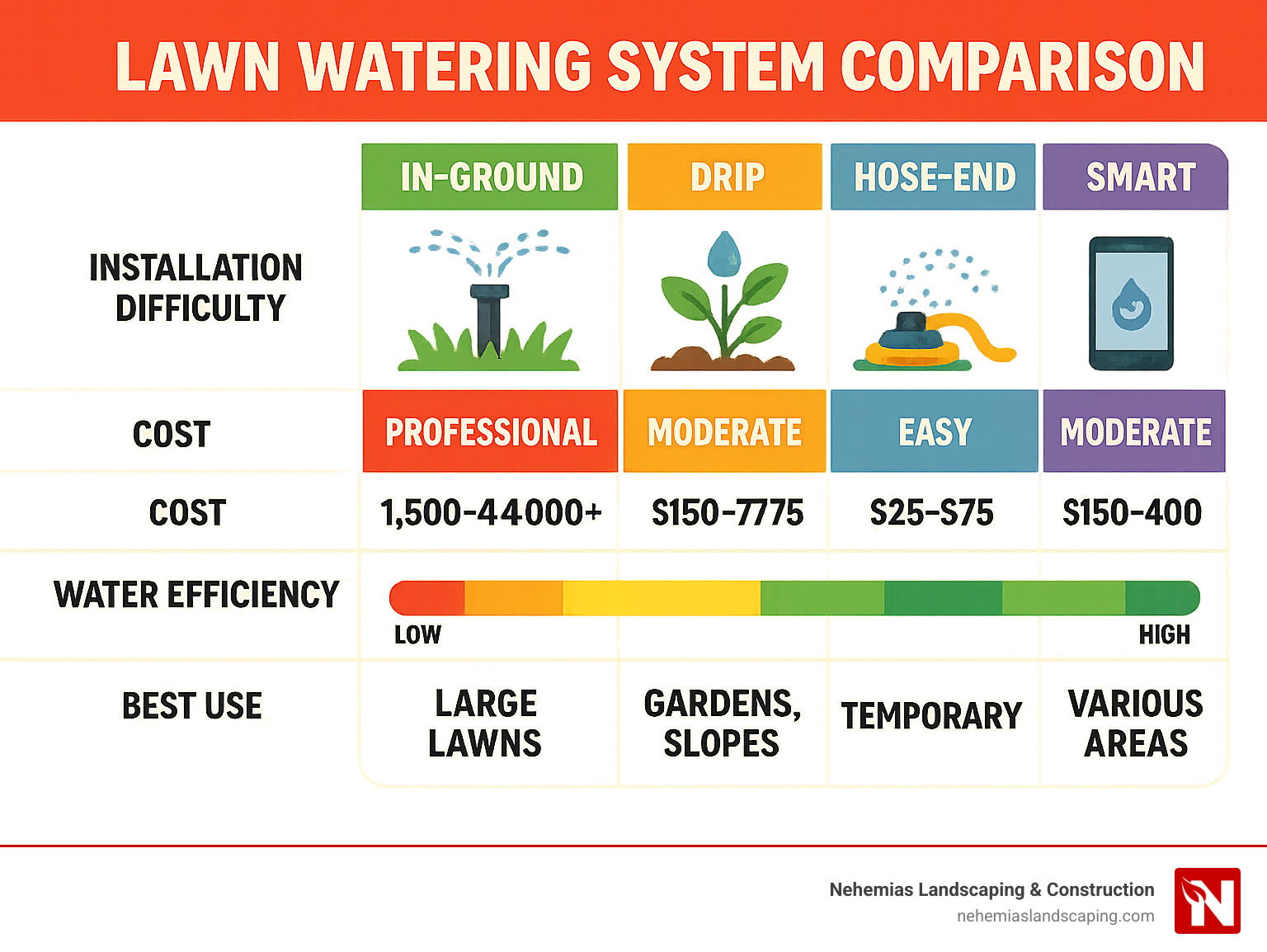
Whether you’re a busy professional needing a “set it and forget it” solution or a gardening enthusiast wanting precise control over each zone of your landscape, understanding the available options is your first step toward greener, healthier outdoor living. In the following sections, we’ll explore each system type in detail, helping you find the perfect match for your specific needs.
For specialized solutions like drip irrigation system installation or assistance with sprinkler repair, consulting with experienced irrigation system contractors can save you time and ensure professional results. The right lawn watering system isn’t just about technology—it’s about creating the perfect partnership between you, your landscape, and nature.
Types of Lawn Watering Systems Explained
Let’s face it – keeping your Massachusetts lawn green and gorgeous can feel like a full-time job, especially during those hot summer months. The right lawn watering system can be a game-changer, saving you time, water, and a whole lot of frustration. Let’s explore the options available to turn your Essex County landscape into the envy of the neighborhood.
Sprinkler vs Drip: Which Lawn Watering System Fits Your Landscape?
When it comes to watering systems, the two main contenders are sprinklers and drip irrigation. Each has its sweet spot in your landscape.
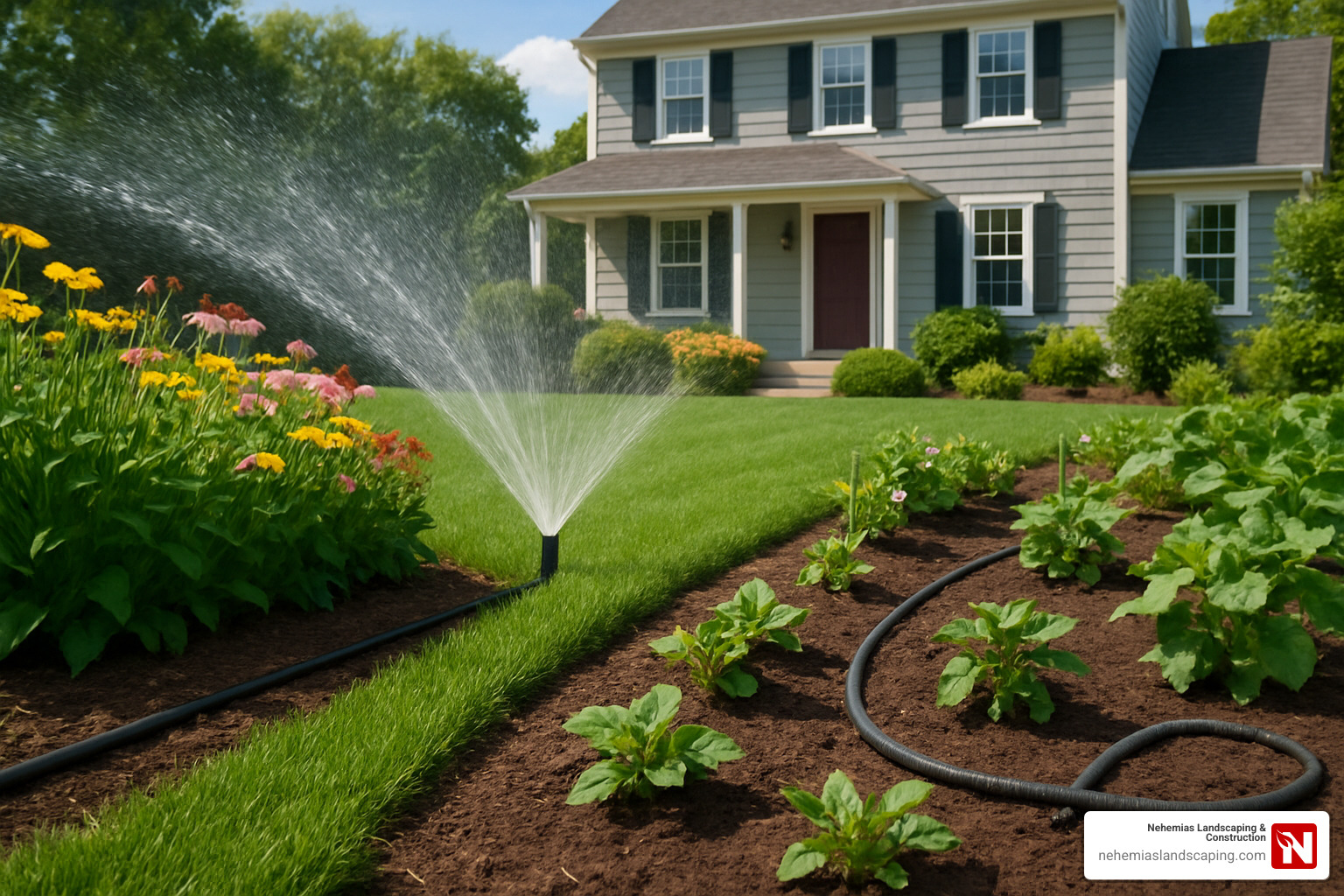
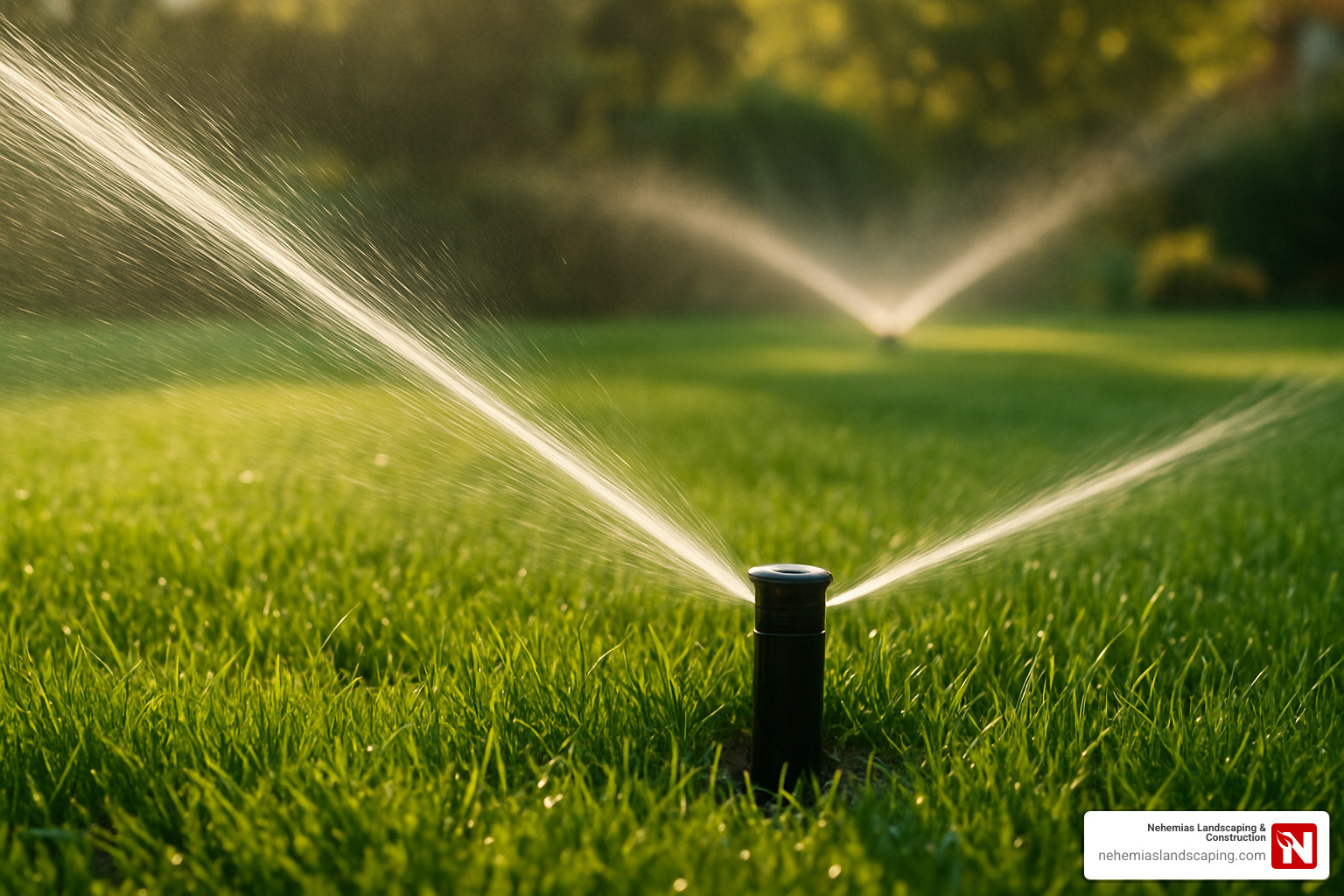
Sprinkler systems come in two flavors: above-ground (portable) and in-ground (permanent). Above-ground sprinklers connect to your outdoor faucet and can be repositioned as needed. In-ground systems feature those clever pop-up heads that emerge when it’s showtime and disappear when the job is done – keeping your landscape looking tidy.
Rotary sprinklers are the marathoners of the sprinkler world. They distribute water in wide circular patterns, making them perfect for medium to large lawns. The water droplets are typically larger, which helps them resist being carried away by those pesky coastal Massachusetts breezes.
Spray sprinklers are more of the sprinters – they emit a fixed spray pattern and excel in smaller areas. With coverage ranges of 5-15 feet and various pattern options (full circle, half-circle, quarter-circle), they’re versatile performers for compact spaces.
Drip irrigation takes a completely different approach. Rather than showering water from above, these systems deliver moisture directly to plant roots through small tubes with emitters. Talk about efficiency – drip systems can reduce water consumption by up to 60% compared to traditional sprinklers! They’re especially valuable for flower beds, vegetable gardens, and anywhere you want to minimize evaporation and prevent disease by keeping foliage dry.
Your soil type and yard topography should influence your choice too. Clay-heavy soil? Sprinklers provide the even distribution needed. Sandy soil that drains quickly? Drip irrigation’s consistent moisture delivery is your best bet. And if you’re dealing with slopes, drip systems help prevent the runoff that can waste water and erode soil.
Portable & Hose-End Options for Renters
Don’t own your home? No problem! You can still enjoy efficient watering without permanent installations.
Quick-connect systems are the renter’s best friend. These nifty devices let you set up multiple watering stations around your yard. Simply move your hose from one connection point to another, and you’re good to go.
Hose manifolds are another clever solution. These devices split your water source into multiple outlets, each with its own valve. It’s like having several hoses connected to one spigot – perfect for watering different areas with different needs.
Battery-operated hose timers bring automation to portable systems. Many modern models offer sophisticated programming options that rival in-ground systems, allowing for different watering days and durations.
For a more permanent feel without the commitment, no-dig DIY solutions like Quick-Snap offer in-ground performance without the excavation. These systems pop up when water flows and retract when turned off – all without requiring buried pipes or professional installation. With coverage up to 5,000 square feet, they’re surprisingly versatile for temporary solutions.
Smart & Hybrid Solutions
Welcome to the future of lawn care! Smart irrigation technology has transformed how we water our landscapes, making systems more efficient and user-friendly than ever.
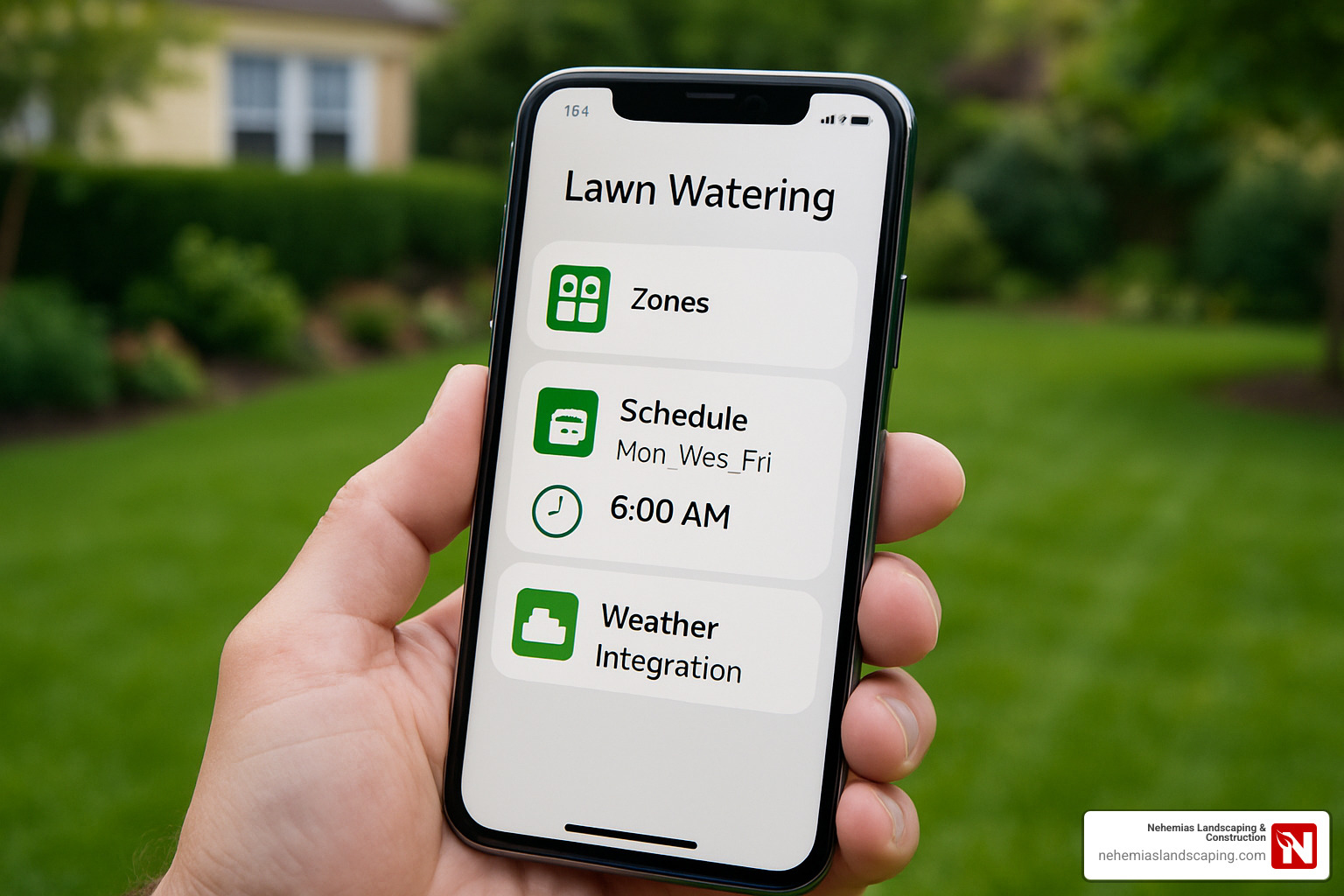
Wi-Fi controllers connect your watering system to your home network, allowing you to manage everything from your smartphone. Imagine adjusting your watering schedule while on vacation or turning off the system when unexpected rain appears – all from the palm of your hand.
These intelligent systems take the guesswork out of watering by incorporating weather data into their scheduling. Many will automatically skip watering when rain is predicted or adjust run times based on temperature and humidity. Some even factor in seasonal evapotranspiration rates – that’s the rate at which water transfers from the earth’s surface to the atmosphere.
Soil moisture sensors take precision a step further by measuring actual moisture levels in your soil. Why water if the ground is already moist enough? These sensors prevent unnecessary watering, saving water and preventing potential plant diseases caused by overwatering.
For many Essex County homeowners, the ideal solution is a hybrid approach: sprinklers for main lawn areas, drip irrigation for planting beds, and smart technology to tie it all together. This combination maximizes efficiency while ensuring all plants receive appropriate hydration.
Remember to check the water conservation tips from Georgetown Water Department and your local water restrictions before installing any system. Massachusetts often restricts watering times and days, especially during summer months when water supplies are under pressure.
The perfect lawn watering system balances your landscape’s needs, your lifestyle preferences, and our region’s water conservation goals. Whether you choose a simple soaker hose or a sophisticated smart system, the days of dragging hoses around your yard are officially over!
Installing & Programming Your Automatic Sprinkler System
Ready to roll up your sleeves and tackle your own lawn watering system? Modern systems have become much more DIY-friendly, making this project accessible for many homeowners. Let’s walk through what you’ll need to know to get started.
Planning Your Layout
Before you grab that shovel, take time to map everything out. I always tell clients that the planning phase is where your project succeeds or fails!
Start by sketching your yard’s dimensions and marking existing structures like walkways and garden beds. Note where you get full sun versus shady areas, as this affects watering needs. Identify logical zones based on plant types and exposure, then locate your water source and electrical connections.
Don’t forget to check your water pressure and flow rate—you’ll need at least 6 GPM (gallons per minute) for most systems to function properly.
A landscaping professional from Beverly put it perfectly: “Proper planning prevents poor performance. Taking time to map out your zones based on plant needs and sun exposure will save you countless headaches down the road.”
Zoning Considerations
Think of zones as your system’s way of delivering customized care to different parts of your landscape:
Your sunny front lawn might need more frequent watering than the shaded side yard. North-facing slopes tend to stay moist longer than south-facing ones. Areas with sandy soil dry out much faster than clay-heavy spots. And those new shrubs you just planted? They’ll need extra attention compared to established plants.
By creating separate zones, you can tailor watering schedules to each area’s specific needs. This not only promotes healthier plants but also conserves water by not overwatering areas that don’t need it.
Key Components You’ll Need
Your shopping list for a complete lawn watering system will include several essential items:
A backflow preventer is non-negotiable—it keeps irrigation water from flowing back into your drinking supply and is required by code in most Massachusetts towns. You’ll also need valves and a valve box to control water flow to different zones, typically housed in a protective box at ground level.
The controller/timer serves as the brain of your operation. Smart controllers add weather responsiveness and smartphone control capabilities that are worth the extra investment. For the underground network, you’ll use PVC or PEX pipe, with most residential systems using 3/4″ or 1″ pipe for main lines.
Select the right sprinkler heads for each area—pop-up spray heads work well for smaller spaces, rotors handle larger lawns, and drip emitters are perfect for garden beds. Don’t forget the various fittings and connectors to join everything together.
Consider adding rain sensors to prevent watering during rainfall, pressure regulators if you have high water pressure, and filters if you’re using well water.
Step-by-Step Homeowner Installation
If you’re feeling confident about DIY installation, here’s how to approach it:
Begin by marking your layout with flags or marking paint to show where sprinkler heads and pipes will go. Next comes the muscle work—digging trenches about 6-8 inches deep to protect pipes from lawn mowers and frost. Renting a trencher can save your back and hours of time.
Install the backflow preventer according to local codes, then lay and connect your pipes, making sure all connections are secure. Install valves in accessible locations, typically grouped near your water source, and mount the controller somewhere protected with access to electrical power.
Once the underground work is done, connect sprinkler heads to the pipe network using risers. Before finalizing, flush the system by running water through the pipes before attaching heads—this clears out debris that could clog your new sprinklers. Finally, test and adjust each zone for proper coverage.
A homeowner in Peabody shared his experience: “I was intimidated at first, but the Rain Bird 32ETI system really was designed for homeowners. The illustrated 5-step manual made the process straightforward, and I had my system up and running in a weekend.”
Not ready for major trenching? Consider a system like the Rain Bird Easy to Install Automatic Sprinkler System, which requires minimal digging. It covers medium-sized lawns from 1,000 to 3,000 sq. ft. and works best with water pressure between 40-75 psi.
Programming Your Lawn Watering System for Peak Health
Getting your lawn watering system installed is only half the battle—proper programming makes all the difference in lawn health and water conservation.
Most Massachusetts lawns need about 1-1.5 inches of water weekly, including rainfall. This typically means programming for 20-30 minutes of watering 2-3 times per week, adjusted based on your specific sprinkler output and soil type.
Early morning (4-10 AM) is the golden time for watering—evaporation is minimal, and plants have time to dry before evening, reducing fungal disease risk. Be aware that many Massachusetts towns restrict watering to these hours during summer months.
For sloped areas or clay soils, the cycle and soak method works wonders. Instead of one long watering session that causes runoff, program multiple shorter cycles with breaks in between. As one system manufacturer notes, “Two shorter watering cycles on slopes allow water to soak in and avoid runoff waste.”
Don’t forget to make seasonal adjustments—reduce watering in spring and fall, and increase during hot summer months. Most modern controllers offer a “seasonal adjust” feature that changes all zone run times by a percentage.
Use the rain delay feature to skip watering after significant rainfall. Smart controllers handle this automatically, while basic timers may have a manual button for this purpose.
David Lively, who installed a smart system, couldn’t be happier: “Every morning I would have to water the parts the sprinklers couldn’t get. Not anymore. The OtO paints a perfect outline of our lawn.”
For more detailed guidance, check out Irrigation Systems Installation and Automatic Sprinkler System resources to ensure you’re on the right track.
Water Efficiency, Smart Tech & Budget Considerations
Let’s talk about saving water, saving money, and embracing the tech that makes it all possible. Modern lawn watering systems have come a long way from the “set it and forget it” timers of yesteryear.
Smart Controllers & Timers
Remember when programming your sprinkler meant twisting dials and pushing tiny buttons on a controller that looked like it belonged in a 1980s sci-fi movie? Those days are gone. Today’s smart controllers are like having a personal lawn care assistant.
“From weather patterns to sun exposure, plant type to soil condition, Rachio helps you give your yard the water it needs, when it needs it,” explains the manufacturer of one popular smart controller. And they’re not kidding.
These intelligent devices connect to your home’s Wi-Fi network, allowing you to control your lawn watering system from your smartphone whether you’re on the couch or on vacation in the Bahamas. Many work with voice assistants too, so you can say, “Alexa, skip tomorrow’s watering” when you hear rain in the forecast.
The real magic happens behind the scenes. Controllers like the Rachio 3 automatically adjust watering schedules based on local weather forecasts, saving you from being “that neighbor” whose sprinklers are running during a downpour.
Zone mapping features let you create detailed profiles of your landscape within the app. Got clay soil in the backyard but sandy soil up front? Full sun on one side but shade on the other? The controller can handle all these variables, giving each area exactly what it needs.
One homeowner in Swampscott told us: “My smart controller has reduced my summer water bill by nearly 30% while keeping my lawn healthier than ever. It automatically adjusted during last summer’s dry spell without me lifting a finger.”
Saving Water & Money
Water conservation isn’t just about being green (though your lawn certainly will be). It’s also about keeping some green in your wallet.
Runoff reduction is a simple concept with big payoffs. Instead of watering for 20 minutes straight, many systems now use cycle-and-soak methods—watering for 5 minutes, pausing to let it soak in, then repeating. This works wonders on slopes and clay soils where water tends to run off before it can be absorbed.
Drip conversion might sound technical, but it’s simply about putting water exactly where it’s needed. Converting traditional spray zones to drip irrigation around your flower beds and trees can reduce water use by up to 60%. That’s because drip systems deliver water directly to plant roots with minimal evaporation.
Got downspouts? Consider rain barrel integration. Why pay for water when nature provides it for free? Collecting rainwater from your roof and using it to supplement your irrigation is both eco-friendly and budget-conscious.
Many Essex County residents are embracing drought-tolerant landscaping with native plants that thrive with less supplemental watering once established. This doesn’t mean a yard full of cacti—many beautiful New England native plants are naturally adapted to our climate’s feast-or-famine rainfall patterns.
“We’ve seen customers cut their water bills in half after upgrading to efficient irrigation systems,” notes a water conservation specialist. “The initial investment typically pays for itself within 2-3 seasons.”
Don’t forget to check for rebate programs. Many Massachusetts water districts offer financial incentives for water-efficient irrigation equipment. A quick call to your local water provider could save you hundreds on your upgrade.
For Danvers residents and others in Essex County, complying with local water restrictions is essential during summer months. A smart controller can automatically adjust your schedule to comply with these regulations, saving you from potential fines.
Smart Water-Saving Technologies
The technology behind today’s lawn watering systems can seem almost magical in its ability to deliver precisely the right amount of water.
ET sensors measure evapotranspiration—a fancy word for how quickly moisture evaporates from plants and soil. These sensors help your system understand how thirsty your landscape actually is, rather than just blindly following a schedule.
Soil moisture probes take a more direct approach, measuring the actual moisture in your soil. Why water if the soil is already wet enough? These probes prevent unnecessary watering, which not only saves water but also helps prevent fungal diseases that thrive in overly damp conditions.
Matched precipitation rate nozzles ensure that water is distributed evenly across your landscape. No more soggy spots in one area while another part of your lawn bakes in the sun. These specialized nozzles apply water at consistent rates regardless of the arc pattern, eliminating dry or overwatered patches.
Rain sensors are perhaps the simplest smart technology, but they’re incredibly effective. These devices interrupt scheduled watering when rainfall is detected—a straightforward solution that can prevent significant waste.
According to the EPA, up to 50% of outdoor water is lost to wind, evaporation, and runoff. That’s literally money evaporating into thin air! Smart controllers can reduce water use by at least 20% through automated schedule adjustments.
For more information about the costs associated with different irrigation systems, check out more info about irrigation system cost. That while the initial investment might seem significant, the water savings and increased property value often make it worthwhile in the long run.
When you’re ready to explore professional installation options, Nehemias Landscaping & Construction brings years of experience creating efficient, reliable irrigation solutions for Essex County properties. Their team can help you steer the sometimes confusing world of smart irrigation to find the perfect balance of technology and simplicity for your needs.
Maintenance, Troubleshooting & Seasonal Care
Your lawn watering system is like any relationship—it needs regular attention to thrive. With proper care, your system will reward you with years of reliable service and a lush, healthy landscape. Let’s explore how to keep everything running smoothly through every season.
Spring Start-Up
After a long Massachusetts winter, your irrigation system needs a proper wake-up call. Think of spring start-up as your system’s annual physical—a chance to catch small issues before they become big problems.
Begin by carefully inspecting the entire system for any damage that might have occurred during winter. Look for cracked pipes, damaged sprinkler heads, or any components that might have shifted during freeze-thaw cycles.
“I set aside a Saturday morning every April for my system check,” shares a homeowner from Gloucester. “That single morning of maintenance has saved me countless headaches and hundreds in emergency repairs over the years.”
Clean any filters that may have accumulated debris, as clogged filters can significantly reduce water pressure. Then test each zone individually, watching for proper coverage and operation. This is the perfect time to adjust any misaligned heads and reprogram your controller for spring conditions.
Spring soil is often already moist, so your initial watering schedule should be conservative. You can always increase frequency as temperatures rise and plants become more active.
Routine Maintenance Checklist
Keeping your lawn watering system in top condition doesn’t require advanced technical skills—just consistent attention. Here’s what to focus on:
Filter flushes should happen monthly during peak season. A clean filter ensures proper water flow and prevents clogging in sprinkler heads and drip emitters. For systems using well water, more frequent cleaning may be necessary.
Head alignment can drift over time due to foot traffic, lawnmowers, or natural soil settling. Walk your property regularly during watering cycles to spot and correct any misaligned sprinklers before they create dry spots or waste water on hardscapes.
Controller batteries need annual replacement, even if they seem to be working fine. Nothing’s more frustrating than having your system fail during a heatwave because of a dead backup battery. Smart controllers often send reminders when batteries need changing.
Firmware updates for smart controllers provide new features and fix bugs. Most manufacturers make this process simple through their mobile apps. “My controller actually improved over time with updates,” notes a Beverly homeowner. “Last year’s update added a new feature that adjusts watering based on soil type.”
Common Problems & DIY Fixes
Even well-maintained systems occasionally develop issues. Fortunately, many common problems have simple solutions:
Those frustrating dry spots in your lawn often result from blocked or misaligned sprinkler heads. Check for debris in the nozzles or heads that may have been knocked askew by lawnmowers or foot traffic. Ensure your system provides head-to-head coverage, where each sprinkler’s spray reaches the next sprinkler.
Overspray onto sidewalks and driveways wastes water and can create hazardous conditions. Most modern sprinkler heads have adjustable arc and radius settings. Take time to fine-tune these settings—your water bill will thank you.
That annoying valve chatter (a rapid clicking sound when your system runs) typically indicates debris caught in the valve or excessive water pressure. Cleaning the valve diaphragm often solves this issue, but persistent problems might require a pressure regulator.
Controller faults can seem mysterious, but often the fix is as simple as resetting the unit or checking connections. If your controller seems to have a mind of its own, try the time-honored IT solution: unplug it, wait 30 seconds, and plug it back in. You’d be surprised how often this works!
“I panicked when half my zones stopped working last summer,” recalls a homeowner from Newburyport. “Turns out, a wire had come loose at the controller. Five minutes with a screwdriver fixed everything.”
Winterizing in Cold Climates
Essex County winters can be brutal on irrigation systems. Proper winterization isn’t just recommended—it’s essential for preventing costly freeze damage.
The process begins with shutting off water to the system, typically at a main shutoff valve installed specifically for your irrigation system. This valve is usually located near where your irrigation line tees off from your household water supply.
Next comes the critical step of removing water from all pipes and components. There are three primary methods:
The manual drain method works for systems specifically designed with drain valves at low points. Simply open these valves and let gravity do the work.
Automatic drain valves built into some systems activate when water pressure drops. While convenient, they should be checked to ensure they’re functioning properly.
The compressed air blow-out method is the most thorough approach and the one most professionals recommend for our cold Massachusetts climate. This process uses compressed air to force water out of the entire system. While effective, it requires specific equipment and knowledge to avoid damaging components with excessive air pressure.
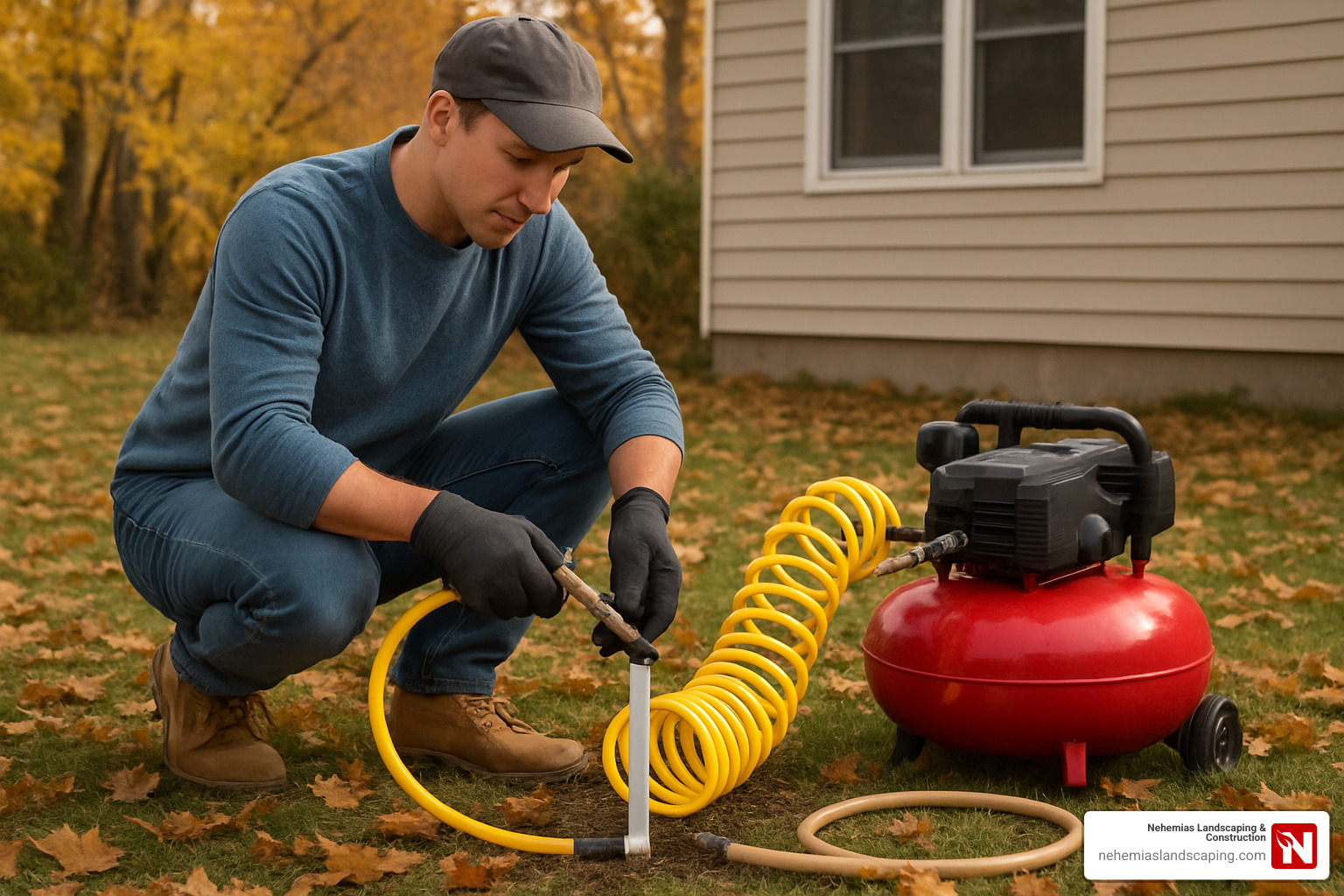
“The most expensive service call I make every spring is to homes that skipped winterization,” shares a local irrigation professional. “Replacing cracked valves and split pipes costs ten times more than proper winterization.”
Don’t forget to store portable timers indoors and insulate exposed components like backflow preventers. A small investment in pipe insulation and insulation tape can prevent costly repairs.
For systems with self-draining features like the Rain Bird 32ETI, the process is simpler, but verification remains important. As one manufacturer notes: “The system is self-draining to avoid freeze damage in colder months.”
At Nehemias Landscaping & Construction, we’ve seen how proper maintenance extends system life and improves performance. Our Sprinkler Repair services can help address any issues you can’t handle yourself, ensuring your landscape stays beautiful year-round.
A well-maintained lawn watering system isn’t just about convenience—it’s about protecting your investment and ensuring your landscape receives exactly the care it needs to thrive in our unique Essex County climate.
Costs, Warranties & Professional Help
Understanding the financial aspects of lawn watering systems helps you make informed decisions about installation and upgrades:
System Costs
The cost of a lawn watering system varies widely based on:
– System type and complexity
– Yard size and shape
– Soil conditions
– Local labor rates
– Quality of components
Average Cost Ranges (based on internet data, not actual costs for Nehemias Landscaping & Construction):
DIY Hose-Based Systems:
– Basic oscillating sprinklers: $25-$75
– Multi-zone hose timers: $50-$150
– Quick-connect systems: $100-$300
– Portable PVC systems: $70-$200
DIY In-Ground Kits:
– Small yard kits (up to 3,000 sq ft): $150-$500
– Medium yard kits (3,000-7,000 sq ft): $500-$1,200
– Smart controller upgrade: $150-$350
Professional Installation:
– Small yards (up to 2,500 sq ft): $1,500-$4,500
– Medium yards (2,500-10,000 sq ft): $3,000-$9,000
– Large properties: $6,000-$18,000+
Additional Costs:
– Backflow preventer installation: $150-$450
– Smart controller upgrade: $200-$600 installed
– Drip zone conversion: $300-$900 per zone
– Annual maintenance contract: $100-$600
One Ipswich homeowner shared: “I installed a Rain Bird system myself for about $400, while quotes from contractors were $2,800-$3,500. It took a weekend of work, but the savings were substantial.”
Warranties & Service Agreements
Most professional lawn watering system installations include warranties:
– Equipment warranties: Typically 1-5 years, depending on component quality
– Installation warranty: Often 1-2 years covering workmanship
– Extended service plans: Available for annual maintenance and priority service
When considering DIY installation, note that some manufacturers offer limited warranties that may be voided by improper installation. Professional installation often includes more comprehensive warranty coverage.
When to Call a Pro
While many homeowners successfully install their own lawn watering systems, certain situations warrant professional help:
Complex Landscapes: Properties with significant elevation changes, multiple distinct areas, or complex plantings benefit from professional design.
High-Pressure Systems: If your water pressure exceeds 80 psi, you’ll need pressure regulation to prevent damage to irrigation components.
Pump Integration: Systems drawing from wells, ponds, or rainwater harvesting systems require specialized knowledge.
Hardscape Crossings: Running pipes under driveways, walkways, or patios often requires specialized equipment.
Backflow Prevention: Many municipalities require certified installation of backflow preventers.
“For complex systems, the expertise of a professional often pays for itself in water savings and reduced repairs,” advises a contractor from Lynn. “They can optimize zone layout, head placement, and scheduling in ways DIYers might miss.”
At Nehemias Landscaping & Construction, we understand Essex County’s unique landscape challenges and can design systems that account for local soil conditions, municipal regulations, and seasonal changes.
Expanding or Modifying Your System
As your landscape evolves, your lawn watering system may need modifications:
Adding Zones: Expanding your system to cover new planting areas or lawn sections.
Converting to Drip: Transitioning spray zones to more efficient drip irrigation in garden beds.
Integrating Smart Technology: Upgrading conventional controllers to weather-responsive smart systems.
Incorporating Sensors: Adding soil moisture sensors, flow meters, or rain sensors to improve efficiency.
One Manchester-by-the-Sea resident told us: “We started with a basic system for our lawn, then added drip irrigation when we put in raised vegetable beds. Each upgrade made the system more efficient and our landscape healthier.”
When expanding your system, ensure your water supply can handle the additional demand. Most residential systems are designed for specific flow rates, and exceeding them can reduce performance.
Frequently Asked Questions about Lawn Watering Systems
How often should I water my lawn?
Figuring out the perfect watering schedule for your Massachusetts lawn doesn’t have to be complicated. Think of your grass like any other living thing – it needs just the right amount of water to thrive, not too much and not too little.
If you have sandy soil (common in parts of Essex County), you’ll need to water more frequently since sand drains quickly. Clay soil, on the other hand, holds moisture longer, so you can space out your watering sessions. The cool-season grasses we typically grow in Massachusetts generally need about 1-1.5 inches of water each week, including rainfall.
“Watering deeply but less frequently trains your grass to develop deeper roots, making it more drought-resistant,” explains a lawn care specialist. “Most Essex County lawns do well with 20-30 minutes of watering 2-3 times weekly during summer.”
The early morning hours (between 4-10 AM) are ideal for running your lawn watering system. This timing reduces water loss from evaporation and gives grass blades time to dry before evening, which helps prevent fungal diseases. Plus, many towns in our area restrict watering to these hours during summer months anyway.
Remember to adjust your schedule based on recent rainfall – your smart controller can handle this automatically, or you can manually skip sessions after a good rain. Always check your town’s water restrictions too, as many Massachusetts municipalities limit outdoor watering during summer.
What water pressure and flow do I need?
Your home’s water pressure and flow rate are the heartbeat of your lawn watering system. Without adequate pressure and flow, even the best-designed system will underperform.
Most residential irrigation systems need at least 30-40 psi (pounds per square inch) to function properly, with an ideal range between 40-65 psi. In terms of water flow, you’ll typically need a minimum of 6-10 gallons per minute (GPM) to operate a zone of sprinklers effectively.
Testing your home’s metrics is simple. For pressure, attach an inexpensive gauge (available at any hardware store) to your outdoor spigot. To check flow rate, time how long it takes to fill a 5-gallon bucket from your hose – divide 5 by the number of minutes it took, and you’ll have your GPM.
If your water pressure exceeds 80 psi (which happens in some Essex County neighborhoods), you’ll need to install a pressure regulator to protect your irrigation components from damage. Conversely, if your pressure falls below 30 psi, look for specially designed low-pressure sprinkler heads or consider installing a booster pump.
The popular Rain Bird 32ETI system, for example, “requires a minimum water flow of 6 gallons per minute (GPM) and operates best at a water pressure of 40-75 psi.” Most manufacturer specifications will clearly state these requirements to help you choose the right components.
Can I install a lawn watering system myself?
Many of our neighbors across Essex County have successfully installed their own lawn watering systems, often saving thousands of dollars in the process. Whether DIY is right for you depends on several factors.
You might be a good candidate for DIY installation if you have a small to medium yard with relatively flat terrain, possess basic plumbing and electrical skills, and can dedicate several weekends to the project. Many manufacturers now offer homeowner-friendly kits with clear instructions. As one product description notes: “The first professional-grade Rain Bird sprinkler system designed for homeowner installation.”
A Rowley homeowner shared his experience with us: “I had quotes ranging from $3,500 to $5,000 for professional installation. I did it myself for under $1,000 with a kit and some YouTube tutorials. It took two weekends, but the savings were worth it.”
Professional installation might be the better choice if your property is large or has complex features like significant elevation changes, multiple landscaped areas, or hardscaped features that pipes need to cross under. Local code requirements for backflow prevention devices might also require certified installation in some towns.
The time investment for DIY installation is substantial – typically 2-4 weekends for a complete system, depending on your yard size and complexity. You’ll need to research, plan thoroughly, and possibly rent equipment like a trencher to make the job more manageable.
Whether you choose DIY or professional installation, taking the time to understand your lawn watering system will help you maintain it properly for years to come, ensuring your Essex County landscape stays lush and healthy through our sometimes challenging New England seasons.
Conclusion
A well-designed lawn watering system is an investment that pays dividends in time savings, water conservation, and landscape health. Whether you’re considering a simple hose-end setup or a sophisticated smart system, today’s options fit virtually any budget, property size, and comfort level with technology.
For Essex County homeowners, finding the right irrigation solution means balancing efficient water use with the unique demands of our New England climate and soil conditions. The freezing winters and occasionally dry summers here require thoughtful system design and seasonal maintenance.
Water conservation isn’t just environmentally responsible—it makes financial sense too. Modern irrigation technology has come a long way, with smart controllers, efficient sprinkler heads, and thoughtful scheduling capable of reducing water consumption by 20-50% compared to manual methods. As one Ipswich homeowner told us, “My water bill dropped by almost a third after upgrading to a weather-responsive system.”
Many homeowners find success in starting with a basic setup and gradually expanding or upgrading components as their landscape evolves and their budget allows. This approach lets you spread the investment over time while gaining experience with your system’s operation.
The satisfaction of a properly watered landscape goes beyond aesthetics. There’s real peace of mind in knowing your plants are receiving precisely what they need—not too much, not too little—even when you’re away from home. As a Danvers resident shared, “I used to worry about my garden when we went on vacation. Now I can check my irrigation app from anywhere and know everything’s taken care of.”
At Nehemias Landscaping & Construction, we’re committed to helping Essex County residents achieve beautiful, sustainable landscapes through properly designed and installed irrigation systems. Our team understands local conditions and regulations, ensuring your system provides optimal performance while complying with municipal water restrictions.
Whether you’re considering a new installation or upgrading an existing system, our experienced professionals can provide guidance custom to your specific property and needs. We take pride in creating solutions that save water, time, and money while enhancing your outdoor living space.
For more information about complete irrigation systems and how they can improve your property, visit our irrigation systems page or contact us for a consultation.
With the right lawn watering system in place, you can enjoy a lush, healthy landscape while conserving water and freeing up your time for other activities. That’s truly keeping it green in every sense of the phrase.