
Automatic Sprinkler System: Top 10 Best in 2024
Understanding Automatic Sprinkler Systems: Types and Benefits
An automatic sprinkler system can transform your landscaping routine, keeping your lawn healthy while freeing you from daily watering chores. If you’re looking to buy a system today, here’s the quick answer you need:
Best Automatic Sprinkler Systems at a Glance:
| System | Best For | Average Cost |
|---|---|---|
| Rachio 3 Smart Controller | Smart features & water saving | $150 – $450 |
| Rain Bird 32ETI | Easy DIY installation | $130 – $400 |
| Hunter Industries PGP Rotor | Large areas and durability | $15 – $50 per head |
(Note: Prices above are average online estimates and not specific costs from Nehemias Landscaping & Construction.)
Many suburban homeowners spend hours each week dragging hoses around their yards, struggling to water evenly. Adrian Sanchez from Sprinkler Warehouse captures this frustration perfectly:
“I hate watering my yard and did not want to drop thousands on a permanent sprinkler system.”
Automatic sprinkler systems tackle this exact problem. They deliver water efficiently, adjust for rain and weather, and keep grass consistently green. Even better, modern sprinkler systems can reduce your outdoor water waste by up to 50%.
This guide will break down the best options on the market, so you’ll find a system that fits your lawn’s needs without breaking your budget.
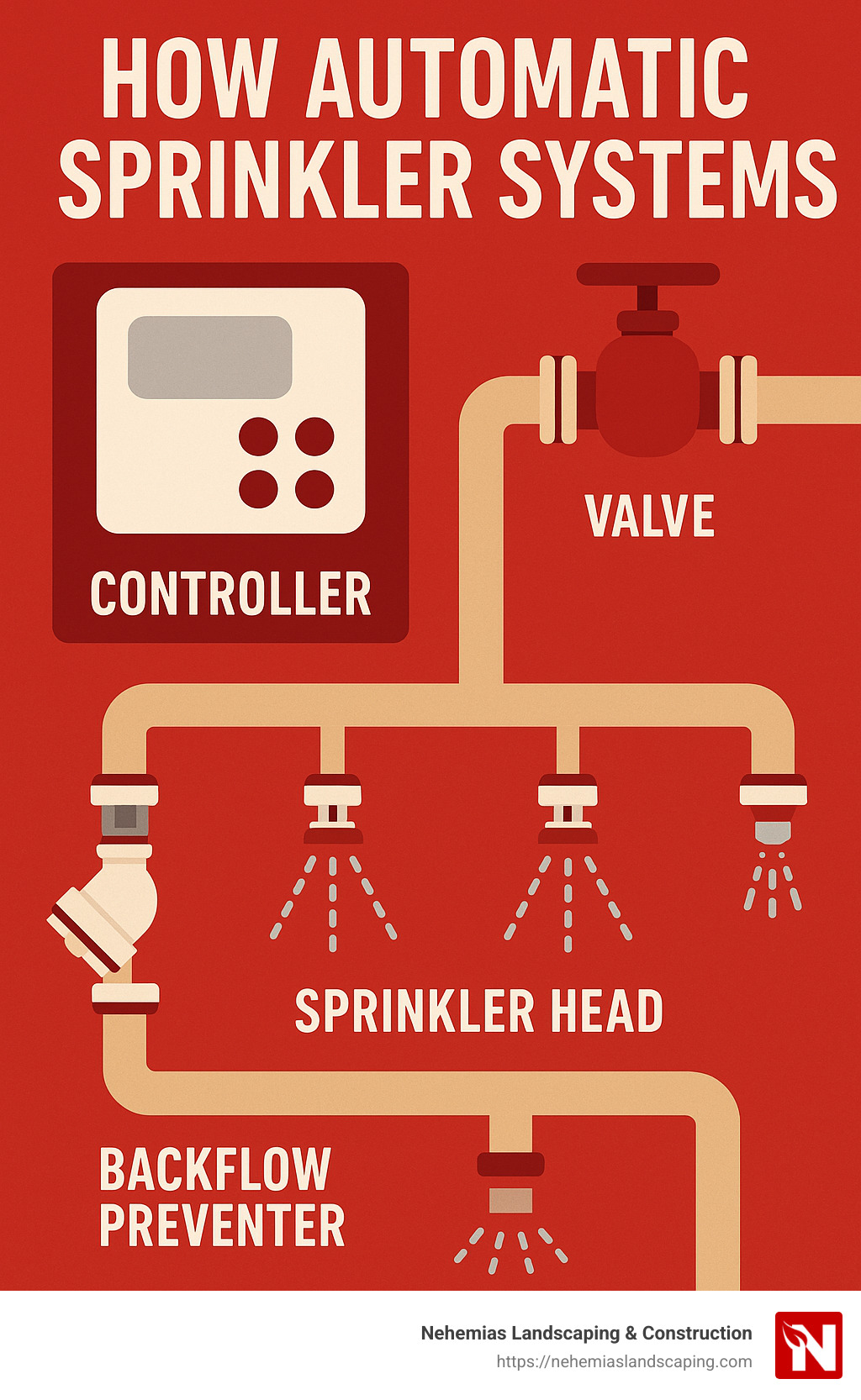
Similar topics to automatic sprinkler system:
– Irrigation Systems Installation
– irrigation system installation
– sprinkler repair
An automatic sprinkler system is much more than a convenience—it’s a comprehensive solution for maintaining a healthy landscape while conserving water and time. At Nehemias Landscaping & Construction, we’ve seen how these systems transform properties across Essex County, Massachusetts.
The benefits of installing an automatic sprinkler system extend far beyond convenience:
- Water Efficiency: Smart systems can reduce water usage by 20-50% compared to manual watering
- Environmental Impact: Precision watering reduces runoff and water waste
- Convenience: Set schedules and forget about daily watering chores
- Property Value: Professional irrigation systems can increase home value by 5-10%
- Seasonal Adjustments: Modern systems automatically adapt to changing weather conditions
According to the EPA, “Up to 50 percent of the water we use outdoors is lost due to wind, evaporation, and runoff caused by inefficient irrigation methods and systems.” This striking statistic highlights why investing in an efficient automatic sprinkler system isn’t just good for your lawn—it’s good for the planet and your wallet.
There are four main types of automatic sprinkler systems used in residential and commercial settings:
- Wet Pipe Systems: The most common type, where pipes are always filled with water ready for immediate discharge when activated.
- Dry Pipe Systems: Pipes contain pressurized air or nitrogen that must be released before water flows—ideal for areas subject to freezing.
- Pre-Action Systems: Similar to dry pipe systems but require both a detection system trigger and sprinkler activation—providing double protection against accidental discharge.
- Deluge Systems: All sprinkler heads are open, and water is released simultaneously across an entire area when triggered—typically used in high-hazard commercial applications.
For most Essex County homeowners, a wet pipe system with smart controls offers the best combination of reliability, efficiency, and ease of use.
How Automatic Sprinkler System Components Work Together
An effective automatic sprinkler system operates as a synchronized network of components, each playing a vital role in delivering water efficiently to your landscape. Understanding these components helps you make informed decisions when purchasing or upgrading your system.
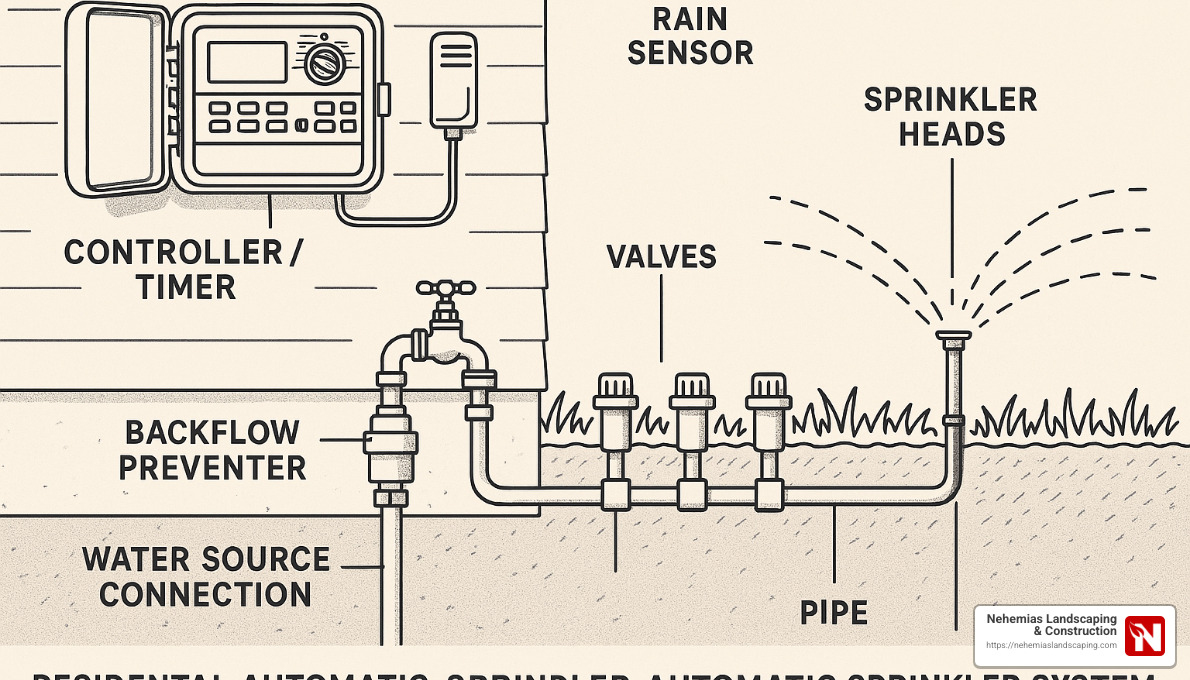
The five essential components of every automatic sprinkler system include:
- Controllers/Timers: The brain of your system, controllers determine when and how long each zone runs. Smart controllers like the Rachio 3 can automatically adjust watering schedules based on weather forecasts, saving water during rainy periods.
- Valves: These components control water flow to different zones in your yard. When the controller signals a valve to open, water flows to that specific area. Quality valves ensure reliable operation and prevent leaks.
- Pipes/Tubing: The network that carries water throughout your property. Most systems use either PVC (in warmer climates) or polyethylene tubing (in colder regions where freezing is a concern).
- Sprinkler Heads: These determine how water is distributed. Options include:
- Pop-up spray heads (for smaller areas up to 15 feet)
- Rotor heads (for larger areas from 15-50 feet)
- Drip emitters (for precise watering of plants and gardens)
- Bubblers (for trees and shrubs)
- Backflow Preventers: Critical safety devices that prevent irrigation water from flowing back into your drinking water supply.
As Adrian Sanchez from Sprinkler Warehouse explains: “The sprinkler system is broken down into five basic components with a clear flow sequence from the water source to the sprinkler heads.”
The system operates on a simple principle: The controller sends an electrical signal to open specific valves, allowing water to flow through the pipes to the designated sprinkler heads in that zone. When the programmed watering time ends, the valve closes, and the process may continue with other zones.
“The EPA estimates that up to 50 percent – yes, HALF – of the water we use outdoors is lost due to wind, evaporation, and runoff caused by inefficient irrigation methods and systems.”
Modern automatic sprinkler systems divide your yard into zones based on watering needs. This zoning is crucial because different areas of your landscape have different requirements:
– Sunny areas may need more water than shaded sections
– Plants and flowers require different watering patterns than lawns
– Slopes need special consideration to prevent runoff
At Nehemias Landscaping & Construction, we design zone systems that account for your property’s specific microclimates, soil conditions, and plant types to maximize efficiency and plant health.
Key Features to Look for in Quality Automatic Sprinkler Systems
When investing in an automatic sprinkler system, certain features separate average systems from excellent ones. Based on our experience installing systems throughout Essex County, here are the key features that deliver the best performance and value:
Smart Controllers: The technology in today’s controllers has revolutionized irrigation. Look for:
– Weather-based adjustments that automatically modify schedules based on local conditions
– EPA WaterSense certification, which indicates the controller meets water efficiency standards
– Mobile app control for adjusting your system from anywhere
– Integration with smart home systems (Alexa, Google Home)
Weather Sensors: These components dramatically improve efficiency:
– Rain sensors that prevent watering during or after rainfall
– Freeze sensors that protect your system in cold weather
– Wind sensors that pause irrigation during high winds to prevent drift
– Solar sensors that measure sunlight to adjust watering needs
Zone Customization: Quality systems allow for precise control:
– Multiple program capability for different landscape areas
– Individual zone run times based on specific watering needs
– Cycle and soak features that prevent runoff on slopes or clay soils
Water-Saving Technology: Look for features that maximize conservation:
– Flow sensors that detect leaks and excessive water use
– Pressure regulation that optimizes water delivery
– High-efficiency nozzles that reduce misting and evaporation
– Matched precipitation rates that ensure even coverage
As one satisfied Rachio user, Kim B., notes: “I love this controller. Easy to install. Software is intuitive and comprehensive.”
Durability: Components should withstand the demands of outdoor installation:
– UV-resistant materials that won’t degrade in sunlight
– Corrosion-resistant metals for valves and fittings
– Impact-resistant valve boxes and controller housings
– Commercial-grade solenoids in valves
Warranty: Protection for your investment:
– Look for controllers with 2+ year warranties
– Valve warranties of 2-5 years indicate quality construction
– Some premium components offer limited lifetime warranties
Ease of Installation: Whether DIY or professional:
– Clear instructions and support resources
– Compatibility with existing irrigation components
– Availability of replacement parts
Compatibility: Ensure your system can grow with your needs:
– Expandable controllers that allow adding zones later
– Standardized connections for future upgrades
– Support for add-on sensors and flow meters
At Nehemias Landscaping & Construction, we prioritize these features when recommending systems to our clients. The right combination of these elements ensures your automatic sprinkler system will provide years of reliable, efficient operation while maintaining a beautiful landscape.
Top Automatic Sprinkler System Controllers for 2025
The controller is the heart and brains of your automatic sprinkler system. Today’s advanced models go far beyond just turning water on and off—they can save you water, money, and time. Let’s explore some of the top sprinkler controllers available in 2025, each with their own unique strengths and ideal uses.

Rachio 3 Smart Sprinkler Controller
The Rachio 3 has quickly become the gold standard in smart sprinkler controllers, and it’s easy to see why. Available in 4, 8, and 16-zone configurations, this WiFi-connected powerhouse brings incredible convenience and efficiency to your landscape watering.
With Rachio’s Weather Intelligence Plus™ technology, your system automatically adjusts watering schedules based on real-time local weather forecasts. For example, if rain is expected tomorrow, it skips today’s watering—no more wasted water or soggy lawns! It’s also EPA WaterSense certified, meaning you may qualify for water-saving rebates from your local utility.
Installation is surprisingly straightforward, typically taking homeowners less than 30 minutes. Plus, the Rachio 3 integrates seamlessly with smart home assistants like Amazon Alexa, Google Assistant, and Apple HomeKit. Want to water your flower beds without getting off the couch? Just say the word!
Darwin B., a happy Rachio user, shared, “Installation was super easy. We travel a lot, so controlling our watering remotely has been ideal.” The Rachio app itself regularly earns rave reviews, with a 4.9 rating in the App Store—proof of its user-friendly design and powerful features.
Expect to spend between $150 to $450 based on zone count and retailer—remember, these are average prices from online sources, not specific Nehemias Landscaping & Construction prices.
Learn more about the Rachio 3 Smart Sprinkler Controller
Rain Bird ESP-TM2 Smart Controller
If you’re looking for smart features at a budget-friendly price, Rain Bird’s ESP-TM2 is a great choice. With options ranging from 4 to 12 zones, it combines traditional reliability with modern convenience.
Add Rain Bird’s optional WiFi module, and you can easily manage your watering schedule from anywhere via your smartphone. Its seasonal adjustment feature automatically modifies your watering times to match the changing seasons, and you can conveniently pause watering during rainy spells—saving water and money.
The ESP-TM2 typically costs around $120 to $350 depending on the model and features—again, these are average online estimates, not specific quotes from Nehemias Landscaping & Construction.
Hunter Hydrawise HC Controller
Homeowners with larger properties or complex landscapes often love Hunter’s Hydrawise HC controller. With options ranging from 6 to an impressive 54 zones, it’s ideal for yards with varied watering needs.
Hydrawise excels in predictive watering. It factors in temperature, rainfall probability, wind speed, and humidity to fine-tune your irrigation. Coupled with its ability to connect to flow meters for leak detection, it provides peace of mind by instantly alerting you to broken pipes or sprinkler heads—potentially avoiding costly damage.
The Hydrawise system runs around $180 to $600 based on configuration and features, reflecting typical online averages.
Orbit B-hyve XR Smart Controller
Orbit’s B-hyve XR controller is an ideal starting point if you want smart functionality without breaking the bank. Available in 4, 8, and 16-zone models, it adapts water schedules using WeatherSense technology based on your current local conditions.
This budget-friendly controller offers both WiFi and Bluetooth connectivity, making setup simple even if you’re less tech-savvy. Its weather-resistant design means you can install it indoors or outdoors without worry.
Pricing for the B-hyve typically ranges from $100 to $300, again based on online averages.
At Nehemias Landscaping & Construction, we’ve installed each of these controllers across Essex County, MA. We’re happy to help you decide which option best suits your landscape, lifestyle, and budget.
Smart Controllers vs. Traditional Timers
When choosing your controller, the first decision is whether to go smart or stick with a traditional timer. Both have their strengths, but modern smart controllers clearly pull ahead when it comes to saving water, convenience, and long-term value.
Smart controllers automatically adjust watering schedules based on real-time weather updates. Did it rain this morning? Your controller knows already and will skip today’s watering. Going away on vacation? No problem—you can control everything from your smartphone, even halfway across the country. Smart controllers can reduce water usage by 20-50%, translating into real financial savings on your water bills.
They also provide detailed water usage reports, leak detection alerts, and easy integration with voice-activated systems like Alexa and Google Assistant. As Nilton V., another Rachio user, humorously said, “It actually doesn’t water my lawn when it’s raining. Imagine that!”
On the other hand, traditional timers offer simplicity and lower initial cost. If you prefer the basics, they provide straightforward operation with easy-to-use dial controls, no apps required. They’re also less dependent on WiFi, meaning fewer potential tech headaches.
In the long run, smart controllers usually pay for themselves within one or two years due to their efficiency. The EPA notes that using smart controllers can save an average home up to 8,800 gallons of water annually—that’s both planet-friendly and wallet-friendly.
Here’s a quick price comparison based on average internet pricing:
| Controller Type | Initial Cost Range | Potential Water Savings | 5-Year Total Cost* |
|---|---|---|---|
| Traditional Timer | $30-$100 | Minimal | $500-$2,000 |
| Basic Smart Controller | $100-$200 | 20-30% | $300-$1,600 |
| Premium Smart Controller | $200-$600 | 30-50% | $200-$1,400 |
*Includes estimated water bills and initial purchase based on average usage.
At Nehemias Landscaping & Construction, we often suggest smart controllers due to their outstanding long-term value and convenience. But if you prefer simplicity or have a simpler yard, a traditional timer can still do the job well.
Best Features of Modern Automatic Sprinkler Controllers
Today’s sprinkler controllers offer remarkable features that were simply unimaginable a few years ago. Some of the best innovations include rain sensors that pause watering during rainy weather, and freeze protection that stops irrigation when temperatures drop near freezing—crucial here in Massachusetts.
Another standout feature is flow monitoring, which can detect broken sprinkler heads or pipe leaks, potentially saving thousands in water and repair costs. Hunter’s ICC2 controller, for example, automatically shuts down water flow if it senses any abnormalities.
Customizable schedules let you easily program multiple watering zones separately, ideal for yards with diverse landscaping. Plus, modern controllers integrate easily with voice assistants, so watering your lawn can be as easy as saying, “Hey Alexa, water the front yard.”
Detailed water usage reports help you understand exactly how much water you’re using, allowing you to identify opportunities for conservation. Plus, mobile alerts keep you informed of your system status, maintenance requirements, and potential issues from anywhere you have your phone.
At Nehemias Landscaping & Construction, we’ve found that homeowners who choose controllers with these advanced features enjoy healthier landscapes, reduced water bills, and fewer irrigation headaches overall. If you’re ready to upgrade your automatic sprinkler system with a smart controller, we’d love to help you make it happen.
Professional vs. DIY Automatic Sprinkler System Installation
Installing an automatic sprinkler system can truly transform your yard and simplify your life. But before you dive into this project, there’s one important question every homeowner must answer: Should you do it yourself, or hire a professional like our team here at Nehemias Landscaping & Construction?
Both options have their perks, so let’s take a closer look at each one to help you make the best decision for your home and lifestyle.
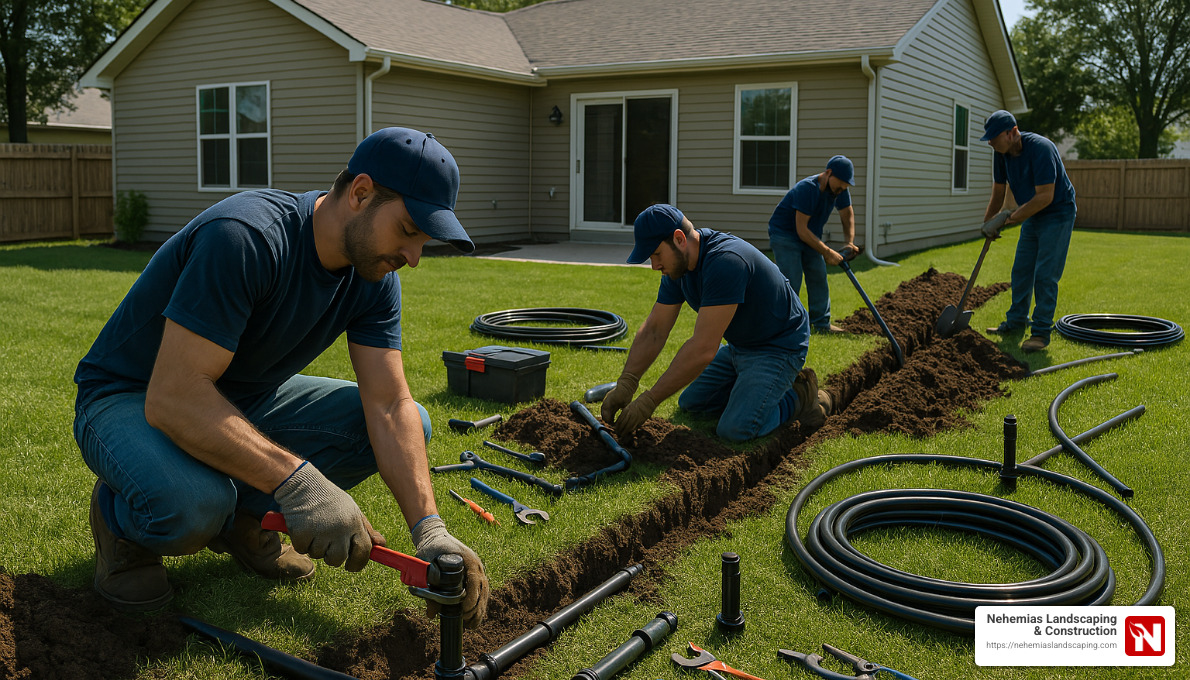
Professional Installation
Hiring a professional team offers several clear advantages. First and foremost is expertise and experience. Professional installers know exactly how to design a system that fits your property’s specific needs—addressing slopes, sun exposure, soil types, and your landscape’s particular watering requirements.
Professional installation is also a huge time saver. A project that might take you multiple weekends (and plenty of head-scratching) can typically be wrapped up by a skilled crew in just one or two days. Plus, pros come equipped with all the proper equipment, such as specialized trenchers and pipe-pulling machines, ensuring the job is done efficiently, neatly, and safely.
Another significant benefit is the assurance of warranty protection. A reputable professional installer will usually offer warranties on workmanship (typically 1-5 years) in addition to manufacturer warranties for the installed components. They’ll also handle any permit requirements and ensure your system meets local building codes, saving you from potential headaches down the line.
Of course, the primary consideration for professional installation is often cost. Average online estimates for professional installation range widely, from around $2,000 to $8,000 or more, depending on your yard’s complexity, size, number of zones required, and component quality. (Note: These are general industry averages, not specific pricing from Nehemias Landscaping & Construction.)
Additionally, during peak seasons like spring or summer, you may need to plan ahead and work around your installer’s availability.
DIY Installation
For those comfortable tackling home projects, taking the DIY route for your automatic sprinkler system installation has its own set of advantages. The most appealing reason is likely cost savings. Doing the work yourself can cut labor expenses by approximately 30-50%, although materials will generally remain similarly priced.
DIY installation also provides greater flexibility. You can plan and complete the project at your own pace without fitting into a professional’s schedule. Plus, there’s something truly satisfying about building a system with your own hands—you’ll gain detailed personal knowledge of your setup, which can make future maintenance and troubleshooting easier.
However, DIY installation does come with some important considerations. One big factor is the time investment. For an average-sized yard (around ¼ acre), expect to spend roughly 16 to 20 hours on installation, typically spread out over multiple weekends.
The job can be physically demanding, too, especially if you’re digging trenches by hand. You’ll also need a basic understanding of plumbing and electrical principles, since your system will involve connecting pipes, valves, and wiring up the controller.
In addition, you’ll need appropriate tools and equipment. You may need to rent or purchase items like trenchers, pipe cutters, and pressure gauges. And let’s not forget unexpected challenges—like finding rocky soil or tough tree roots—that can make trenching more difficult than anticipated.
According to a helpful guide from This Old House, a basic DIY sprinkler system with around 8-10 heads typically costs about $200-$400 in materials and usually takes 4-6 hours to install—though this is for those already comfortable with basic plumbing tasks.
Making the Right Choice
Choosing between professional or DIY installation depends on your individual situation, preferences, and skill set. Here’s a quick guide to help you decide:
Choose professional installation if your property includes complex features like slopes, multiple plant types, or unevenly shaped landscaping. It’s also the right choice if your time is limited, physical labor is a challenge, or if you’d simply prefer the peace of mind of professional design expertise and warranty coverage.
On the other hand, consider DIY installation if you have experience with plumbing or electrical projects, a relatively straightforward landscape, and enough free time and physical capability to handle the work yourself. It can also be a rewarding experience, especially if you enjoy learning new skills or if professional installation isn’t within your budget.
Whichever path you choose, our team at Nehemias Landscaping & Construction is here to support you. We offer professional automatic sprinkler system installation across Essex County, Massachusetts. If you’re leaning toward DIY but still have questions or need guidance, don’t hesitate to reach out—we’re always happy to help!
For more details on the cost of sprinkler system installations, check out our dedicated article on Irrigation System Installation Cost.
Maintaining Your Automatic Sprinkler System for Longevity
Let’s face it – that automatic sprinkler system you invested in wasn’t cheap. The good news? With some regular TLC, it can serve your landscape faithfully for 15-20 years or more. Neglect it, and you might be looking at problems within just a few seasons (and a much lighter wallet).
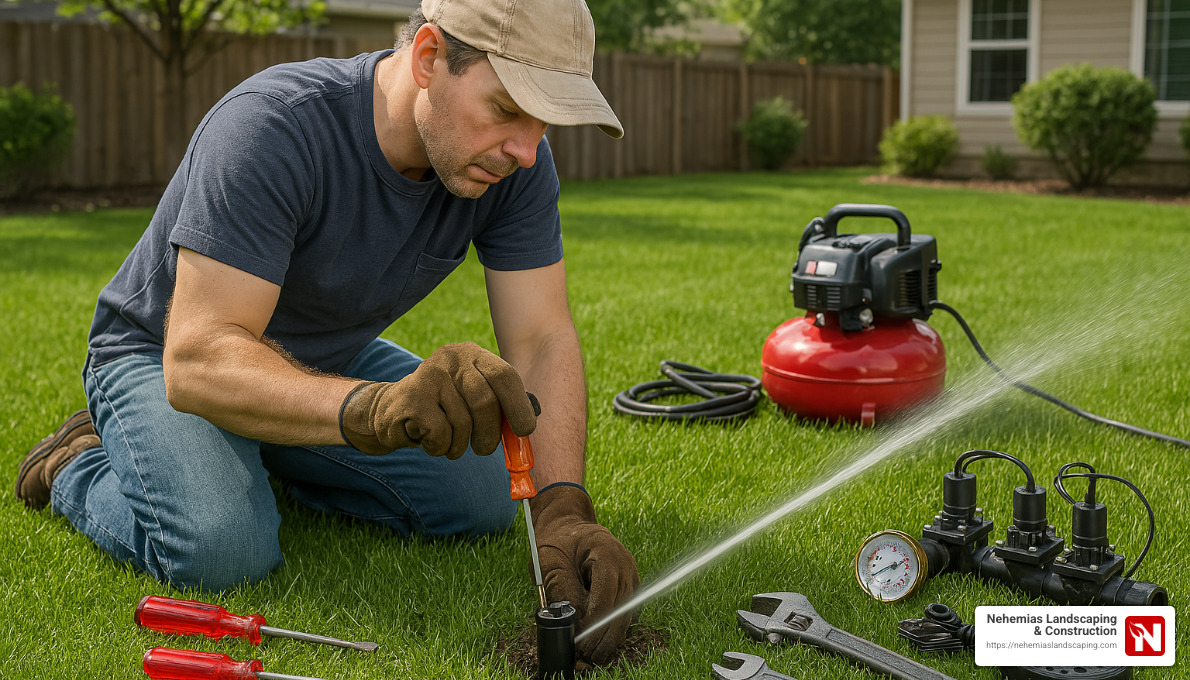
As we like to tell our Essex County customers, maintenance isn’t just about avoiding problems – it’s about ensuring your system waters efficiently while keeping your landscape lush and healthy. Let’s walk through what your system needs throughout the year.
Seasonal Maintenance Requirements
Spring Startup (March-April in Essex County)
After our New England winter retreats, your automatic sprinkler system needs a gentle wake-up call. Think of it as the irrigation equivalent of that first cup of morning coffee.
Start by inspecting everything before turning the water back on. Look for heads that might have been damaged by snow plows, valve boxes filled with winter debris, or pipes that may have cracked during freeze-thaw cycles. A quick visual inspection now can save gallons of wasted water (and a soggy yard) later.
When you’re ready to restore water, do it gradually. I’ve seen too many homeowners crank open the main valve quickly, causing a pressure surge that can crack fittings or pipes. Instead, open it slowly over 5-10 minutes, giving the system time to pressurize gently.
Next comes the moment of truth – testing each zone. Run every zone for 2-3 minutes, watching for proper head operation and coverage. Those geysers shooting skyward? They’re telling you something’s broken. Adjust spray patterns as needed so water reaches exactly where it should.
Don’t forget your controller! Replace those backup batteries, update your watering schedule for spring, and make sure all your sensors are connected and working. As one of our clients in Andover told us, “I forgot to check my rain sensor in spring and wondered why my lawn was turning into a swamp during April showers!”
Summer Adjustments (June-August)
Summer is peak season for your automatic sprinkler system, and a few monthly check-ups will keep everything running smoothly.
Look for clogged nozzles – they’re common as summer progresses. Those tiny grass clippings and soil particles can block water flow, creating dry spots. While you’re at it, check for heads that might have sunk or tilted after several watering cycles, and trim any grass that’s tall enough to block spray patterns.
Your controller likely needs adjustments as temperatures climb. During those scorching July days, you might need to increase watering times or add a second start time for especially thirsty areas. Remember – early morning watering (4-6 AM) minimizes evaporation, saving water and money.
Want to check how evenly your system is watering? Place a few tuna cans or similar containers across your lawn, run the system for a set time, and measure the water depth in each. Uneven results mean it’s time to adjust those heads.
Fall Preparation (September-October)
As temperatures cool and growth slows, your automatic sprinkler system needs to wind down too.
Gradually reduce both the frequency and duration of watering as plants require less moisture. If parts of your landscape go dormant, consider shutting off those zones completely – why water what’s not growing?
Fall is also the perfect time to inspect for leaks or issues you’ll want to address before next spring. Clean filters and pressure regulators, and make notes about any parts that might need replacing.
Winter Protection (November in Essex County)
Here in Essex County, winter protection isn’t optional – it’s essential for preventing costly damage to your automatic sprinkler system.
First, shut down the controller or set it to “rain” or “off” mode. Then turn off the main water supply to the irrigation system.
The most critical step is removing all water from the pipes and components. Most professionals use an air compressor to “blow out” the system, maintaining air pressure between 50-80 PSI to avoid damage while purging each zone until only mist appears from the heads. If your system has auto-drain valves, verify they’re functioning properly.
Don’t forget to protect exposed components like backflow preventers with insulation, and consider removing and storing rain sensors indoors if the manufacturer recommends it.
One of our clients in Beverly learned this lesson the hard way: “I skipped winterization one year to save a few bucks. That spring, I finded three broken pipes and a cracked valve – a $600 repair bill that made the winterization service look like a bargain!”
At Nehemias Landscaping & Construction, we offer comprehensive maintenance services, including spring startup and winterization, to ensure your automatic sprinkler system performs reliably year after year throughout Essex County.
Troubleshooting Common Automatic Sprinkler System Issues
Even well-maintained automatic sprinkler systems occasionally develop issues. When problems pop up, knowing what to look for can save you time and frustration.
Low Pressure Problems
Have you noticed weak spray, reduced coverage, or heads that barely pop up? Low pressure is often the culprit.
Sometimes the issue is simply having too many heads per zone. Each sprinkler head requires a certain amount of water pressure to function properly, and exceeding your system’s capacity leads to poor performance for all heads. You might need to split an overloaded zone or run fewer zones simultaneously.
Clogged filters are another common pressure-killer. Check filters at the valve or pressure regulator, and consider flushing the system to remove built-up debris. For ongoing protection, a mesh filter at the water source can prevent many clogs before they start.
Leaking pipes will definitely sap your pressure. Look for unusually wet areas or sunken spots in your yard – these often indicate an underground leak. Check connection points first, as they’re the most likely failure points.
Sometimes the issue isn’t your system at all. Municipal water pressure can fluctuate throughout the day, especially during peak usage times. Try testing your pressure at different times to identify patterns. If pressure is consistently low, a booster pump might be worth considering.
Clogged Sprinkler Heads
When you notice uneven spray patterns or reduced flow from specific heads, clogs are the likely problem.
Cleaning nozzles and filters is usually a quick fix. Turn off the system, lift the pop-up stem, and remove both the nozzle and internal filter. A thorough rinse with clean water often resolves the issue. For stubborn clogs, a soft toothbrush can help dislodge particles without damaging components.
If cleaning doesn’t solve the problem, the head might need replacement. Consider upgrading to heads with built-in check valves, which not only prevent debris infiltration but also eliminate that annoying low-point drainage when the system shuts off.
Broken Pipes or Fittings
Water bubbling from the ground or suddenly soggy areas are clear signs of underground leaks. These need prompt attention to prevent water waste and landscape damage.
To locate a break, run the affected zone and look for water pooling or bubbling. Once you’ve identified the general area, turn off the water and dig carefully around the spot. For PVC pipes, you’ll need to cut out the damaged section and install a repair coupling. Poly pipe repairs typically use insert fittings and clamps. Always allow glue to cure completely before pressurizing the system again.
To prevent future breaks, make sure pipes are installed at proper depth (6-12 inches in our region) and use protective sleeves under walkways and driveways where pressure points can cause damage.
Valve Malfunctions
When a zone won’t turn on or off, or you hear a chattering sound from the valve box, you’re dealing with valve issues.
Electrical problems are common culprits. Use a multimeter to check controller output and inspect wire connections for corrosion or breaks. A quick troubleshooting trick: swap the solenoid with one from a working valve to determine if that’s the failing component.
Diaphragm problems typically require disassembling the valve to clean or replace the diaphragm and seals. While you have it open, check for debris caught in the diaphragm or solenoid port – even tiny particles can prevent proper closure.
Controller Errors
When your system doesn’t run on schedule or your controller displays error codes, several issues might be at play.
First, check the basics – power supply, connections, and backup battery. Verify that the outlet has power and the GFCI hasn’t tripped. Programming errors are surprisingly common, so confirm that time, date, and AM/PM settings are correct. Double-check that start times and run times are properly set.
If basic checks don’t resolve the issue, try resetting the controller according to the manufacturer’s instructions. Look for signs of water damage or corrosion on the circuit board, which often require professional repair or replacement.
Uneven Coverage
Those brown spots in your otherwise green lawn? They’re usually a sign of uneven coverage.
Head alignment issues are the most common cause. Straighten tilted heads, adjust arc and radius settings, and ensure heads are at the proper height relative to your turf. A head that’s too low or too high won’t distribute water properly.
Pressure problems can also cause uneven coverage. Too much pressure creates misting that blows away in the slightest breeze, while too little pressure reduces throwing distance. Pressure-compensating heads can help maintain consistent spray patterns regardless of pressure fluctuations.
Sometimes the original design simply doesn’t provide adequate coverage. You might need to add heads to fill gaps or reposition existing heads for better overlap. Different nozzle types can also improve distribution in challenging areas.
At Nehemias Landscaping & Construction, our technicians are experts at diagnosing and resolving these common issues throughout Essex County. Many problems can be prevented through regular professional maintenance, which is often more cost-effective than emergency repairs.
Frequently Asked Questions about Automatic Sprinkler Systems
How much does an automatic sprinkler system cost to install?
Installing an automatic sprinkler system can vary quite a bit in price depending on several key factors, such as your property’s size, the number of zones needed, the type of components you choose, and whether you’re going the DIY route or hiring professionals.
For a general idea, here are typical cost ranges based on industry averages (these are online estimates, not Nehemias Landscaping & Construction prices):
A small yard (up to ¼ acre) usually costs between $1,500 and $10,000. Expect a basic setup on the lower end and a premium, smart system with professional installation at the higher end.
For a medium-sized yard (¼ to ½ acre), pricing typically ranges from $2,500 up to $15,000, depending on complexity and upgrades.
Larger properties (½ acre or more) can range significantly, from about $4,000 to $25,000 or even higher, reflecting additional components, zoning complexity, and premium features.
Several factors influence these costs:
- Zones and Sprinkler Heads: The more zones your lawn needs, the more valves, wiring, and heads required, increasing the overall installation and component costs.
- Controller Technology: Smart controllers like the popular Rachio 3 typically add between $100 and $500 to your cost but significantly boost efficiency and water savings.
- Soil and Terrain Conditions: Rocky, compacted, or steeply sloped grounds may require extra labor or special equipment.
- Extra Features: Add-ons such as rain sensors, weather integration, and flow monitors improve system performance and efficiency but also increase upfront costs.
- Water Source: Connecting to municipal water usually costs less compared to tapping private wells or adding pumps.
Whether you install the system yourself or hire professionals makes a big difference, too. A DIY installation typically reduces costs by 30–50%, with most homeowners spending around $500–$1,500 in materials alone. But keep in mind, DIY projects are time-consuming and require technical skills in plumbing and electrical setups.
An automatic sprinkler system is an investment that pays off in multiple ways. Not only can it boost your property value—often recovering 50–100% of its cost when selling—but it also saves money on your water bills. According to the EPA, a WaterSense-certified smart controller can reduce outdoor water usage by 15–30%, saving the average homeowner between $75 and $300 per year.
At Nehemias Landscaping & Construction, we take pride in providing clear, customized quotes custom specifically to your Essex County home’s needs and your budget—so you’ll know exactly what to expect before we ever begin work.
How do automatic sprinkler systems save water?
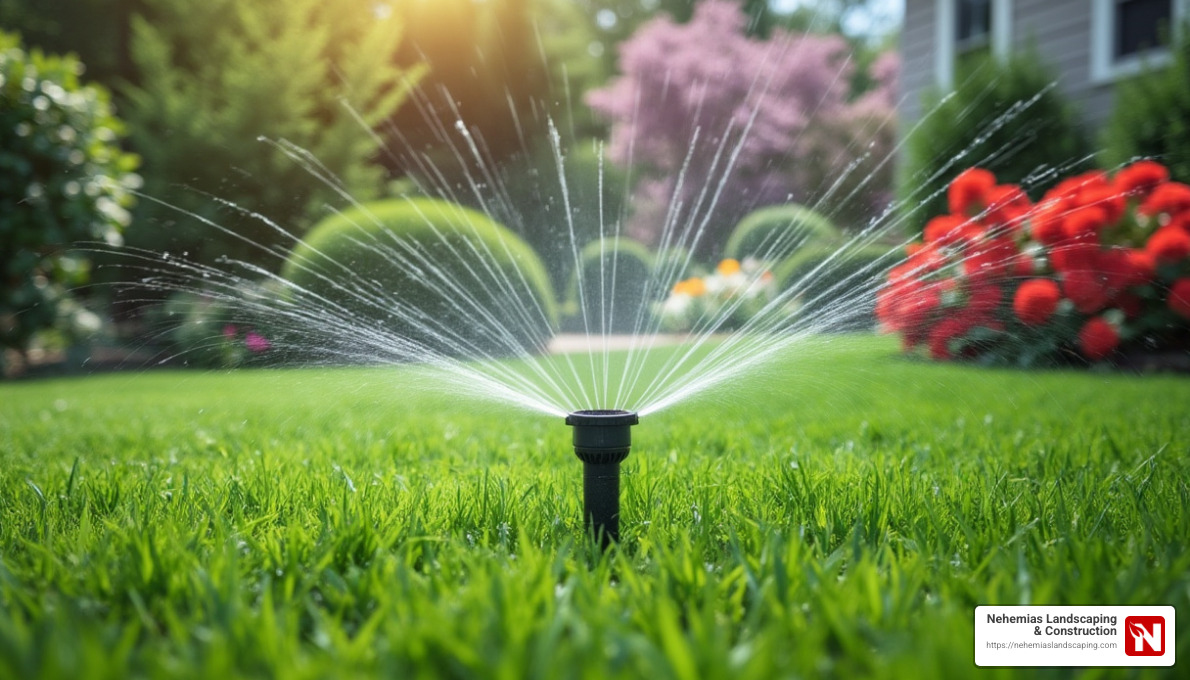
Today’s automatic sprinkler systems—especially smart systems—are designed to carefully manage water usage while keeping your lawn healthy and vibrant. Gone are the days of setting a timer and hoping for the best! Now, smart technology helps ensure your yard gets exactly the right amount of water—and not a drop more.
A major way smart sprinkler systems save water is through smart scheduling. These controllers automatically calculate how much water your lawn and plants actually need, based on soil type, sun exposure, slope, and other factors. That means your lawn gets watered deeply when needed, but never unnecessarily during cool or rainy periods.
Speaking of rain, smart systems incorporate rain sensors that detect recent rainfall and pause scheduled watering. These little gadgets are a huge water saver—typically reducing water use by around 15–20% each year. Plus, they pay for themselves quickly and spare you the embarrassment of sprinklers watering your lawn during a downpour (we’ve all seen it happen!).
Another great feature is the ability to set separate watering zones, customizing irrigation for lawns, flower beds, shrubs, or shady spots. This precise control prevents overwatering where it’s not needed and gives each area just the right amount of hydration.
Advanced controllers even use something called evapotranspiration (ET) calculations. These systems connect to local weather data and determine exactly how much water your lawn is losing each day through evaporation and plant use. Adjustments are automatic, resulting in 30–50% water savings compared to traditional timed watering.
Other technologies like soil moisture sensors directly measure moisture content in your soil, so if your lawn doesn’t need water, your system won’t run. Plus, modern sprinkler heads deliver water precisely to the target zone, minimizing misting and runoff.
These improvements add up to significant water savings. The EPA estimates typical households waste up to 50% of outdoor water due to inefficient irrigation. Switching to a WaterSense-certified smart sprinkler system can typically cut your outdoor water usage by at least 20–30%, saving thousands of gallons (and plenty of money!) each year.
At Nehemias Landscaping & Construction, we’re passionate about helping Essex County homeowners save water, lower their bills, and enjoy lush, healthy yards. We design systems with efficiency in mind, using the latest technologies to ensure every drop counts.
Can I install an automatic sprinkler system myself or should I hire a professional?
This question is common among homeowners who love DIY projects but also want professional results. The answer depends on your experience, comfort level, available time, and the complexity of your yard.
Installing an automatic sprinkler system on your own can be rewarding—just make sure you’re prepared for the challenge. You’ll need basic plumbing and electrical skills, comfort working with tools like pipe cutters and trenchers, and be ready for some physical labor. Expect to spend several weekends digging trenches, laying piping, installing valves, and connecting controllers.
You’ll also need to carefully plan zones to ensure even watering coverage, considering factors like soil type, slope, and sun exposure. Be ready to handle obstacles like rocks, roots, and unexpected challenges. It’s not uncommon for DIY projects to take longer than planned (you’ve been warned!).
And don’t forget permits! Many towns in Essex County require permits and inspections for irrigation installations, especially backflow preventers. This important safety step ensures your drinking water stays protected from irrigation contamination.
One potential downside of DIY installation is warranty limitations. Some manufacturers require professional installation to maintain full warranty coverage. Plus, without a professional’s knowledge, mistakes can cost more down the road if you need repairs.
Professional installation, offered by experienced teams like ours at Nehemias Landscaping & Construction, brings peace of mind. We handle the complexities of irrigation design, zoning, permitting, and trenching quickly and efficiently. Our professional installers use specialized equipment to minimize disruption to your yard, and we provide thorough testing, walk-throughs, and warranty coverage.
Many homeowners find the time savings alone worth going professional. As one satisfied homeowner said after installing a sprinkler system: “What would have taken me weeks of weekends was completed in two days with better coverage than I could’ve done myself.”
If you’re somewhere in the middle—handy but hesitant about tackling the whole project—consider a hybrid approach. Nehemias Landscaping & Construction can help you design your system, handle the more technical tasks (like main line connections and controller installation), and guide you through the simpler jobs you feel comfortable tackling yourself.
Whichever route you choose, your lawn and garden will thank you for the consistent watering an automatic sprinkler system provides. At Nehemias Landscaping & Construction, we’re always here to help make your landscaping dreams a reality—whether you’re a DIY enthusiast or prefer relaxing while we handle the heavy lifting.
Conclusion
A quality automatic sprinkler system is one of the smartest investments you can make for your Essex County property. It goes far beyond just freeing you from dragging hoses around (though that’s a pretty great perk!). In fact, a well-designed irrigation system offers substantial benefits for your landscape health, your wallet, and even the environment.
Let’s start with water conservation. Did you know the EPA estimates that up to half of outdoor water use gets wasted through inefficient watering methods? Today’s smart automatic sprinkler systems tackle this issue head-on, dramatically reducing water waste through features like rain sensors, weather-responsive controllers, and precision watering nozzles. Homeowners who switch to WaterSense-certified smart controllers can save thousands of gallons of water every year—good for the planet and your monthly bills. In fact, since 2014, Rachio users alone have collectively saved billions of gallons of water—a shining example of how smart irrigation technology makes a difference.
And let’s talk convenience! Installing an automatic sprinkler system means no more worrying about watering schedules or accidentally overwatering your prized flower beds. Modern systems are intuitive, automated—and even accessible from your smartphone. As one busy homeowner shared, “We travel a lot, so being able to control our watering remotely has been ideal.” Think of all the Saturday mornings you’ll get back!
But the benefits don’t stop there. Proper watering is essential for lawn and plant health. An efficient automatic sprinkler system provides consistent moisture at just the right levels, helping your grass develop deeper roots and making your plants stronger and more resistant to disease. A healthy, vibrant landscape doesn’t just look incredible—it boosts your home’s curb appeal and overall value. According to real estate experts, professionally installed irrigation systems can recover 50-100% of their cost when selling your home.
Recent advancements in irrigation technology have taken these systems to a whole new level. Smart controllers, intuitive apps, and integration with voice assistants like Alexa and Google Assistant make managing your landscape easier (and more fun!) than ever before. High-efficiency nozzles, leak detection sensors, and real-time water usage reports give you precise control over your system and clear insights into your water savings.
Now you might be wondering—should you attempt DIY installation or hire a pro like Nehemias Landscaping & Construction? DIY can save money upfront, but it’s often a more complicated, labor-intensive process than homeowners realize. Professional installation ensures that your system is perfectly designed and installed, custom specifically to your yard’s size, plant needs, sun exposure, and soil type. Our skilled team handles everything—from permits to trenching to fine-tuning your system for optimal performance. Trust us, we’ve seen it all: rocky soil, unexpected tree roots, weird yard shapes—we’ve steerd them all successfully, saving homeowners plenty of headaches.
Whether you’re installing your first automatic sprinkler system or upgrading an existing one, choosing the right setup is key. At Nehemias Landscaping & Construction, we’ve helped countless Essex County homeowners transform their outdoor spaces with beautiful, functional, and environmentally friendly irrigation systems. Our experienced professionals pride themselves on delivering exceptional craftsmanship at affordable prices, ensuring your yard stays lush for years to come.
Ready to ditch the hoses and transform your lawn with a smart, efficient, and hassle-free irrigation solution? Check out our Irrigation Systems page or contact us directly. Our friendly team at Nehemias Landscaping & Construction can’t wait to help you create the perfect automatic sprinkler system for your home.