
Paver patio design ideas: 10 Stunning Ways to Transform 2025
Transform Your Outdoor Space with Paver Patios
Paver patio design ideas are the foundation of any beautiful outdoor living space. Looking for inspiration? Here are the top paver patio designs homeowners are implementing today:
- Modern Grid – Large-format concrete pavers in running bond pattern
- Natural Flagstone – Irregular stone slabs with groundcover joints
- Classic Brick Herringbone – Timeless pattern ideal for high-traffic areas
- Mediterranean Cobblestone – Circular patterns with old-world charm
- Mixed-Material Mosaic – Combining various pavers for artistic effect
- Permeable Eco-Friendly – Open-grid systems with environmental benefits
- Fire Pit Focal Point – Radial paver layout centered around fire feature
- Outdoor Kitchen Base – Durable, stain-resistant pavers for entertaining
Today, 63% of new homes include patios, making them one of the most popular outdoor features in modern homes. It’s easy to see why – pavers offer extraordinary versatility in design while providing practical benefits that concrete slabs simply can’t match.
Unlike poured concrete that inevitably cracks, paver patios flex during freeze-thaw cycles, maintaining their integrity season after season. They’re also incredibly customizable, with options ranging from classic brick and natural stone to modern concrete pavers in virtually any color, shape, or pattern imaginable.
“Pavers are one of the most versatile materials out there,” notes one landscape designer. “They can suit virtually any architectural style and budget.”
Whether you’re creating an intimate retreat for morning coffee or an expansive entertainment space for summer barbecues, the right paver design transforms your outdoor living potential. The perfect patio balances aesthetics with functionality – complementing your home’s architecture while providing durable, low-maintenance outdoor space for years to come.
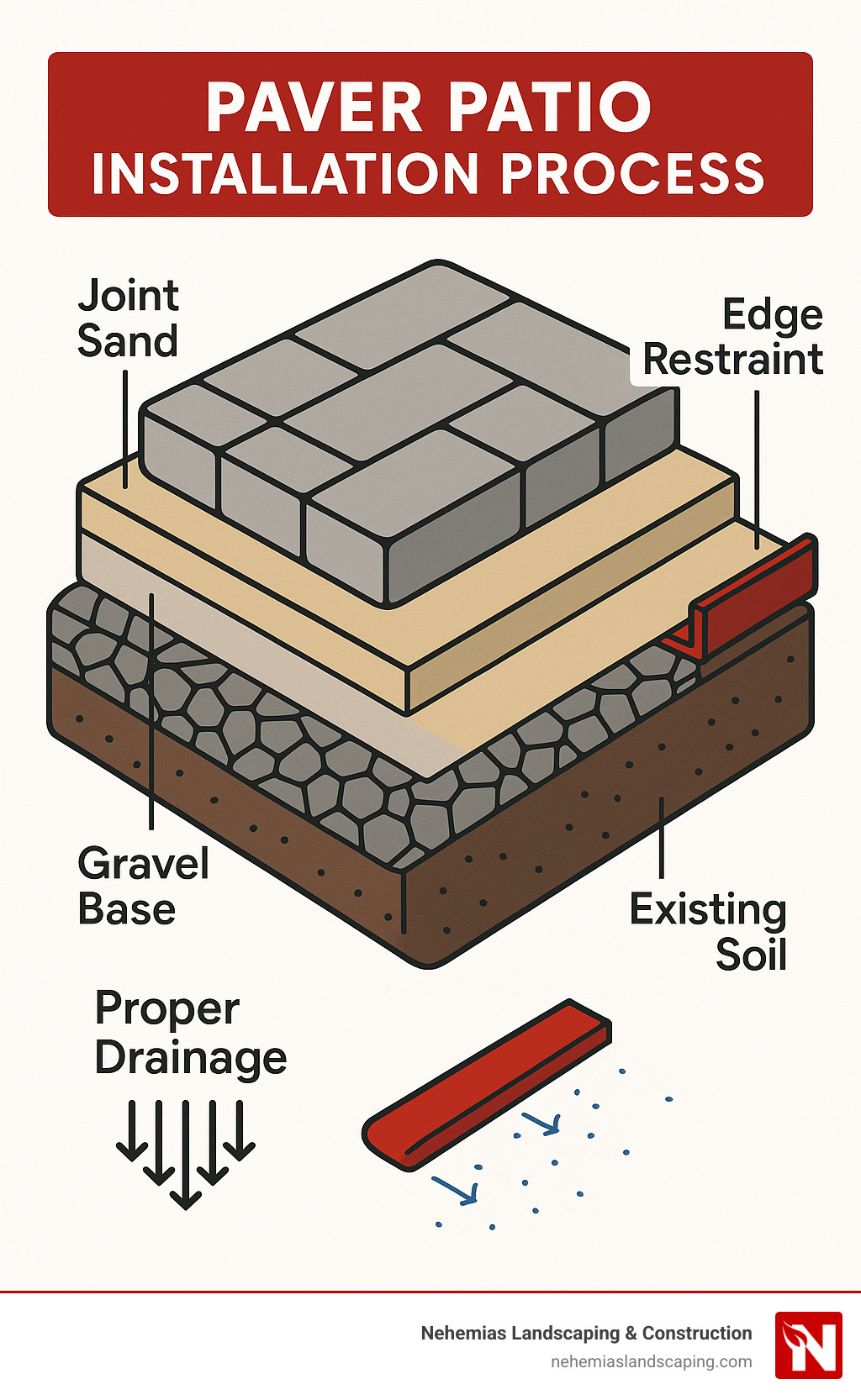
Simple guide to Paver patio design ideas terms:
– Backyard hardscaping ideas
– Patio and walkway ideas
– Hardscape maintenance services
Paver Patio Design Ideas at a Glance
There’s a reason why over 59,000 patio design photos featuring pavers appear on Houzz alone. Homeowners across Essex County and beyond are finding what we’ve known all along – paver patio design ideas offer the perfect blend of beauty and practicality that simply outshines traditional concrete slabs.
Why are pavers winning the popularity contest against poured concrete? The benefits speak for themselves. During our Massachusetts winters, pavers flex slightly during freeze-thaw cycles without cracking – a huge advantage for our Essex County clients who’ve dealt with the frustration of cracked concrete. When accidents happen (like dropping that heavy grill), replacing individual pavers is a breeze compared to jackhammering out an entire concrete slab.
Safety matters too. The natural texture of pavers provides excellent slip resistance even on those dewy New England mornings. And let’s talk design possibilities – from classic brick to sleek modern concrete pavers in practically any color imaginable, your outdoor space can truly reflect your personal style.
“When clients see the change pavers can bring to their outdoor space, their faces light up,” says our design team at Nehemias Landscaping & Construction. “We love guiding homeowners through the selection process to find that perfect match for their home’s character.”
| Material | Cost Range (per sq ft)* | Durability | Maintenance | Best For |
|---|---|---|---|---|
| Concrete Pavers | $8-24 | High | Low | Modern designs, budget-conscious projects |
| Brick | $14-30 | Very High | Low-Medium | Traditional homes, high-traffic areas |
| Natural Stone | $20-60+ | Exceptional | Medium | Luxury spaces, organic designs |
*Average costs based on internet data, not actual costs for Nehemias Landscaping & Construction
Whether you’re dreaming of a cozy corner for your morning coffee or planning the ultimate outdoor entertainment space, pavers provide the perfect foundation. Their versatility makes them ideal for projects of any size or style – something we’ve proven in countless Essex County backyards.
For a comprehensive guide to finding the perfect pavers for your specific needs, the Hardscaping 101 design guide offers excellent additional insights. Now, let’s explore some of the most inspiring paver patio design ideas that are changing ordinary backyards into extraordinary outdoor living spaces.
Modern Minimalist Grid
For homeowners with contemporary homes in Essex County, the modern minimalist grid design offers clean sophistication that complements today’s architecture. This style features large-format concrete pavers arranged in simple patterns that create a sleek, uncluttered look.
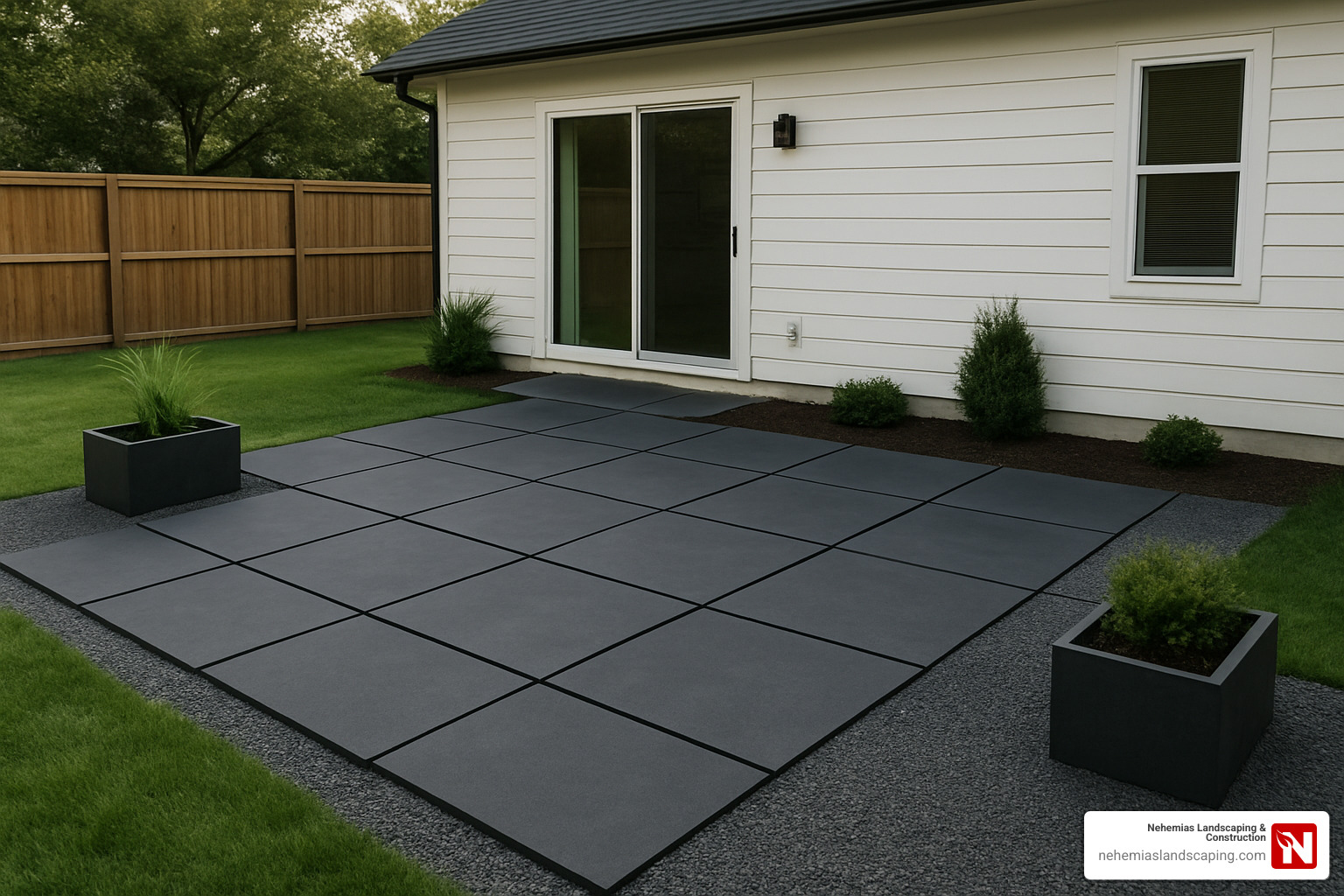
There’s something incredibly satisfying about the clean lines of a modern grid patio. When we install these at Nehemias Landscaping & Construction, our clients often tell us how the simple geometry brings a sense of calm to their outdoor spaces.
Large-format pavers are the stars of this design – typically 24″x24″ or larger concrete slabs that create a seamless surface with minimal interruption. The beauty lies in their simplicity. We often arrange them in running-bond patterns (like a brick wall) or stack-bond patterns (aligned in perfect rows) to create that geometric precision that modern homes call for.
The color palette usually stays refreshingly simple – think cool charcoal grays, soft concrete tones, or crisp ivory shades that won’t compete with your home’s architecture. As one designer perfectly put it, “A boldly geometric paver-and-gravel layout functions like an outdoor art installation.” This approach works wonderfully for homes in Marblehead or Swampscott, where those clean lines complement stunning ocean views.
What many of our busy clients in Beverly and Danvers appreciate most is the practicality behind the style. Those minimal joints between pavers mean fewer places for weeds to take hold, and the uniform surface makes furniture placement a breeze. For families juggling work and activities, this low-maintenance option delivers style without the weekend upkeep.
The modern grid design creates a neutral foundation that lets your outdoor furniture and landscaping shine. It’s like a gallery wall for your outdoor living – providing structure without stealing the show. The result is a harmonious extension of your indoor space that feels intentional and thoughtfully designed.
At Nehemias Landscaping & Construction, we’ve found this style works particularly well for clients who appreciate clean design that will stand the test of time, both in durability and aesthetics. If you’re drawn to contemporary architecture and uncluttered spaces, this paver patio design idea might be your perfect match.
Rustic Flagstone Retreat
For homeowners in Essex County who prefer a more natural, organic look, flagstone pavers create a rustic retreat that blends seamlessly with the landscape. This design approach feels right at home in communities like Hamilton, Ipswich, and Rowley, where traditional New England charm meets natural beauty.
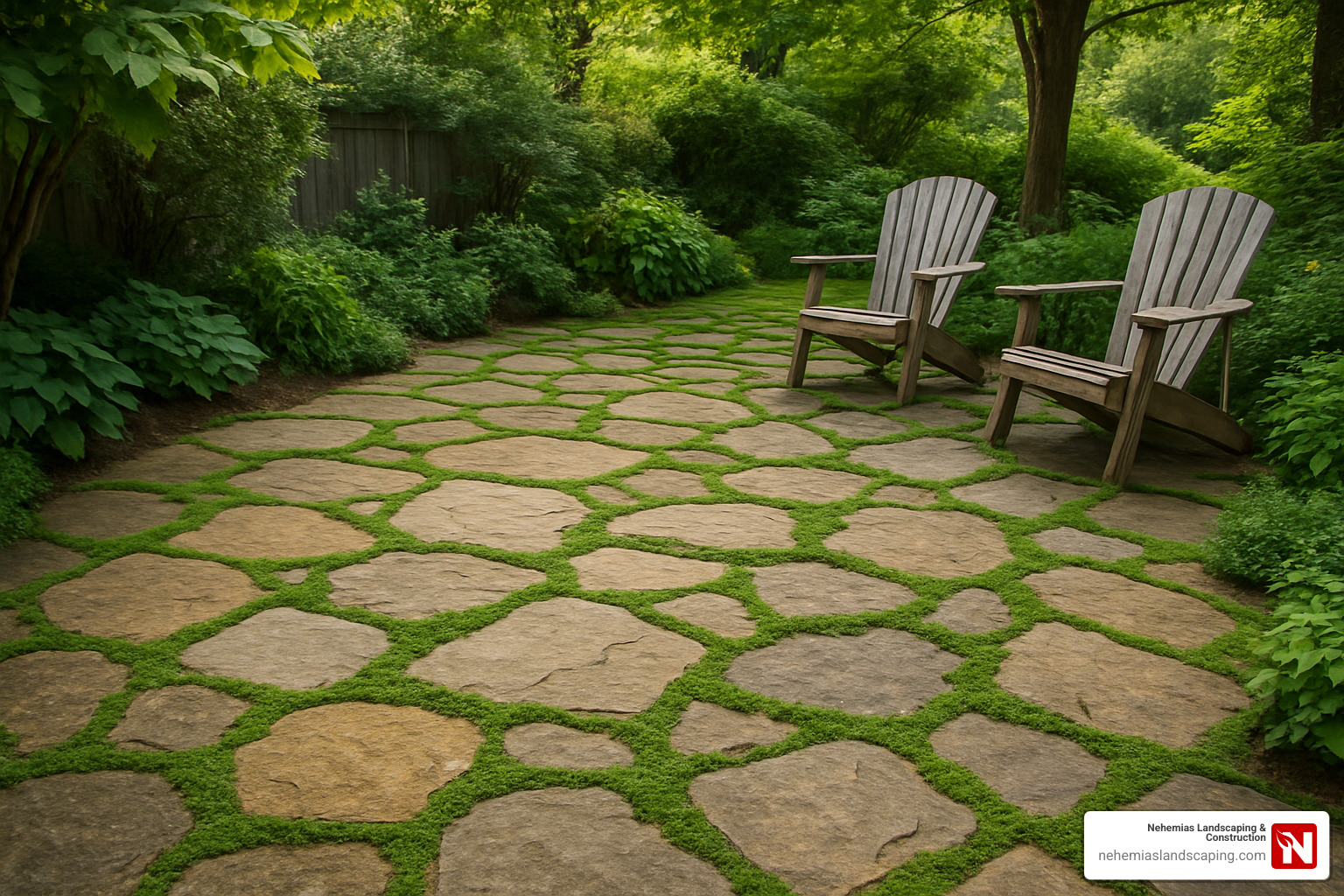
What makes flagstone patios so special? It’s all in the details. Unlike manufactured pavers, these natural stone slabs come with irregular shapes and varying thicknesses that create a one-of-a-kind appearance. The pieces fit together like a puzzle rather than following rigid patterns, giving your patio an organic layout that feels as though Mother Nature herself designed it.
“Combining formal raised bluestone patios with casual irregular slabs and groundcover creates seamless transitions,” notes one landscape architect we work with. This approach is perfect for creating a patio that feels like it’s always been part of your property.
One of our favorite features of flagstone patios is the opportunity for living joints. Instead of traditional sand or grout between stones, many of our clients opt for moss, thyme, or other low-growing groundcovers. These plants soften the hardscape edges and release wonderful aromas when you walk across them on warm summer evenings.
The earthy color palette of flagstone—with its blues, rusts, tans, and grays—provides a natural foundation that complements both your home and garden. Unlike manufactured products that can look artificial, these stones develop character over time, with subtle color shifts and gentle softening of edges that only improve their beauty.
For our clients in Georgetown or Groveland with historic homes, we often recommend this style to complement traditional architecture. The irregular edges and natural variations in the stone create a sense of history and permanence that newer materials simply can’t match.
Maintenance tip: While some homeowners accept the cottage garden feel of moss and groundcover between stones, others prefer a more manicured look. If you want the natural appearance without the maintenance, we can install polymeric sand in the joints to prevent weed growth while maintaining the rustic aesthetic.
A flagstone patio isn’t just a hardscape feature—it’s an invitation to slow down and connect with nature right in your own backyard. Whether you’re enjoying morning coffee or hosting an evening gathering, these patios create a timeless backdrop for life’s everyday moments.
Classic Brick Herringbone Terrace
There’s something undeniably charming about a brick patio laid in herringbone pattern. This design choice has graced neat homes for centuries, and continues to captivate homeowners today with its perfect blend of traditional appeal and practical durability.
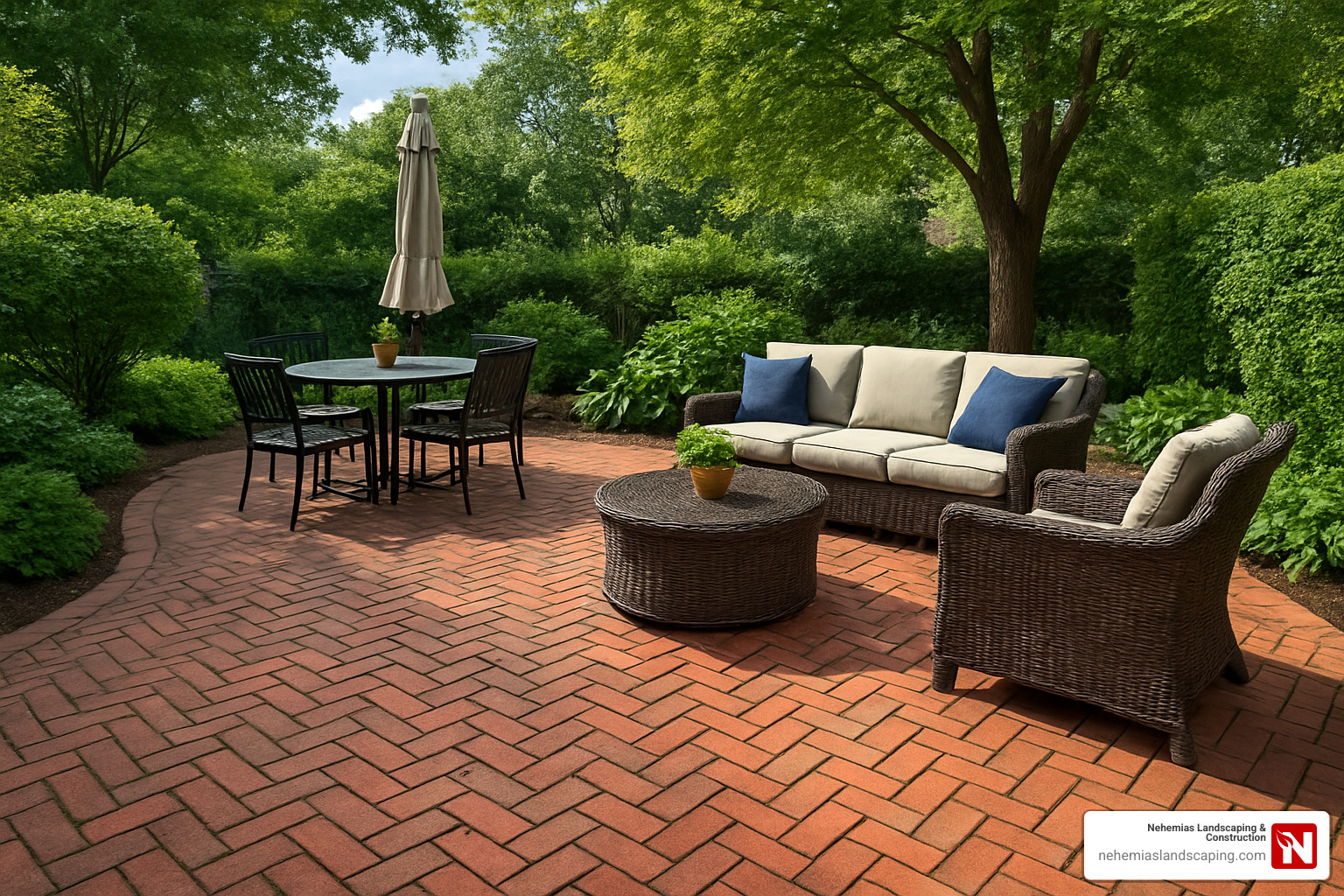
What makes a brick herringbone terrace so special? It starts with the material itself. Clay brick pavers are kiln-fired at high temperatures, giving them exceptional color retention and durability that synthetic materials simply can’t match. The warm reds, burgundies, and russets create a welcoming atmosphere that only gets better with age.
The magic really happens in the pattern itself. The herringbone design creates interlocking V-shaped angles that distribute weight beautifully across the entire surface. As our installation team often explains, “Herringbone isn’t just pretty to look at—it’s practically bulletproof against shifting, even under heavy furniture or when you’re constantly moving things around.”
For our Essex County clients with colonial or traditional homes, especially in historic areas like Salem or Marblehead, brick patios provide that perfect architectural connection to New England’s rich heritage. The pattern adds visual interest while the material tells a story that goes back generations.
“I can’t tell you how many compliments we get on our brick patio,” shared one of our Gloucester clients recently. “After 15 New England winters, it still looks fantastic—not a single repair needed. The colors have actually mellowed beautifully with time, like a good wine!”
While herringbone patterns do require more precision during installation (there’s more cutting involved than with simpler layouts), the investment pays dividends in both beauty and longevity. Our team at Nehemias Landscaping & Construction takes special care with these installations, ensuring perfect alignment that will maintain its crisp appearance for decades.
For high-traffic areas or spaces where you’ll be entertaining frequently, few paver patio design ideas can match the timeless charm and remarkable stability of a brick herringbone terrace. It’s the perfect foundation for creating outdoor memories that will last as long as the patio itself.
Mediterranean Cobblestone Courtyard
Imagine stepping into a sun-drenched plaza in southern Europe, where centuries-old stones tell stories beneath your feet. That’s the magic a Mediterranean cobblestone courtyard brings to your Essex County home. This enchanting design has captured the hearts of many homeowners in upscale coastal communities like Manchester-by-the-Sea and Rockport.
Cobblestone-style pavers create the foundation of this old-world design. Whether using authentic cobblestones or modern tumbled concrete pavers that mimic their appearance, the slightly irregular surfaces create a dance of light and shadow throughout the day. The aged, slightly weathered look instantly adds character that new installations typically take years to develop.
“Fan patterns are popular in historic European plazas, offering a classic look,” notes one design expert we work with regularly. “They make for particularly welcoming entry and exit points.”
The circular or radial patterns common in Mediterranean designs naturally draw the eye to a central focal point – perhaps a fountain, mosaic detail, or seating area. This natural flow creates conversation spaces that feel intimate and connected, perfect for gathering with family and friends on warm summer evenings.
Warm terracotta tones dominate the Paver patio design ideas in Mediterranean styles, often complemented by blues, golds, and earthy neutrals that echo the landscapes of Italy, Spain, and southern France. These warm hues seem to capture sunlight, creating a perpetually inviting atmosphere even on cooler New England days.
No Mediterranean courtyard would be complete without some form of overhead structure. A pergola draped with wisteria or grape vines provides welcome dappled shade while framing views and adding architectural interest. This vertical element helps define the space and creates a true outdoor room rather than simply a paved area.
What truly sets this style apart is how it accepts a sense of history and romance. When paired with Mediterranean plantings like lavender, rosemary, and potted olive trees, the effect transports you thousands of miles away while remaining firmly rooted in your Essex County backyard.
For clients seeking practical beauty, we often recommend tumbled concrete pavers that mimic cobblestones while providing a smoother walking surface. This thoughtful compromise gives you the Mediterranean aesthetic without sacrificing comfort or functionality – especially important for entertaining spaces where guests may wear dress shoes or heels.
At Nehemias Landscaping & Construction, we’ve created several stunning Mediterranean-inspired courtyards throughout Essex County. The timeless appeal of this design ensures your investment will remain beautiful and relevant for decades to come, aging gracefully like the European plazas that inspired it.
Mixed-Material Mosaic
For the artistically inclined homeowner looking to make a truly unique statement, the mixed-material mosaic patio design offers unlimited creative potential. This approach combines different paver materials, sizes, and colors to create a one-of-a-kind outdoor space that functions as both patio and art installation.
The key components of this design approach include:
- Multiple paver types: Combining concrete, brick, natural stone, and even river rock
- Bold geometric patterns: Creating visual interest through contrast and arrangement
- Recycled or repurposed materials: Incorporating salvaged bricks or stone for sustainability and character
- Artistic expression: Using the patio surface as a canvas for personal creativity
“Treating a paved area as an outdoor art installation by combining concrete pavers, pea gravel, lawn strips, and mulched foliage creates a dynamic visual experience,” observes one landscape designer who specializes in creative hardscaping.
This approach works particularly well for homes in creative communities like Lynn, Salem, or Peabody, where artistic expression is valued and encouraged. The mixed-material approach also allows for incorporating local materials with special significance, such as reclaimed brick from historic buildings or stone from local quarries.
One Essex County homeowner described their mixed-material patio as “a conversation starter that reflects our personality and ties together elements from throughout our property.” By incorporating stone that matches their home’s foundation, brick that complements their chimney, and river rock collected from a favorite beach, they created a deeply personal outdoor space.
At Nehemias Landscaping & Construction, we love helping clients express their creativity through these custom designs. While more complex to install than uniform patterns, the result is a truly unique patio that can’t be replicated and brings joy for years to come.
Permeable Eco-Friendly Haven
As environmental awareness grows, more Essex County homeowners are choosing permeable paver systems that balance beauty with ecological responsibility. These innovative designs reduce stormwater runoff, prevent erosion, and can even help filter pollutants before they enter the watershed.
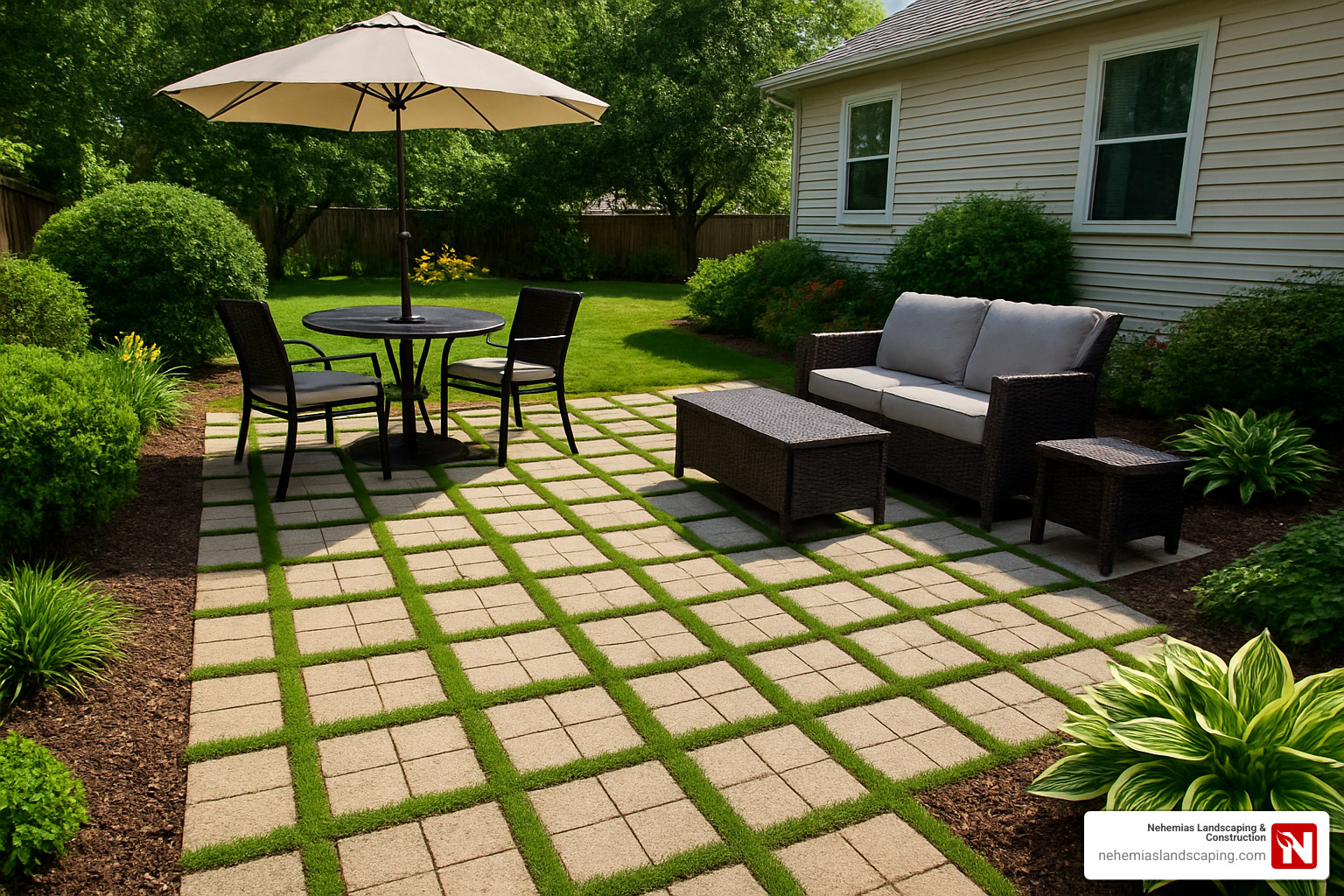
“Asking for holes in pavement may sound as logical as wishing for holes in your head,” jokes one environmental landscape architect we work with. “But using pervious surfaces is actually the smart and environmentally friendly thing to do.”
What makes these paver patio design ideas so special is their thoughtful engineering. The magic happens with open-grid pavers that allow rainwater to filter through joints or openings rather than rushing across surfaces. Beneath these visible elements lies a special base construction specifically engineered for water storage and gradual release into the soil below.
For homeowners in coastal communities like Rockport, Gloucester, or Manchester-by-the-Sea, these systems offer practical benefits beyond just being eco-friendly. By allowing water to infiltrate where it falls rather than running off, permeable pavers help prevent landscape erosion and reduce the risk of basement flooding during heavy New England downpours.
“My permeable patio has made a huge difference during those spring storms,” shares one of our Gloucester clients. “Before, my yard would turn into a mini lake. Now the water just disappears like magic.”
The aesthetic options have exploded in recent years too. You’re no longer limited to basic grid systems – today’s groundcover infill options range from decorative gravel to charming low-growing plants. Many of our clients choose aromatic herbs like thyme or Corsican mint instead of traditional grout. These living joints add color, texture, and even fragrance while supporting local pollinators.
For environmentally conscious homeowners throughout Essex County, we at Nehemias Landscaping & Construction can design permeable systems that satisfy both your aesthetic vision and ecological values. Some of our installations have even helped clients qualify for valuable LEED points in green building projects.
According to scientific research from the EPA, properly installed permeable pavement systems can reduce stormwater runoff volume by 70-90% compared to traditional surfaces. This reduced environmental impact is increasingly important as we experience more intense rainfall events in our region.
The cost for permeable paver systems typically ranges from $15-45 per square foot based on internet data (not actual costs for Nehemias Landscaping & Construction), with variables including paver type, site conditions, and design complexity. While sometimes slightly higher than conventional paving initially, many homeowners find the long-term environmental benefits and potential drainage problem prevention well worth the investment.
Whether you’re looking to solve existing drainage issues or simply want to be a better environmental steward, a permeable paver patio offers a beautiful solution that works with nature rather than against it.
Fire-Pit Gathering Hub
Few outdoor features create as much enjoyment as a well-designed fire pit patio. This design centers the paver layout around a fire feature, creating a natural gathering space for family and friends to enjoy year-round, especially during New England’s cool evenings.

The magic of a fire pit patio happens in the details. Most successful designs feature a radial paver layout that naturally draws people toward the warmth. These circular or semi-circular patterns create a sense of intimacy that rectangular patios simply can’t match. The flames become the heart of your outdoor space, with everything else revolving around this primal gathering point.
“My fire pit patio has become our family’s favorite spot,” shares one Essex County homeowner. “Even our teenage kids invite friends over to hang out there instead of being inside on their phones. That alone made every penny worth it!”
Built-in seating options take these spaces to the next level. Low walls constructed from matching pavers create permanent seating that doubles as a design element. These seating walls define the space while offering plenty of perching spots when extra guests arrive. For maximum comfort, consider topping these walls with smooth capstones slightly wider than the wall itself.
When planning your fire pit patio, material selection matters tremendously. Heat-resistant materials must be used in the immediate fire area to prevent cracking or discoloration. Our team at Nehemias Landscaping & Construction carefully selects pavers that can withstand temperature fluctuations, ensuring your investment remains beautiful for years to come.
“Radial patterns around fire pits create a natural focal point and soften the edges of square patios,” notes our design team. This approach works particularly well when connecting a rectangular patio extending from the home to a circular fire pit area, creating visual interest through the contrast of geometric forms.
The evening ambiance focus makes lighting crucial to the overall experience. Strategic placement of low-voltage landscape lighting along pathways and seating walls ensures safe navigation while enhancing the magical atmosphere. For coastal properties in Swampscott or Marblehead, where ocean breezes can be chilly, a thoughtfully designed fire pit extends outdoor enjoyment well into fall and early spring.
For our clients throughout Essex County, we help steer important considerations like fuel type (wood, natural gas, or propane), proper clearances from structures and plants, and local regulations regarding outdoor fires. Some towns have specific requirements about fire feature placement and usage, especially in densely populated areas.
“A backyard fire pit bordered by thick pavers and filled with crushed gravel topped by a wide fire table creates both beauty and functionality,” describes another satisfied client. This approach provides flexibility, allowing the fire feature to be the star while maintaining usable patio space for dining or lounging.
At Nehemias Landscaping & Construction, we believe a fire pit patio isn’t just another hardscape feature—it’s an investment in countless future memories with those you love most. From marshmallow roasting with grandkids to romantic evenings under the stars, these gathering spaces become the heart of outdoor living.
Outdoor Kitchen Entertainer
For the ultimate in outdoor entertaining, nothing compares to a paver patio designed specifically to support an outdoor kitchen. This specialized approach focuses on creating a durable, functional space for cooking and dining while maintaining aesthetic appeal.
The key components of an outdoor kitchen patio include:
- Interlocking pavers: Providing stability for heavy appliances and furniture
- Stain-resistant materials: Often sealed with specialized products to resist grease and food spills
- Integrated design elements: Grill islands, bar seating, and dining areas
- Task-specific lighting: Ensuring safety and functionality after dark
“Treat patios as extensions of indoor living space to improve usability and cohesion,” advises one outdoor living specialist. This approach is particularly important for outdoor kitchens, which function best when designed with the same attention to workflow and convenience as indoor cooking spaces.
For our clients in communities like Lynnfield, Middleton, or Danvers who love to entertain, an outdoor kitchen patio can become the heart of summer social life. The paver selection for these spaces requires special consideration – materials must be able to withstand not only foot traffic but also the weight of heavy appliances and the potential for food and grease stains.
One Essex County family shared: “Our outdoor kitchen patio has transformed how we entertain. The durable pavers have handled everything from dropped utensils to spilled marinades without staining, and the layout makes cooking and serving a joy rather than a chore.”
At Nehemias Landscaping & Construction, we recommend a comprehensive approach to outdoor kitchen patio design that includes:
- Planning for utilities (gas, water, electricity) before paver installation
- Creating distinct zones for preparation, cooking, and dining
- Selecting pavers that complement both your home’s architecture and your outdoor appliances
- Installing proper drainage to handle both rain and cleaning water
With thoughtful design and proper installation, an outdoor kitchen patio becomes more than just a cooking space – it’s a complete outdoor room that extends your home’s living area and creates memories for years to come.
Small-Space Geometric Escape
Limited square footage doesn’t mean limited design potential. For homeowners in more densely populated areas of Essex County like Lynn, Salem, or Peabody, small-space geometric paver patios can transform even the most compact yards into stylish outdoor retreats.
The distinctive features of small-space geometric patios include:
- Plank-style pavers: Creating visual length and movement
- Diagonal patterns: Making the space appear larger than it is
- Optical illusions: Using line and color to expand perceived space
- Integrated vertical elements: Container gardens and privacy screens
“Small pavers for compact spaces, larger pavers for expansive patios,” advises one design expert. This principle helps maintain visual proportion in limited areas.
The key to successful small patio design lies in maximizing both function and perception. Diagonal layouts create longer sight lines than square or rectangular patterns, instantly making a space feel larger. Similarly, laying plank-style pavers perpendicular to your home’s exterior wall draws the eye outward, suggesting greater depth.
For our clients with townhomes in Saugus or condominiums in Swampscott, we often recommend a minimalist approach that limits the paver palette to one or two colors. This creates a cleaner, less busy appearance that makes the space feel more open and cohesive.
One Essex County homeowner with a small urban lot shared: “By using a diagonal herringbone pattern with slim pavers, our tiny 10×12 patio feels twice as large. The design draws your eye to the corners rather than the edges, which completely transformed how we perceive the space.”
At Nehemias Landscaping & Construction, we specialize in creating these optical illusions through thoughtful paver selection and placement. Combined with strategic container plantings and vertical elements like trellises or water features, even the smallest patio can become a private paradise that feels surprisingly spacious.
Multi-Level Garden Oasis
For properties with sloping terrain, a multi-level paver patio transforms challenging topography into a stunning design feature. This approach is particularly popular in hillside communities throughout Essex County, where it maximizes usable outdoor space while creating visual interest.
The defining elements of multi-level paver patios include:
- Tiered design: Creating distinct “rooms” at different elevations
- Integrated retaining walls: Often built from materials that complement the pavers
- Connecting stairways: Designed for both function and visual appeal
- Thoughtful lighting: Highlighting level changes for safety and ambiance
“A raised patio landing secured by dry-laid stone walls with built-in planters rather than railings” creates both safety and beauty, notes one landscape architect. This approach eliminates the need for obtrusive railings while maintaining clear boundaries between levels.
For homeowners in areas like Georgetown, Groveland, or Rowley with natural slopes, multi-level patios offer practical advantages beyond aesthetics. By working with the existing topography rather than against it, these designs often require less excavation and fill, reducing both environmental impact and construction costs.
One Essex County client described their multi-level patio as “a journey through different outdoor experiences.” Their design incorporates a dining terrace near the house, stepping down to a conversation area centered around a fire pit, and finally to a quiet meditation space overlooking their property’s natural features.
At Nehemias Landscaping & Construction, we approach multi-level designs with careful attention to:
- Proper drainage between levels to prevent erosion and water damage
- Stable, engineered retaining walls that meet local building codes
- Comfortable stair dimensions for easy navigation between areas
- Strategic plantings that soften transitions and highlight level changes
The result is a dynamic outdoor living space that transforms a challenging site into a unique and beautiful landscape feature that adds both function and value to your property.
Materials, Colors & Patterns Essentials
Creating your dream paver patio begins with understanding the fundamental building blocks: materials, colors, and patterns. These three elements work together to determine not just how your patio looks, but how it performs and how much maintenance it will require.
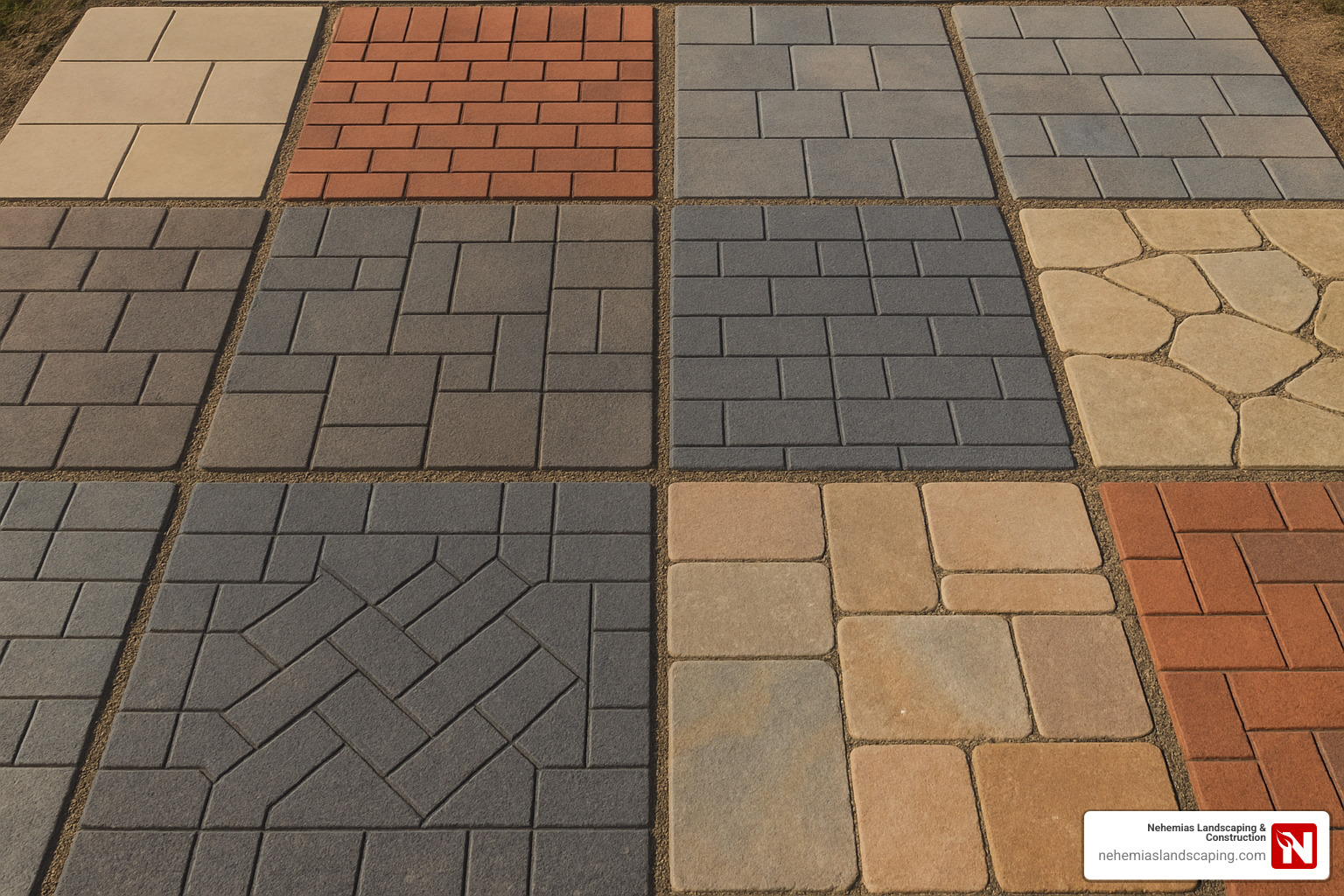
Paver patio design ideas: choosing the right material
The material you select for your paver patio design forms the foundation of your project, both literally and aesthetically. Think of it as choosing the perfect canvas for your outdoor masterpiece.
Concrete pavers offer the most versatility and budget-friendly options for Essex County homeowners. Modern manufacturing has come a long way – today’s concrete pavers can convincingly mimic the look of natural stone at a fraction of the cost. They come in countless shapes, sizes, and colors, making them perfect for nearly any design style from modern to traditional.
“I tell my clients to think of concrete pavers as the chameleons of hardscaping,” says our lead designer at Nehemias Landscaping & Construction. “They can transform to match almost any aesthetic while still being kind to your wallet.”
Brick pavers bring timeless charm and exceptional durability to your outdoor space. Made from kiln-fired clay, these rich-toned beauties maintain their color for decades, even under harsh New England sun and snow. Their warm reds and browns create a welcoming atmosphere that complements many architectural styles throughout Essex County.
One Georgetown homeowner shared: “Our brick patio looks even better now than when it was installed 15 years ago. The color has deepened beautifully with age.”
Natural stone – including bluestone, limestone, granite, and sandstone – offers best character and longevity. While typically the most expensive option, nothing rivals the unique personality and organic beauty of stone. Each piece tells its own geological story, creating a truly one-of-a-kind patio.
“Full-range stone color palettes are more interesting than single-tone pavers,” notes our design team. “The natural variations create depth and visual interest that manufactured products simply can’t match.”
Permeable pavers represent the eco-friendly choice, designed with wider joints or special shapes that allow water infiltration. For environmentally conscious homeowners in coastal communities like Rockport or Gloucester, these innovative options reduce runoff and help prevent flooding during heavy New England downpours.
When selecting materials for Massachusetts homes, we carefully consider climate resilience (our freeze-thaw cycles can be brutal), slip resistance (especially important for pool surrounds), maintenance requirements, and of course, your budget constraints.
Paver patio design ideas: creative pattern planning
The pattern you choose dramatically impacts your patio’s visual appeal and structural integrity. It’s like choosing the right hairstyle – the same pavers can look completely different depending on how they’re arranged!
Running bond patterns create a clean, contemporary look similar to a brick wall, with each paver offset from the ones below and above it. This simple yet neat arrangement works beautifully for modern homes in communities like Swampscott or Marblehead.
Herringbone arrangements set pavers in a distinctive V-shaped pattern that provides excellent interlocking strength. “For driveways or high-traffic patios, nothing beats herringbone for stability,” explains our installation team. “Those interlocking angles distribute weight beautifully and resist shifting.”
Basketweave patterns create a woven appearance that’s perfect for traditional or cottage-style homes. This classic look has adorned English and American gardens for centuries and brings timeless charm to historic properties throughout Essex County.
Circular or radial designs arrange pavers in concentric rings, creating natural focal points. “When we install fire pits, we almost always recommend a radial paver pattern surrounding it,” shares our design consultant. “It naturally draws people in and creates a sense of gathering.”
Random or ashlar patterns use multiple paver sizes in a non-repeating arrangement, creating a natural, organic appearance. This approach works beautifully with natural stone or stone-look concrete pavers.
For complex patterns, we use specialized software and 3D visualization tools to help our clients see exactly how their patio will look before installation begins. This eliminates guesswork and ensures the final result matches your vision.
“Incorporating a soldier course border to neatly finish the edge” is a design technique we frequently recommend. This row of pavers placed perpendicular to the main pattern creates a clean frame around your patio and can be done in a contrasting color for added visual interest.
Color selection ties everything together. Many landscape designers agree the best approach is matching paver colors to your home’s roof, creating a harmonious connection between your home and hardscape. For a more subtle look, select colors that complement your home’s exterior or pick up accent hues from your existing landscape elements.
At Nehemias Landscaping & Construction, we offer a friendly, no-pressure consultation process to help you steer these choices. Our goal is ensuring your paver patio not only looks stunning but also functions perfectly for your specific needs and New England environment. Learn more about our approach to Patio Design and Build on our website.
Planning, Installation & Budget Tips
Turning your paver patio dreams into reality requires thoughtful planning, quality installation, and realistic budget expectations. At Nehemias Landscaping & Construction, we’ve guided countless Essex County homeowners through this process, and we’re happy to share some insider tips to help your project succeed.
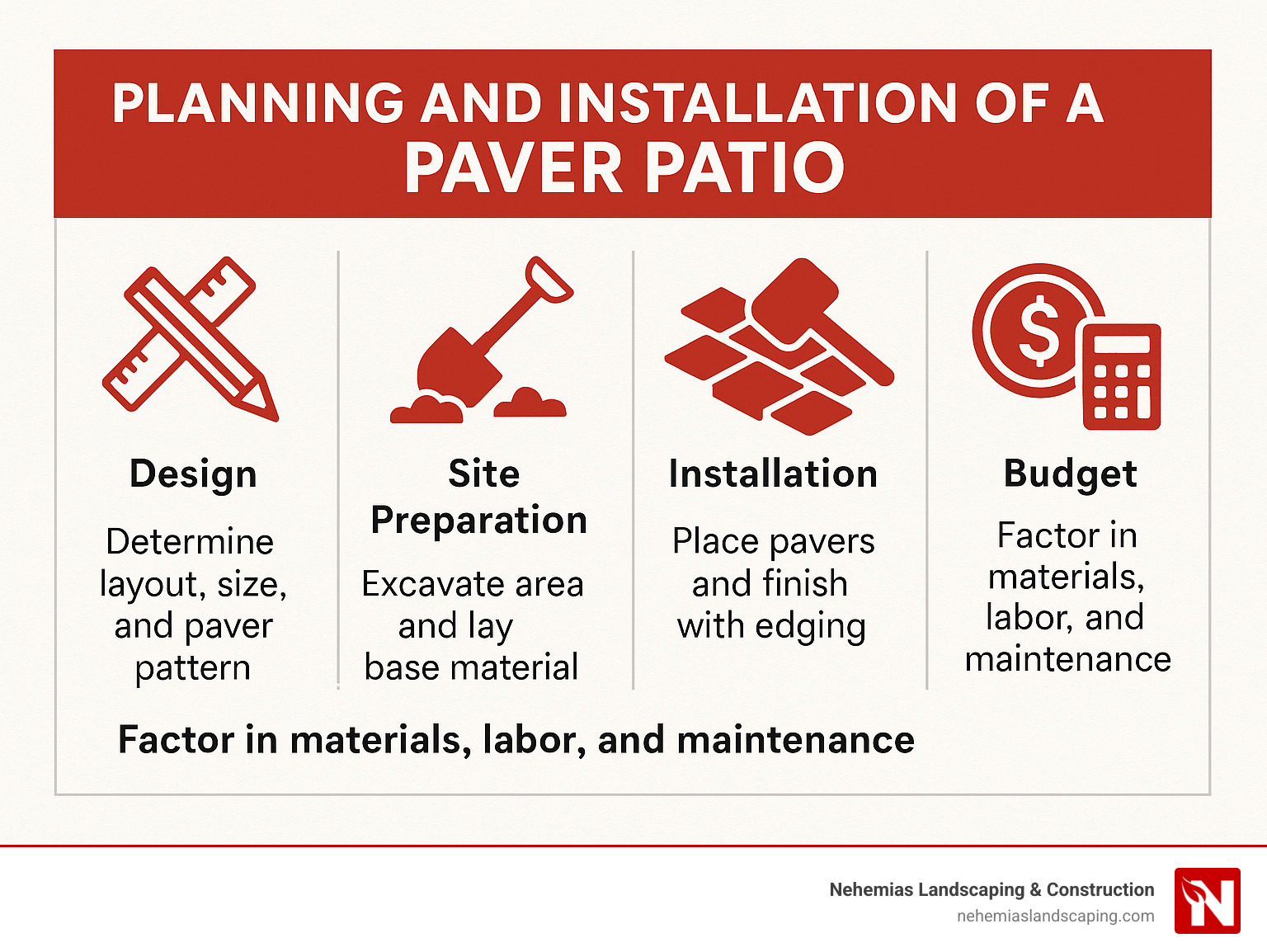
Before jumping into any patio project, take time for a thorough site assessment. We always start by examining your property’s unique characteristics. Does your yard have a gentle slope that needs addressing? What about those low spots that collect water after a rainstorm? Understanding your property’s drainage patterns is crucial – the last thing anyone wants is water flowing toward your home’s foundation.
“I can’t stress enough how important proper site evaluation is,” shares one of our project managers. “We recently worked with a family in Danvers whose previous patio had failed because no one addressed the clay soil underneath. Taking time to do things right from the beginning saves heartache later.”
Your soil conditions matter tremendously too. Sandy soils drain differently than clay, and both require specific approaches to base preparation. We also carefully note access points – how you’ll move between your home, patio, and other outdoor spaces – and study sun/shade patterns that affect both material choices and your comfort when using the space.
DIY or Professional Installation?
Many homeowners wonder if they should tackle paver installation themselves. While small, simple projects might be DIY-friendly, there are good reasons most larger patios benefit from professional installation.
“I thought I’d save money installing my own patio,” laughs one Beverly homeowner. “Three weekends later, with a sore back and crooked pavers, I called Nehemias. Their team finished in two days what would have taken me two more months, and the quality difference was night and day.”
Professional installation brings specialized equipment that most homeowners don’t own – plate compactors, laser levels, and specialty cutting tools. More importantly, it brings expertise in creating proper slopes for drainage, installing edge restraints that prevent shifting, and ensuring your base layers are properly compacted to prevent settling.
Understanding Patio Budgets
When it comes to budgeting for your paver patio, costs can vary significantly. Based on internet data (not actual costs for Nehemias Landscaping & Construction), average paver patio costs in the U.S. typically range from $8–$30 per square foot, with high-end custom designs potentially reaching $90+ per square foot.
What explains this wide range? Several factors influence your final investment:
Your material choice makes a substantial difference – concrete pavers generally cost less than natural stone, with brick falling somewhere in between. Pattern complexity also impacts labor costs – a simple running bond pattern requires less cutting and fitting than an intricate herringbone or circular design.
Site conditions play a huge role too. A flat, easily accessible yard requires less preparation than a sloped site with poor soil. And don’t forget those extras that transform a basic patio into an outdoor living room – built-in seating, fire features, lighting, and pergolas all add to the overall project cost.
“When comparing quotes, look beyond the bottom line,” advises our lead designer. “Make sure you’re comparing apples to apples in terms of materials, base preparation, and extras. The lowest bid often reflects corners being cut on essential elements like proper base depth or drainage solutions.”
Maintaining Your Investment
Once your beautiful patio is installed, a little regular maintenance goes a long way toward preserving its beauty and function. Most paver patios benefit from sealing every 3-5 years, which improves color and provides protection against stains and weather.
Joint sand maintenance is another simple but important task – occasionally checking that the sand between pavers remains full helps prevent weed growth and keeps pavers locked together. For everyday care, regular sweeping prevents debris from staining or scratching your pavers.
“Our Georgetown clients are always surprised when we tell them how little maintenance their new patio will require,” notes our customer service team. “A few hours of attention each year keeps it looking fresh for decades.”
Proper drainage remains important even after installation. Make sure downspouts and landscape drainage direct water away from your patio, not across it. And if you live in a wooded area of Essex County, a fall cleanup to remove leaves prevents organic staining and moss growth.
Ready to start planning your perfect paver patio? Visit our Patio Installation Services page to learn more about how we can help bring your vision to life with quality craftsmanship at an affordable price.
Frequently Asked Questions about Paver Patios
How much does a paver patio cost on average?
When budgeting for your dream outdoor space, cost is naturally a top concern. Based on internet data (not actual costs for Nehemias Landscaping & Construction), paver patio design ideas come with varying price tags depending on several key factors.
Most paver patios range from $8 to $30+ per square foot installed, with premium custom designs potentially reaching $90+ per square foot. Why such a wide range? It comes down to your specific choices:
Material selection makes the biggest impact on your budget. Concrete pavers ($8-24/sq ft) offer excellent value, while brick pavers ($14-30/sq ft) provide classic appeal at a mid-range price point. Natural stone ($20-60+/sq ft) represents the premium end, offering best character and longevity.
“Our paver patio cost more upfront than a concrete slab would have,” shared one Essex County homeowner, “but after seeing our neighbor’s concrete crack after just two winters, we’re convinced our investment was worth every penny.”
Design complexity also influences cost – a simple running bond pattern requires less labor than an intricate herringbone or circular design. Site conditions matter too – sloped yards or poor drainage can require additional preparation work. And don’t forget to budget for those special touches like built-in lighting, fire features, or seating walls that transform a basic patio into an outdoor living room.
For a typical 300 square foot patio in Essex County, most homeowners invest between $2,400 and $9,000+ for professional installation that includes proper base preparation and edging – a crucial foundation for long-term performance.
At Nehemias Landscaping & Construction, we believe in transparent pricing. We provide detailed quotes that break down all costs so you can make informed decisions about where to invest and where you might save.
How do I keep weeds and stains away long-term?
Nothing diminishes the beauty of a paver patio faster than unwanted weeds poking through joints or stubborn stains marring the surface. Fortunately, with some proactive care, your paver patio design can stay pristine for years.
For weed prevention, polymeric sand is your best ally. “Using polymeric sand in the joints prevents weed growth long-term,” explains our maintenance team. This specialized product hardens when wetted, creating a solid barrier that locks pavers in place while blocking weed seeds from taking root.
Proper installation makes a tremendous difference too. A correctly installed weed barrier beneath your patio’s base layer provides additional protection that pays dividends for years. Regular sweeping prevents organic debris from decomposing and creating a growing medium for opportunistic weeds.
When it comes to stain protection, sealing is your patio’s shield. A quality paver sealer applied every 3-5 years creates an invisible barrier against oil, food spills, and organic stains. One Essex County client shared their experience: “After having our patio professionally sealed by Nehemias, red wine spilled during a party wiped right up without leaving any trace. The sealer has more than paid for itself in peace of mind.”
Simple preventative measures make a big difference too. Place protective mats under grills to catch grease drips, use furniture pads to prevent rust stains from metal pieces, and address spills promptly – especially acidic substances like wine or citrus juices that can etch natural stone surfaces.
With these straightforward maintenance practices, your paver patio will continue looking fresh and inviting through countless New England seasons.
Can I install a paver patio myself or should I hire a pro?
The DIY approach to paver patio design ideas tempts many homeowners, especially when browsing those inspiring weekend project videos online. While self-installation is certainly possible, it’s worth honestly assessing your situation before deciding.
DIY paver installation might make sense if your project is relatively small (under 100 square feet), you have some experience with similar projects, and you have access to proper equipment like a plate compactor and wet saw. The physical demands shouldn’t be underestimated – you’ll be moving tons of material, quite literally.
“The labor component is so backbreaking that paying a pro may be worth it if the budget allows,” confessed one homeowner who attempted a DIY installation. The most challenging aspect isn’t laying the pavers themselves – it’s the critical base preparation that requires excavating several inches of soil, installing proper drainage, and creating a perfectly level foundation.
Professional installation from Nehemias Landscaping & Construction brings peace of mind through expertise. Our team handles everything from site assessment and proper grading to precise cutting and professional-grade edge restraints. We’ve refined our process through hundreds of installations across Essex County, allowing us to work efficiently while maintaining exceptional quality standards.
For complex projects involving slopes, drainage challenges, or intricate patterns, professional installation is particularly valuable. The same goes for larger patios or those incorporating special features like fire pits or outdoor kitchens, where proper installation ensures both safety and longevity.
Many homeowners find that the confidence of a professionally installed patio – one that will last for decades with minimal maintenance – justifies the investment. Plus, you’ll have warranty protection on both materials and workmanship, something no DIY project can offer.
Whether you choose the satisfaction of building it yourself or the assurance of professional installation, the most important factor is proper preparation – the hidden foundation that determines how your patio will perform through years of New England’s challenging weather cycles.
Conclusion
Creating your dream paver patio is more than just a home improvement project—it’s an investment in your lifestyle and property value. Throughout Essex County, from coastal communities like Gloucester and Rockport to inland towns like Middleton and Peabody, well-designed paver patios transform ordinary backyards into extraordinary outdoor living spaces.
The versatility of paver patio design ideas means there’s a perfect solution for every home, regardless of architectural style, property size, or budget constraints. Whether you’re drawn to the timeless elegance of brick herringbone, the natural beauty of flagstone, or the clean lines of modern concrete pavers, the right design creates a seamless transition between your home and landscape.
Beyond aesthetics, paver patios offer practical benefits that other surfacing options simply can’t match. Their ability to flex during freeze-thaw cycles makes them ideal for Massachusetts’ challenging climate. Their modular nature allows for easy repairs if needed. And their nearly limitless design potential ensures your outdoor space will be uniquely yours.
At Nehemias Landscaping & Construction, we’ve helped countless Essex County homeowners transform their outdoor dreams into reality. Our comprehensive approach includes thoughtful design, meticulous installation, and ongoing support to ensure your patio remains beautiful for years to come.
“With a little imagination, simple materials can be arranged to create a dynamic hardscape carpet underfoot,” notes one designer. We couldn’t agree more. The perfect patio combines form and function, creating a space that not only looks beautiful but also improves how you live, entertain, and connect with nature.
Ready to explore the possibilities for your outdoor space? Contact Nehemias Landscaping & Construction today to schedule a consultation. As your Essex County partner for affordable, high-quality outdoor changes, we’re committed to bringing your patio vision to life with exceptional craftsmanship and attention to detail.
Learn more about our hardscaping services and take the first step toward the outdoor living space you’ve always wanted.