
How to Install Handrail on Brick Steps: Top 3 Easy Tips
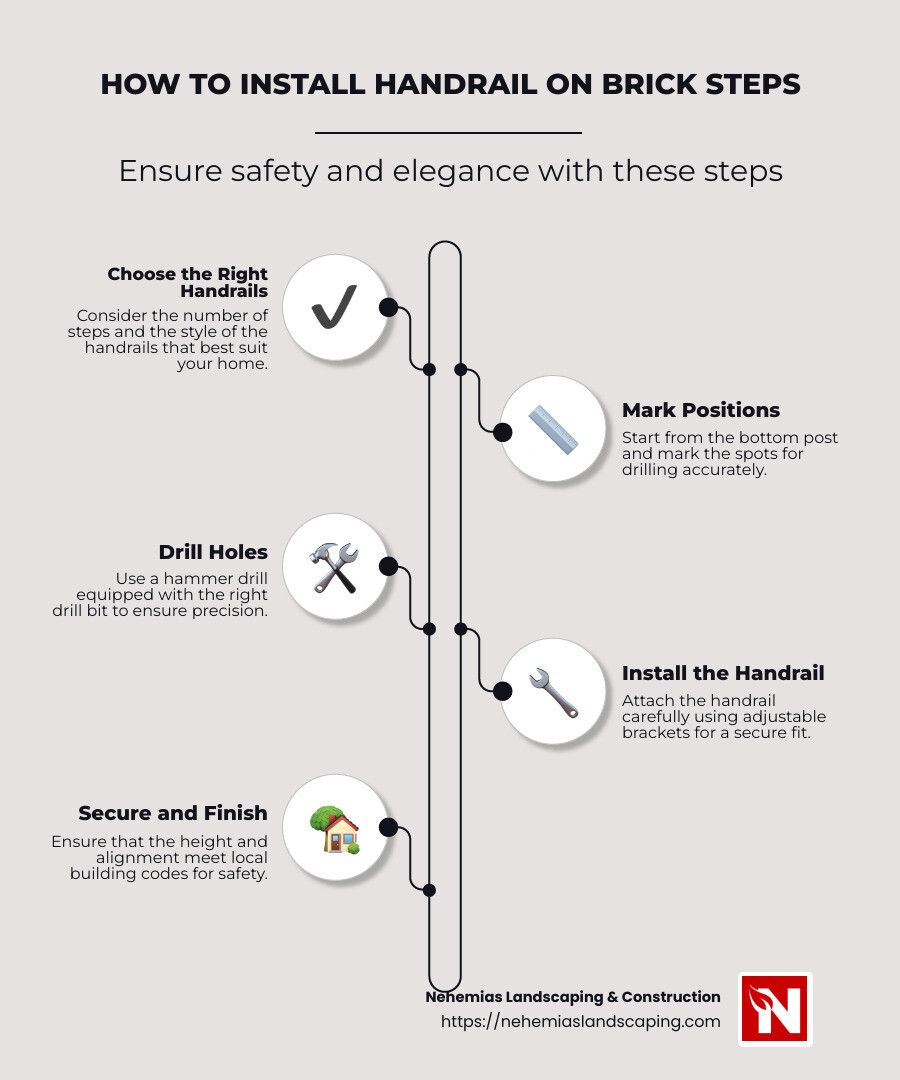
If you’re looking for how to install handrail on brick steps, you’re in the right place. Here’s a quick overview:
- Choose the right handrails: Consider step count and style.
- Mark positions: Start from the bottom post.
- Drill holes: Use a hammer drill and expansion screws.
- Install the handrail: Attach using adjustable brackets.
- Secure and finish: Ensure height and alignment meet local codes.
For suburban homeowners aiming to ensure safety and elegance with their brick steps, installing a handrail is a practical and rewarding project. The process might seem daunting, especially with brick’s delicate nature, which tends to crack or crumble when improperly drilled. But worry not—armed with the right tools and techniques, you’ll have those handrails up in no time.
At Nehemias Landscaping & Construction, we understand the unique challenges brick steps pose. With our expertise in both design and installation, we’ll guide you through the step-by-step process that marries functionality with aesthetic appeal. With our help, you can transform your hardscape into a safe and inviting feature.
Key terms for how to install handrail on brick steps:
– how to install railing on brick stairs
– install vinyl railing on brick steps
– how to install brick stairs
Understanding Brick Material
Before diving into how to install handrail on brick steps, it’s crucial to understand the material you’re working with. Bricks are primarily made of clay, but they can include varying amounts of sand, lime, or ash. These components affect the brick’s durability and how it responds to drilling.
Types of Bricks
Bricks come in various types, each with its own properties. Here are some common types:
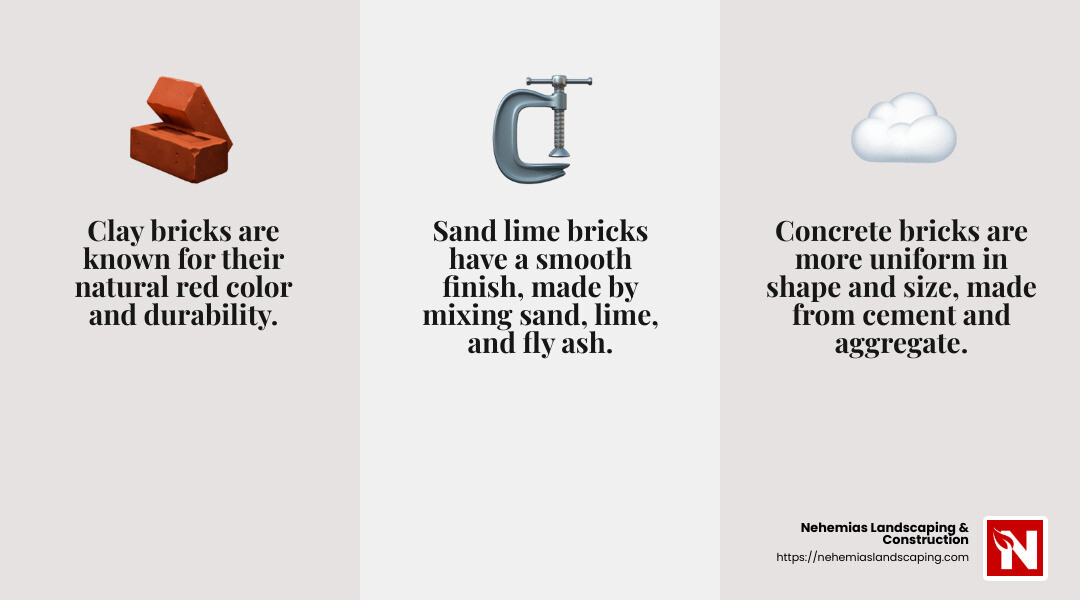
- Clay Bricks: These are the most traditional and commonly used. They are known for their natural red color and durability.
- Concrete Bricks: Made from cement and aggregate, these bricks are often more uniform in shape and size.
- Sand Lime Bricks: These bricks have a smooth finish and are made by mixing sand, lime, and fly ash.
Composition Matters
The composition of a brick significantly impacts its strength and how it reacts when you drill into it. Here’s a quick breakdown:
- Clay: The primary component, offering natural strength and color.
- Sand: Adds bulk and can affect the texture of the brick’s surface.
- Lime: Helps in the binding process, making the brick more robust and durable.
Why This Matters for Handrail Installation
When installing a handrail on brick steps, understanding these materials helps avoid common pitfalls like cracking or blowout. Lower-quality bricks, for instance, are more prone to such issues. This knowledge allows you to choose the right tools and techniques, ensuring a sturdy and aesthetically pleasing installation.
For more on how to handle these materials, continue reading as we dig into the tools and materials you’ll need for a successful handrail installation on your brick steps.
Tools and Materials Needed
Installing a handrail on brick steps requires the right tools and materials to ensure a sturdy and safe setup. Here’s what you’ll need:
Hammer Drill
A hammer drill is essential for drilling into tough materials like brick. Unlike regular drills, a hammer drill uses a combination of drilling and hammering actions to penetrate brick smoothly and efficiently. This tool makes the process faster and reduces the risk of cracking the brick.
Why a Hammer Drill?
- Speed: Cuts through brick like butter, making the job quicker.
- Safety: Built-in shock absorbance protects your wrists and arms.
- Efficiency: Ensures cleaner holes with less risk of blowout.
Anchor Screws
Anchor screws are crucial for securing the handrail posts to the brick. They expand once inserted, providing a firm hold that keeps your handrail steady.
Choosing the Right Anchor Screws
- Size: Make sure they’re long enough to grip securely but not too long to damage the brick.
- Material: Opt for corrosion-resistant screws, especially for outdoor railings exposed to weather.
Adjustable Brackets
Adjustable brackets make aligning the handrail with the steps much easier. They can adapt to the angle of the stairs, ensuring your handrail is both functional and visually appealing.
Benefits of Adjustable Brackets
- Flexibility: Easily adjust to fit the angle of your steps.
- Uniformity: Helps maintain consistent handrail height and alignment.
- Ease of Installation: Simplifies the process, especially on uneven surfaces.
With these tools and materials in hand, you’re well-equipped to tackle the task of installing a handrail on brick steps. Next, we’ll guide you through the steps of preparing the brick surface for a smooth and secure installation.
How to Install Handrail on Brick Steps
Preparing the Brick Surface
Before you start installing your handrail, prepare the brick surface properly. This ensures that the installation is secure and long-lasting.
1. Cleaning: Start by cleaning the brick surface thoroughly. Remove any dirt, dust, or loose debris using a brush or a vacuum. This will help the anchor screws grip better and prevent them from slipping.
2. Marking and Measuring: Once the surface is clean, measure and mark where each post will be placed. Use a tape measure and a pencil to mark the exact spots. Ensure that your measurements are uniform to maintain consistent handrail height. This step is crucial because brick steps can have slight variances in their rise.
Drilling and Anchoring
With your surface prepared, it’s time to drill and anchor the posts. This step requires precision to avoid damaging the brick.
1. Hammer Drill Use: Use a hammer drill to create holes for the anchor screws. This tool is ideal for brick as it combines drilling and hammering actions, making the process efficient and reducing the risk of blowout.
2. Drilling Tips:
– Depth: Drill holes 1/4 to 1/2 inch deeper than the length of the anchor screws. This gives room for debris and ensures the screw can be fully inserted.
– Avoiding Blowout: To prevent the brick from cracking, start drilling at a low speed and gradually increase it as the bit penetrates the surface.
3. Anchor Screws: Insert anchor screws into the drilled holes. These screws expand inside the hole, providing a strong hold. Ensure they are tight to keep the posts stable.
Installing the Handrail
With the posts securely anchored, it’s time to install the handrail.
1. Adjustable Brackets: Use adjustable brackets to attach the handrail to the posts. These brackets can be adjusted to match the angle of your stairs, ensuring a smooth and consistent alignment.
2. Uniform Measurements: Double-check your measurements to ensure that the handrail is at a uniform height (typically between 34–38 inches above the steps). This height is crucial for safety and meets most building codes.
3. Height Requirements: Ensure the railing meets local height requirements, which are typically at least 42 inches for safety. This is especially important if your steps are in a public area.
By following these steps, you’ll achieve a secure and attractive handrail installation on your brick steps. Up next, we’ll share some tips for ensuring your installation is successful and sturdy.
Tips for a Successful Installation
When installing a handrail on brick steps, paying attention to details can make a big difference in the outcome. Here are some key tips to ensure a successful installation:
Post Height
The height of the posts is crucial for both safety and aesthetics. Ensure that your posts are at least 42 inches tall. This height is recommended for safety standards, especially in areas with high foot traffic. Consistent post height ensures that the handrail is level and provides adequate support.
Handrail Systems
Consider using a handrail system with adjustable brackets. These systems are designed to accommodate the varying angles of staircases, making installation easier and more precise. Adjustable brackets allow you to align the handrail perfectly with the angle of your steps, which is critical for both functionality and appearance.
Fortress® Steel Posts
Choosing the right materials can greatly impact the durability of your handrail. One recommended option is Fortress® steel posts. These posts are known for their strength and durability, making them ideal for outdoor installations. They are resistant to weather conditions, ensuring that your handrail remains sturdy over time.

By focusing on these aspects—post height, using adjustable handrail systems, and opting for robust materials like steel posts—you can ensure that your handrail installation is not only successful but also long-lasting.
Next, let’s tackle some frequently asked questions about handrail installation to address common concerns and challenges.
Frequently Asked Questions about Handrail Installation
How do you attach a handrail to brick?
Attaching a handrail to brick requires careful planning and the right tools. Start by using a hammer drill. This tool combines drilling and hammering actions, making it perfect for penetrating tough brick surfaces without causing damage. You’ll need to drill holes where your wall anchors will be placed. Make sure to use a drill bit that matches the size of your anchors to ensure a snug fit.
How to fix railings to a brick wall?
To fix railings to a brick wall, you need to ensure stability and security. Begin by bolting down the posts. This involves using a square foot plate at the base of each post. The square foot plate helps distribute the load evenly, reducing the risk of the brick cracking under pressure. Once the foot plates are in place, use bolts to secure the posts firmly.
How to attach wood post to brick steps?
Attaching a wood post to brick steps involves a few extra steps to ensure proper alignment and stability. Start by doing a plumb check to make sure your post is perfectly vertical. This is important for both safety and aesthetics. Use a 15mm socket to tighten the bolts securely. This size is commonly used for most post installations and ensures a firm grip. Double-check the alignment after securing the bolts to make sure everything is in place.
By following these steps and using the right tools, you can successfully attach handrails and posts to brick surfaces, ensuring both safety and durability.
Conclusion
At Nehemias Landscaping & Construction, we pride ourselves on delivering quality craftsmanship and changing outdoor spaces into beautiful, functional areas. Installing a handrail on brick steps can seem daunting, but with the right tools and guidance, it’s entirely achievable. Our team is here to help you steer this process smoothly, ensuring a sturdy and attractive result.
Whether you’re enhancing your backyard or planning a large-scale outdoor renovation, our skilled professionals are dedicated to bringing your vision to life. We focus on every detail, from choosing the best materials to ensuring precise installation, so you can enjoy a safe and stylish outdoor environment.
If you’re ready to make a change and lift your outdoor space with expertly installed brick steps and handrails, contact us at Nehemias Landscaping & Construction today. Let us guide you from the initial design to the final installation, ensuring a seamless and stress-free experience.