
How to Install a Flagstone and Pea Gravel Patio: 5 Amazing Steps
Create a Timeless Outdoor Space
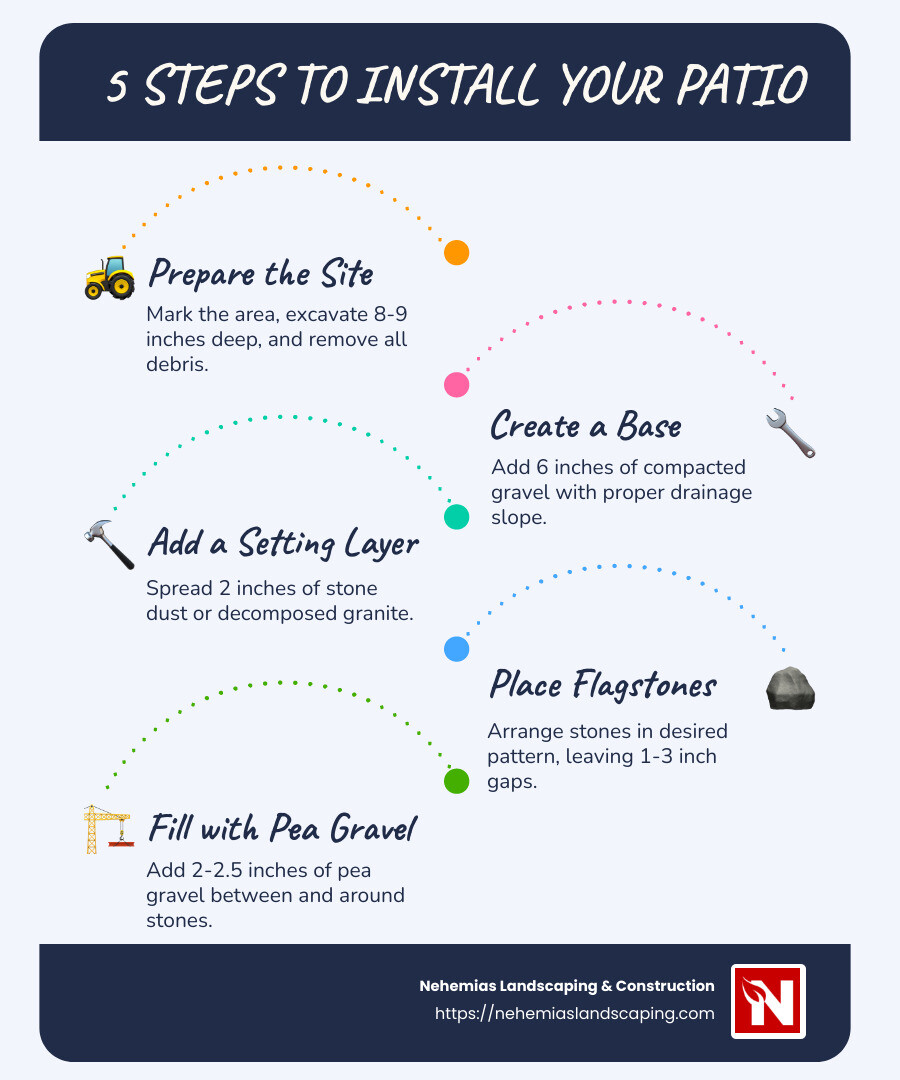
How to install a flagstone and pea gravel patio in 5 simple steps:
- Prepare the site – Mark the area, excavate 8-9 inches deep, and remove all debris
- Create a base – Add 6 inches of compacted gravel with proper drainage slope (1″ per 4 feet)
- Add a setting layer – Spread 2 inches of stone dust or decomposed granite
- Place flagstones – Arrange stones in desired pattern, leaving 1-3 inch gaps
- Fill with pea gravel – Add 2-2.5 inches of pea gravel between and around stones
A flagstone and pea gravel patio combines natural beauty with practicality, creating an inviting outdoor space that’s both neat and functional. This classic hardscape option has stood the test of time because it offers the perfect balance between structure and organic flow.
“If you want a durable, timeless patio material that blends well with your yard, flagstone is the perfect choice,” according to landscape professionals. When paired with pea gravel, you get a Mediterranean or cottage-inspired look that adds instant character to any property.
The combination is particularly appealing because it allows for proper drainage while creating visual interest. Unlike solid concrete patios, the porous nature of this installation prevents water pooling and reduces runoff concerns. Plus, the materials work with the landscape rather than against it.
Best of all, this project can be tackled as a weekend DIY for those with basic landscaping skills, though the excavation work is physically demanding. For a 120-square-foot patio, expect to spend between $1,800 and $2,200 in materials if doing it yourself, with professional installation potentially costing up to $8,400.
Important how to install a flagstone and pea gravel patio terms:
- diy flagstone patio installation
- how to install a flagstone patio with grass joints
- how to install a flagstone patio with mortar
Why Choose a Flagstone and Pea Gravel Patio?
There’s something magical about the combination of rugged flagstone and delicate pea gravel that transforms an ordinary backyard into an enchanting retreat. If you’re weighing your options for a new patio in your Essex County home, this pairing deserves serious consideration.
Flagstone Benefits
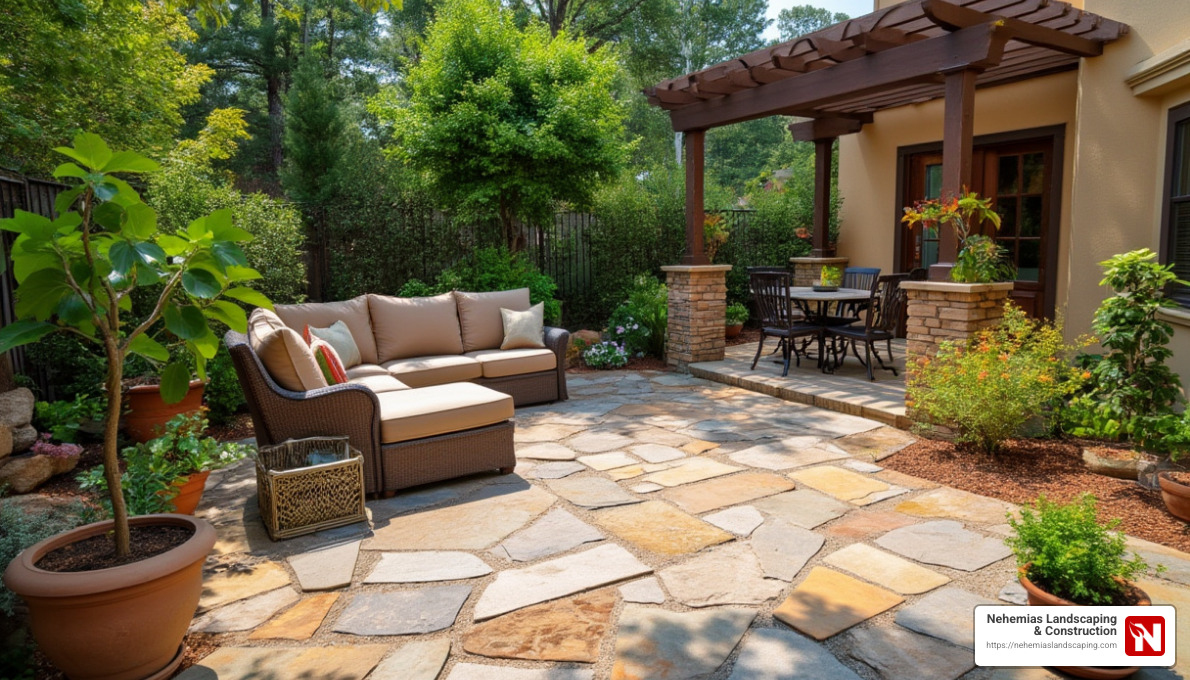
When you walk across a flagstone patio, you’re experiencing a material that has adorned gardens and courtyards for centuries. These natural stone slabs—typically cut from sandstone, limestone, or slate—bring an earthy authenticity that manufactured materials simply can’t match. Each stone tells its own story through unique variations in color, texture, and shape.
“Flagstone offers a natural look that blends organically with outdoor landscapes and is easier to install via the dry-set method,” as many landscape professionals have noted. This natural integration is particularly striking in our New England setting, where the stones seem to emerge organically from the landscape.
The durability of flagstone is remarkable too. With proper installation, these stones can withstand decades of New England winters and summers without losing their charm. In fact, they often become more character-filled with age, developing a gentle patina that adds to their appeal.
Pea Gravel Advantages
While flagstone provides the structure, pea gravel brings the magic in between. These small, rounded stones might seem humble, but they deliver impressive benefits:
Pea gravel creates excellent drainage, allowing rainwater to filter naturally into the soil rather than pooling on your patio surface. This prevents the frustration of puddles and reduces erosion concerns around your property.
The material is wonderfully affordable, costing significantly less than solid hardscaping options. This helps keep your overall project budget in check, especially for larger patio areas.
The easy installation process makes pea gravel appealing for both DIY enthusiasts and professional installations. The stones can be spread and leveled with basic tools, without requiring specialized equipment.
Perhaps best of all, pea gravel is remarkably low maintenance. Unlike wood decking that needs staining or concrete that may crack, pea gravel simply requires occasional raking and topping up every few years.
On hot summer days, you’ll appreciate how pea gravel stays cooler underfoot than materials like concrete or brick, making your patio comfortable for barefoot wandering and pet paws alike.
Combined Benefits
“Pea gravel is a fast and inexpensive solution to create your own backyard patio,” explains Devin from our team at Nehemias Landscaping & Construction. “When combined with flagstone, you get the best of both worlds – the solid footing of natural stone with the drainage and aesthetic benefits of gravel.”
This combination creates a patio that’s both practical and beautiful. The solid flagstones provide stable stepping areas, while the pea gravel fills gaps with a pleasing texture that shifts slightly underfoot, creating a sensory experience as you move through the space.
Massachusetts homeowners particularly appreciate how this combination handles our distinct seasons. The flexible nature of a flagstone and pea gravel installation accommodates ground movement during freeze-thaw cycles without cracking—a common issue with solid concrete patios in our climate.
The natural materials also complement various architectural styles found throughout Essex County, from historic homes in Salem and Marblehead to contemporary residences in Beverly and Peabody. Whether you’re dreaming of a formal entertaining space or a casual, cottage-inspired retreat, this versatile pairing adapts beautifully to your vision.
From the warm golden tones of certain flagstones to the cool, muted grays of others, you can customize your patio to complement your home’s exterior and surrounding landscape. The natural materials create a cost-effective yet undeniably neat outdoor living space that feels both timeless and distinctly your own.
Tools and Materials Needed
Ready to create your dream flagstone and pea gravel patio? Let’s gather everything you’ll need before breaking ground. Having all your supplies ready will make your installation process much smoother and more enjoyable.
Tools:
Nothing kills momentum like having to run to the hardware store mid-project! Here’s what you’ll want to have on hand:
A good shovel (both flat and pointed types) will be your best friend during excavation. You’ll also need a sturdy wheelbarrow for moving materials around your yard – trust me, your back will thank you! A tamper or plate compactor is essential for creating a solid base that won’t shift over time.
Don’t forget a 4-foot level to ensure proper drainage slopes and even stone placement. A garden rake will help spread materials evenly, while a garden hose with spray nozzle helps settle your materials into place.
For accurate layout, grab your tape measure, string and stakes for marking the perimeter, and a mason’s line or line level to establish proper drainage slope. A rubber mallet is perfect for gently setting stones without damaging them.
“I always tell homeowners to invest in good safety equipment,” says Carlos from our Nehemias team. “Gloves, safety glasses, and knee pads might not seem exciting, but they’ll make your project much more comfortable.”
Round out your toolkit with marking paint to outline your patio area, a hammer and chisel for any stone adjustments, and a sturdy broom for final cleanup.
Materials:
Now for the fun part – the materials that will transform your yard into an outdoor oasis!
Flagstones are the star of the show. Choose stones at least 1-1/2 inches thick for durability in our Massachusetts climate. For a natural look, select pieces with varying sizes and shapes.
Pea gravel will fill the spaces between your flagstones, creating that charming Mediterranean or cottage garden feel. You’ll need enough for about 2-2.5 inches of depth across your patio area.
High-quality landscape fabric serves as your defense against future weeds. Don’t skimp here – a good weed barrier can save you hours of maintenance down the road.
You’ll also need edging materials to contain your beautiful creation. Options include pressure-treated lumber, metal edging, or a stone border.
For the base, crushed stone/gravel (3/4-inch clean, angular stone) provides stability, while decomposed granite or stone dust creates the perfect setting bed for your flagstones. Some installers also use sand for fine leveling adjustments.
Don’t forget landscape fabric pins to secure your weed barrier, and if you’re using wooden borders, grab some #4 rebar and corner brackets to ensure they stay in place.
For a typical 120-square-foot patio (about 10′ x 12′), budget for approximately:
- 120 square feet of flagstone ($1,400-$1,500)
- 1-2 cubic yards of pea gravel ($50-$150)
- 2-3 tons of crushed stone
- 1 ton of decomposed granite or stone dust
- 150-200 square feet of landscape fabric
“I do not really like one-size-fits-all answers,” notes one hardscaping expert. “The specific materials you’ll need may vary based on your soil conditions and local climate.” Here in Essex County, our freeze-thaw cycles make a proper base particularly important, so don’t skimp on those crushed stone base materials.
These are average costs based on internet data and not actual costs for Nehemias Landscaping & Construction. Prices can vary significantly based on material quality, regional availability, and current market conditions. For the most accurate pricing, we recommend contacting us for a personalized quote.
With your tools and materials gathered, you’re ready to create a flagstone and pea gravel patio that will be the envy of the neighborhood!
How to Install a Flagstone and Pea Gravel Patio
Now that you understand the benefits and have gathered your materials, let’s dive into the step-by-step process of how to install a flagstone and pea gravel patio. This comprehensive guide will walk you through each phase of the installation.
Step 1: Preparing the Site
The foundation of a successful patio installation begins with proper site preparation. This critical first step will determine the longevity and stability of your finished patio.
Selecting the Location
Begin by choosing the ideal location for your patio. Consider factors like proximity to your home, sun and shade patterns, existing landscape features, views from the patio, and natural drainage patterns.
Before digging even one shovelful of dirt, call 811 to check for underground utilities. This free service marks any buried utility lines on your property, helping you avoid dangerous and costly accidents. Trust me, hitting a gas line is not the way you want to start your weekend project!
Marking the Area
Once you’ve selected your location, outline the perimeter with stakes and string. Create your desired shape – whether a classic rectangle, welcoming circle, or a custom organic form that flows with your landscape. Take time to verify the size by measuring the area and comparing it to your plan.
For a more visual approach, try using a garden hose to outline the shape before marking with stakes. This allows you to easily adjust the design until you’re satisfied. I often tell our Essex County clients to live with the outline for a day or two – you might be surprised how your perspective changes when you view it at different times of day.
Excavation
Now comes the physically demanding part – digging out the entire marked area to a depth of approximately 8-9 inches. This depth accounts for your 6-inch gravel base, 2-inch setting bed, and the thickness of your flagstones (typically 1½ to 2 inches).
Be thorough in removing all vegetation, roots, rocks, and debris from the area. As one of our clients in Marblehead learned the hard way, “If you skip this step, you’ll have weeds growing in your patio by the end of the first season.”
The excavation is undoubtedly the most labor-intensive part of the project. For a 120-square-foot patio, expect this step alone to take a full day of work. Many of our clients in towns like Ipswich, Hamilton, and Manchester-by-the-Sea find that this is the point where they decide whether to continue as a DIY project or call in professionals like our team at Nehemias Landscaping & Construction.
Step 2: Laying the Base
A proper base is crucial for the longevity of your patio. This foundation prevents settling, heaving, and other issues that can compromise your patio’s appearance and functionality.
Crushed Stone Base
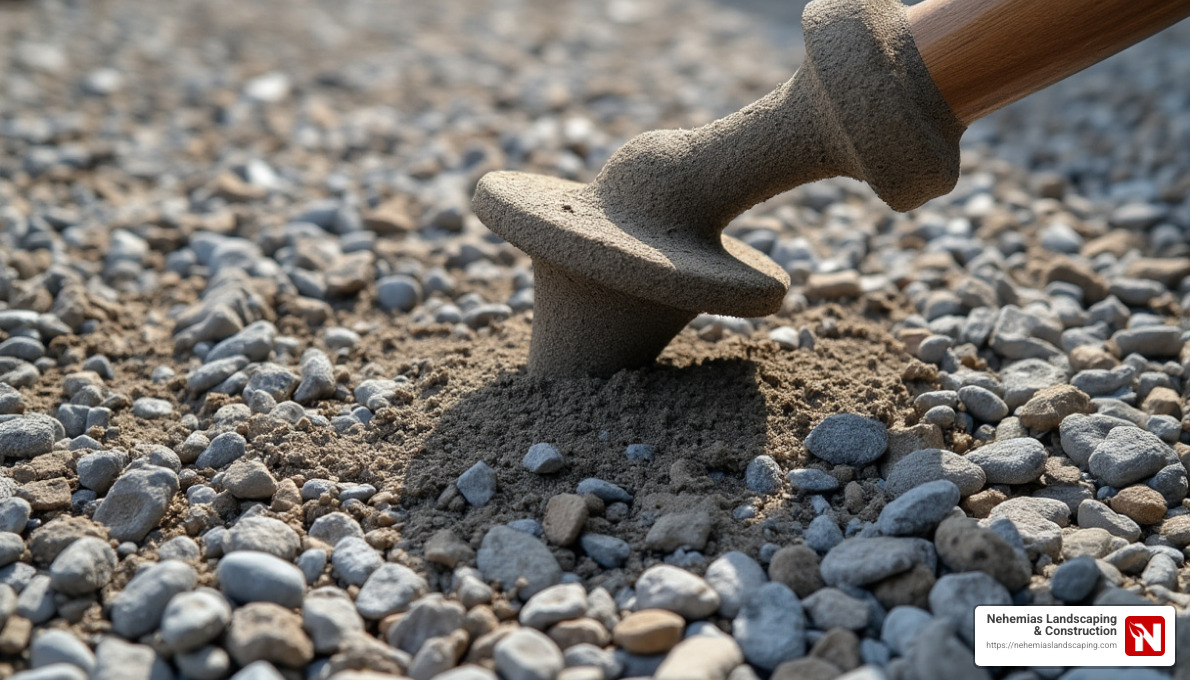
Begin by adding a 3-inch layer of ¾-inch clean, angular crushed stone to the excavated area. Use a rake to spread the stone evenly across the entire surface, then compact this first layer thoroughly using a plate compactor or hand tamper. For larger areas, renting a plate compactor from a local equipment rental shop will save considerable time and effort.
Add another 3-inch layer of crushed stone and compact again. The total compacted base should be approximately 6 inches thick. When properly compacted, you should be able to walk on the surface without leaving footprints or creating noticeable depressions.
Ensuring Proper Drainage
Proper drainage is essential to prevent water pooling, erosion, and potential damage to your patio and home foundation. Create a slope of approximately 1 inch per 4 feet (or 2.5 inches per 10 feet) away from your house or any structures. This gentle slope will be almost imperceptible to the eye but will effectively channel water away.
Use a long level and string to check the slope as you work. For areas with poor drainage or heavy clay soils (common in parts of Essex County), consider installing a perforated drain pipe at the lowest edge of the patio, surrounded by gravel and leading to a suitable drainage area.
“A stable, draining base is crucial to prevent settling and heaving,” explains Brian Post, a stone installation expert. “The goal of a patio foundation is to provide a stable base that won’t settle or heave.”
Compacting the Base
Thorough compaction is critical for a stable patio. Compact each layer of gravel using multiple passes with your compaction tool. A little trick from our crew: lightly spray the gravel with water before compacting to help the material settle and lock together more effectively.
Check for low spots or depressions after compacting and fill them with additional material as needed. Verify that your slope for drainage remains consistent across the entire area. A properly compacted base will feel firm underfoot and show minimal depression when walked on.
Step 3: Placing the Flagstones
With your base properly prepared, it’s time to add the setting bed and begin placing your flagstones.
Adding the Setting Bed
Spread a 2-inch layer of decomposed granite or stone dust over the compacted gravel base. This material, sometimes called “screenings” or “quarry dust,” provides a malleable surface for setting and leveling your flagstones.
Rake the material smooth but do not compact it heavily, as you’ll need to adjust it when setting individual stones. Some professionals recommend mixing one part dry cement to 12 parts stone dust for added stability, though this is optional for a standard residential patio.
Arranging Flagstones
Before placing stones permanently, lay out your flagstones on a flat surface nearby to create a rough design. This “dry fitting” helps you determine the best arrangement and identify any stones that need to be cut or shaped.
Aim for consistent gaps between stones, typically 1-3 inches. These gaps will later be filled with pea gravel. Try to minimize small slivers of stone, as these are more likely to crack or become dislodged over time.
Creating Desired Pattern
Now place the stones on your prepared setting bed, starting from one edge of the patio (typically the edge closest to your home) and working outward. Place each stone firmly onto the setting bed, wiggling it slightly to establish good contact.
For a natural look, vary the sizes and shapes of stones while maintaining relatively consistent gaps. Stand back periodically to assess the overall pattern and make adjustments as needed. I always tell our clients in Beverly and Salem to take a few steps back every 15 minutes – you’ll catch design issues much easier from a distance.
Leveling Each Stone
This step requires patience but is crucial for a safe, comfortable patio surface. Check each stone with a level in multiple directions. For stones that are too high, remove some setting material from underneath. For stones that are too low, lift the stone and add more setting material.
Tap stones gently with a rubber mallet to set them firmly in place. Ensure that adjacent stones have minimal height differences to prevent tripping hazards. Remember to maintain your overall drainage slope while leveling individual stones.
“Do not set flagstones in sand,” advises Devin, a hardscaping expert. “Instead, use a chunky stone dust or coarse sand option.” This advice is particularly relevant for our Essex County clients, as fine sand can wash away during our New England rain events.
Step 4: Filling Gaps with Pea Gravel
With your flagstones properly placed and leveled, it’s time to add the pea gravel that will fill the gaps and complete the distinctive look of your patio.
Pouring Pea Gravel
Ensure all flagstones are firmly set and level before beginning this step. Pour pea gravel into the gaps between flagstones, starting from one edge and working methodically across the patio. Use a wheelbarrow to transport the gravel and a shovel or bucket for controlled pouring.
Fill all gaps completely, including the perimeter around the edge of your patio. The change is almost magical – as the gravel fills in, your patio suddenly comes to life with a finished, polished look.
Raking and Leveling
Use a garden rake or broom to spread the pea gravel evenly between and around the flagstones. Aim for a consistent depth of pea gravel (2-2.5 inches) throughout the patio. The pea gravel should come up to just below the top surface of the flagstones, allowing the stones to provide a stable walking surface while the gravel fills the gaps aesthetically.
For a finished look, ensure the pea gravel is evenly distributed with no bare spots or excessive piles. After spreading the gravel, lightly spray the entire patio with water. This helps settle the gravel and remove any dust from the installation process.
Depth Considerations
The ideal depth for pea gravel in a patio setting is 2-2.5 inches. This depth provides several benefits: sufficient material to prevent landscape fabric from becoming exposed over time, adequate drainage capacity during heavy rainfall, enough depth to accommodate minor settling without requiring immediate replenishment, and not so deep that walking becomes difficult or stones become unstable.
“Less than 2 inches may expose landscape fabric over time, while more than 3 inches makes walking difficult,” note patio installation experts. Finding that sweet spot makes all the difference in both appearance and functionality.
Step 5: Finishing Touches
The final step in how to install a flagstone and pea gravel patio involves adding the details that will improve both the appearance and longevity of your new outdoor space.
Adding Edging or Border
A proper border contains the pea gravel and provides a clean, finished look to your patio. If you haven’t already installed edging during the base preparation, now is the time to add it. Options include pressure-treated lumber secured with rebar, metal landscape edging, larger border stones or pavers, or concrete curbing.
The top of your edging should sit approximately ½ inch higher than the pea gravel surface to effectively contain the material. Ensure the edging is securely anchored to prevent shifting over time. In our experience with Ipswich and Gloucester properties, proper edging can extend the life of your patio by years by preventing gravel migration.
Cleaning the Area
Sweep off any excess stone dust or debris from the flagstone surfaces. Rinse the entire patio lightly with a garden hose to reveal the true colors of the stone and gravel. Check for any areas where additional pea gravel might be needed and add as necessary.
The first rinse is always a rewarding moment – the colors of the stone become more vibrant, and you finally see your vision come to life!
Setting the Stones
While your flagstones should already be level and stable, this final check ensures everything is perfect. Walk across the entire patio, noting any stones that rock or feel unstable. For any unstable stones, lift carefully and adjust the setting bed beneath.
Check the overall appearance and make any final adjustments to the pea gravel distribution. With these finishing touches complete, your patio is ready to enjoy! Allow a day or two for any remaining moisture to evaporate before placing furniture or heavy items on the patio.
For additional insights, see How to Lay a Flagstone and Gravel Patio or Pathway – HGTV.
Ensuring Proper Drainage for Your Flagstone and Pea Gravel Patio
One of the greatest advantages of a flagstone and pea gravel patio is its natural drainage capability – but only if you install it correctly. Here in Essex County, where we see everything from heavy spring downpours to winter’s repeated freeze-thaw cycles, proper drainage isn’t just a nice-to-have feature; it’s essential for your patio’s longevity.
Importance of Slope
Water always seeks the lowest point, and your patio design should work with this natural tendency.
“The number one mistake I see with DIY patios is forgetting to build in enough slope,” says Miguel from our installation team. “People focus so much on making things perfectly level that they create a swimming pool instead of a patio.”
The magic number for proper drainage is a slope of 1/8 inch per foot at minimum. For our New England climate, we typically recommend 1/4 inch per foot (which translates to a 1-inch drop for every 4 feet of patio). This gentle slope is barely noticeable when you’re enjoying your outdoor space, but it makes all the difference during a rainstorm.
Creating this slope isn’t complicated, but it requires attention to detail. Start by establishing your high point (typically against your house foundation), then measure out the length of your patio and calculate the necessary drop. Use stakes with string and a line level to mark your slope, ensuring that every layer of your installation – from the excavation depth to the final gravel layer – maintains this consistent grade.
Preventing Water Pooling
Standing water is the enemy of any hardscape installation. Beyond making your patio temporarily unusable after rain, pooling water creates serious problems over time:
During winter, that trapped water freezes and expands, potentially heaving your carefully placed flagstones out of position. The moisture trapped beneath stones creates the perfect environment for algae and moss growth, making surfaces slippery and unsightly. Over time, water can erode your setting materials, compromising the entire structure.
To prevent these issues, maintain your slope consistently throughout the entire installation process. Be particularly careful with border materials that might inadvertently create “dams” that trap water on your patio. For larger installations, consider creating a slight crown in the middle, allowing water to drain in multiple directions.
For properties in naturally wet areas like parts of Peabody or Saugus, we often recommend additional drainage solutions such as a French drain along the low edge or even incorporating a dry well to collect runoff. These extra steps might seem excessive during installation, but they’ll save you significant headaches (and repair costs) down the road.
Use of Sand or Decomposed Granite Under Base
The materials you choose for your setting bed significantly impact drainage performance. While traditional patio installations often used sand as a setting material, we’ve found that decomposed granite (DG) or stone dust (sometimes called screenings) provide superior drainage while still offering excellent stability for your flagstones.
“Do not set flagstones in fine sand as it can attract ants and wash away,” warns our hardscaping expert Devin. “Instead, use a chunky stone dust or coarse sand option.”
This advice is particularly relevant for our Essex County clients, as fine sand tends to wash away during heavy rains or compact over time, reducing drainage effectiveness. For properties with particularly challenging drainage issues, we sometimes recommend increasing the thickness of the clean, angular gravel base layer to provide additional water storage capacity during heavy rainfall events.
At Nehemias Landscaping & Construction, we take drainage seriously because we’ve seen the consequences of poor water management. Before we begin any patio installation, we evaluate your property’s unique characteristics – the natural slope, soil composition, and surrounding landscape features – to design a drainage system that will keep your patio beautiful and functional for years to come.
Proper drainage isn’t just about protecting your patio investment; it’s about protecting your home’s foundation and landscape as well. The small extra effort required to get the slope right pays enormous dividends in the long-term performance of your outdoor living space.
Design Considerations for a Mediterranean or Cottage Feel
There’s something magical about stepping onto a flagstone and pea gravel patio that transports you to the sun-drenched hills of Tuscany or a quaint English garden. One of the greatest joys of how to install a flagstone and pea gravel patio is the creative freedom it gives you to craft a space with distinct personality and charm.
Choosing Flagstone Color
The color of your flagstone sets the foundation for your patio’s entire mood and style. When aiming for a Mediterranean vibe, accept the warmth of the sun with sandy beiges, rich terra cottas, or golden browns that echo the sun-baked landscapes of Italy or Spain. Limestone and sandstone varieties naturally offer these warm, inviting tones. Look for pieces with subtle color variations rather than uniform slabs – those natural imperfections tell a story and create authentic character.
For a cottage garden feel, cooler-toned flagstones work wonders. Bluestone or slate with their gray and blue undertones immediately evoke the timeless charm of an English countryside retreat. Don’t shy away from stones with a bit of moss potential or slightly weathered edges – these elements only improve the lived-in, generations-old feeling that makes cottage gardens so irresistibly cozy.
“The stone you select should feel like it belongs to your landscape,” says Maria, one of our designers at Nehemias Landscaping. “In Essex County, we’re fortunate to have historic properties where these natural materials look like they’ve always been there, especially in places like Salem and Marblehead where the architecture has such strong character.”
Integrating Plants and Landscaping
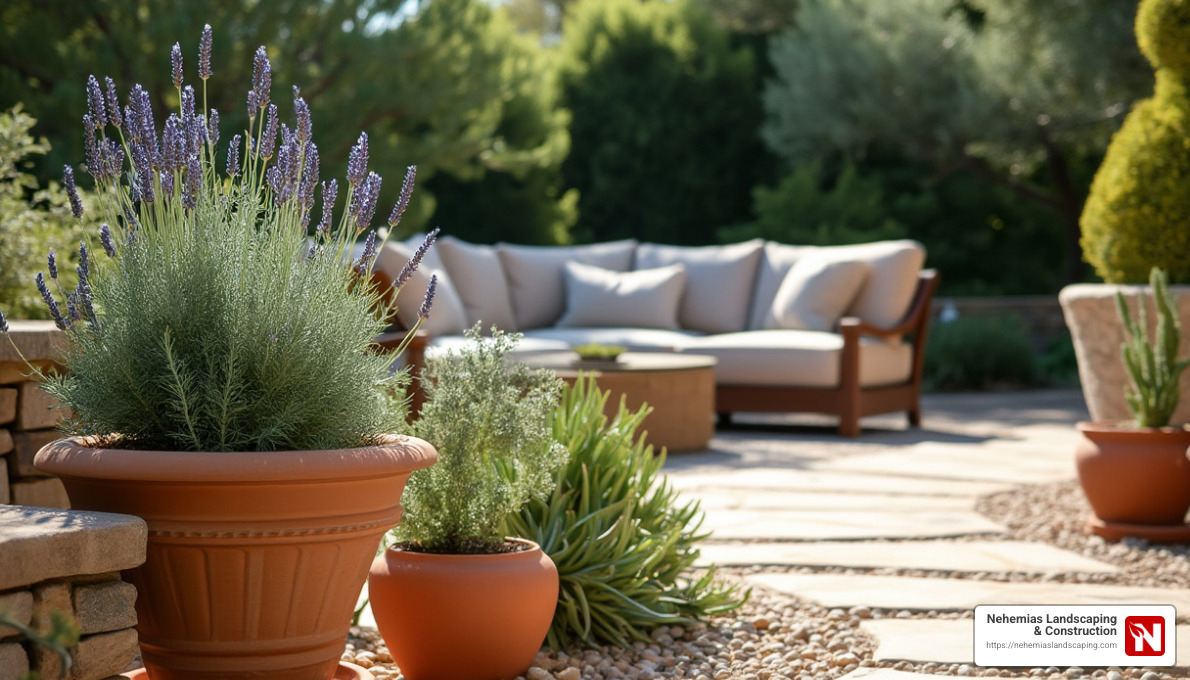
Your choice of surrounding greenery dramatically influences how your patio feels. For Mediterranean-inspired spaces, think drought-tolerant, aromatic plants that transport you to coastal European hillsides. Lavender releases its calming scent when brushed against, while rosemary and thyme provide both fragrance and culinary benefits. Consider potted olive trees or Italian cypress in decorative terra cotta containers – they may need winter protection in our Massachusetts climate, but they’re worth the effort for the authentic Mediterranean feeling they create.
Cottage garden plantings should feel abundant and slightly untamed. Climbing roses scrambling up a nearby wall, billowing catmint spilling onto the patio edge, or cheerful coreopsis nodding in the breeze all contribute to that romantic, collected-over-time aesthetic. Don’t be afraid to let herbs like creeping thyme establish themselves between flagstones – their fragrance when stepped upon is one of gardening’s simple pleasures.
The pea gravel itself becomes part of your color palette too. Available in various neutral shades from warm tans to cool grays, select a tone that complements your flagstone while providing enough contrast to highlight your carefully planned pattern. The gentle crunch underfoot as you walk across your patio adds another sensory dimension that concrete simply can’t match.
Furniture and Decor Ideas
The finishing touches truly bring your patio vision to life. For Mediterranean-inspired spaces, wrought iron tables and chairs with scrollwork details create instant old-world charm. Add colorful ceramic accents in cobalt blues, sunny yellows, and earthy terracottas. A simple pergola overhead draped with flowering vines not only provides welcome shade during hot Essex County summers but frames your outdoor room beautifully. As evening falls, string lights or lanterns cast a warm glow that’s perfect for lingering conversations over a glass of wine.
Cottage-style patios call for furniture with history and heart. Look for weathered wooden pieces or chairs painted in soft, faded colors that suggest years of happy use. Vintage finds like an antique watering can or inherited garden tools displayed thoughtfully add authentic character no store-bought decor can match. A small, bubbling fountain or simple bird bath invites feathered visitors while providing gentle background sounds. Comfortable seating with floral cushions encourages long afternoons with a good book or conversations with friends.
“Your patio should tell your story,” explains Devin from our Nehemias team. “We’ve created dozens of these spaces throughout Essex County, and the most successful ones reflect the personalities of the homeowners while complementing their home’s architecture.”
Particularly in coastal towns like Gloucester and Rockport, we’ve found that these natural materials echo the seaside environment beautifully. The irregular shapes of flagstone mimic the rocky coastline, while the pea gravel recalls the texture of sandy beaches – creating a seamless transition between built and natural environments.
Your patio should balance beauty with function. Ensure you have adequate seating for your typical gatherings, include small tables for drinks and snacks, and consider how you’ll create shade during our hot summer months. With thoughtful planning, your flagstone and pea gravel patio can become the outdoor room you’ve always dreamed of – whether that dream takes you to the Mediterranean coast or an English country garden.
Maintenance Tips for Your Flagstone and Pea Gravel Patio
One of the biggest selling points of a flagstone and pea gravel patio is just how forgiving it is when it comes to maintenance. Unlike solid concrete that can crack or pavers that might settle unevenly, this natural combination requires minimal upkeep while aging beautifully over time.
Regular Cleaning
Keeping your patio clean doesn’t require specialized equipment or harsh chemicals – just a little regular attention will do the trick.
Throughout the year, use a leaf blower on its lowest setting to gently remove fallen leaves, pine needles, and other debris that accumulates. This is especially important during autumn when Essex County’s majestic maples and oaks create a colorful blanket that, while beautiful on trees, can stain your flagstones if left in place too long.
“Not only is it an inexpensive way to create a patio, it is also easy to maintain, and drains well,” one of our Marblehead clients told us after enjoying their patio through all four seasons.
For general cleaning, a simple rinse with your garden hose usually does the trick. There’s no need for pressure washing, which can actually cause more problems by dislodging your carefully placed pea gravel and potentially etching softer stone varieties.
When spills happen (and they will during those summer barbecues!), address them promptly with a mild solution of dish soap and water applied with a soft brush. For tougher stains on natural stone, a mixture of equal parts hydrogen peroxide and water can work wonders without damaging the surface.
Don’t forget to occasionally rake your pea gravel to keep it looking fresh and evenly distributed. High-traffic areas tend to thin out over time, so a quick rake every month or so redistributes the stones and keeps your patio looking its best.
Weed Prevention
While the landscape fabric beneath your installation serves as an excellent weed barrier, Mother Nature is persistent, and some determined plants will inevitably find their way through tiny gaps or from windblown seeds.
The key to easy weed management is early intervention. Pull weeds as soon as you spot them, before they can establish deep root systems or go to seed. A few minutes of weed pulling each month is much easier than tackling a full-blown invasion later.
For a natural weed-killing solution that works well between flagstones, mix white vinegar with a tablespoon of salt and a drop of dish soap in a spray bottle. Apply directly to weeds on a sunny day for best results. Alternatively, carefully pouring boiling water over stubborn weeds can effectively eliminate them without chemicals – just be cautious around desired plants.
Some of our clients in Essex County apply a pre-emergent herbicide in early spring, which prevents weed seeds from germinating in the first place. If you choose this route, select products specifically rated as safe for use around natural stone to avoid discoloration.
Addressing Shifting Stones
Even with perfect installation, the freeze-thaw cycles we experience in Massachusetts can occasionally cause minor movement in your flagstones. The good news? These issues are typically simple to fix.
For slightly uneven stones that develop a small wobble, carefully lift the stone (a flat pry bar works well for this), add or remove some of the setting material beneath, and reset the stone. Check for level in multiple directions before moving on.
If a stone becomes significantly unlevel or unstable, it may need a complete reset. Remove the stone entirely, refresh the setting bed with new decomposed granite or stone dust, and reposition the stone while checking for proper level. This is actually one of the advantages of a dry-laid flagstone patio – individual stones can be adjusted without disrupting the entire surface.
Should a flagstone crack or break (which is rare but possible), you can replace just that one stone without having to redo your whole patio. This modular quality makes long-term maintenance much more manageable compared to a poured concrete slab.
Your pea gravel will need occasional replenishment, typically every 1-2 years depending on weather and foot traffic. We recommend keeping a small supply of matching gravel on hand for quick touch-ups. Most of our Essex County clients find they need to add a thin layer (about half an inch) every other year to maintain the proper 2-2.5 inch depth.
During our New England winters, avoid using salt-based ice melt products on natural stone, as they can cause spalling and surface damage. Instead, use sand for traction or calcium magnesium acetate (CMA) products that won’t harm your investment.
With these simple maintenance practices, your flagstone and pea gravel patio will remain an inviting outdoor retreat for decades to come. At Nehemias Landscaping & Construction, we’re always available to help our clients throughout Essex County with maintenance questions or seasonal refreshes for their patios. After all, we want your outdoor space to be beautiful and functional for years after we complete the installation.
For additional inspiration on pea gravel installations, check out How To Build A Pea Gravel Patio.
Common Mistakes to Avoid When Installing a Flagstone and Pea Gravel Patio
Even the most enthusiastic DIYers can run into trouble when installing a patio. I’ve seen plenty of well-intentioned homeowners across Essex County who had to call us for help after running into these common issues. Let me walk you through the mistakes you’ll want to avoid to save yourself time, money, and frustration.
Skipping Base Preparation
If there’s one thing I’ve learned in my years at Nehemias Landscaping & Construction, it’s that a beautiful patio starts with what you can’t see – the foundation beneath.
The most critical mistake is rushing or skimping on proper base preparation. When you dig only a few inches instead of the necessary 8-9 inches, you’re essentially building on quicksand. Those gorgeous flagstones will shift, settle unevenly, and create tripping hazards within months.
“If you skip proper compaction, you’ll be dealing with settling stones within the first season,” one of our hardscaping professionals often tells clients. Each layer of base material needs thorough compaction with the right equipment – not just a quick once-over with a hand tamper.
I’ve seen homeowners try to save money by using plain dirt or sand as a base instead of proper crushed stone. While it might look fine initially, the first heavy rain or freeze-thaw cycle reveals why this shortcut fails. The materials simply don’t provide the stable, draining foundation your patio needs.
And please, don’t skip the weed barrier! “I promise if you skip this step you will have weeds growing in your patio by the end of the first season,” our landscape designer warns clients. Quality landscape fabric is a small investment that prevents major headaches later.
Inadequate Drainage
Water is both a patio’s best friend and worst enemy. Without proper drainage planning, even the most beautiful installation can fail prematurely.
The number one drainage mistake? Forgetting to slope the patio. Your patio needs that 1/8 to 1/4 inch per foot slope away from your home’s foundation. It sounds minimal, but this gentle grade makes all the difference between a dry patio and one where water pools or, worse, flows toward your house.
Uneven compaction often creates low spots where water collects. These puddles aren’t just annoying – they actively erode your setting bed and wash away pea gravel over time. In our New England climate, they can also freeze and cause heaving that damages your flagstones.
Always consider the bigger picture of water flow. I’ve seen beautiful new patios inadvertently block existing drainage patterns, creating soggy yard areas or even water issues in basements. Water will always find somewhere to go – your job is making sure that “somewhere” is appropriate.
Incorrect Materials
Using the wrong materials is a mistake that’s costly to fix, as it often means starting over from scratch.
Thin flagstones are a false economy. Stones less than 1-1/2 inches thick might save you money initially, but they’re prone to cracking when someone drops something heavy or when we get those inevitable freeze-thaw cycles here in Essex County. Invest in quality, thicker flagstone for a patio that will last decades.
Rounded gravel for the base is another common error. Unlike angular, crushed stone that locks together when compacted, rounded stones continue to shift under pressure – like trying to build on marbles. This constant movement will eventually affect your patio’s surface.
“Do not set flagstones in fine sand,” advises one of our installation experts. Fine sand not only washes away during heavy rains but also attracts ants that can undermine your patio. Stone dust or coarse sand creates a more stable setting bed.
Even the pea gravel size matters. Very small pea gravel can work its way under flagstones over time, causing them to rock or become unstable. Conversely, overly large gravel can be uncomfortable to walk on and tends to migrate more easily out of the patio area.
Not Compacting Base
I can’t emphasize proper compaction enough – it’s the foundation of a successful patio installation.
Many DIYers try to save money by using a hand tamper on larger patios. While this might work for tiny areas, anything substantial really requires a plate compactor. The $50-75 rental fee is worth every penny for the stability it provides.
Another mistake is adding base material in layers that are too thick. Each layer should be no more than 3-4 inches before compaction. Thicker layers simply won’t compact properly all the way through, leaving soft spots that will settle later.
Making just one quick pass with the compactor is insufficient. You need multiple overlapping passes until the material no longer compresses noticeably. Yes, it’s time-consuming, but this diligence prevents future headaches.
One trick many people don’t know: lightly spray each layer with water before compaction. This simple step helps the particles lock together more effectively, creating that solid base your flagstones need.
At Nehemias Landscaping & Construction, we’ve helped many homeowners throughout Essex County rescue DIY projects that ran into these issues. Our team understands the specific challenges of New England’s soils, climate, and freeze-thaw cycles, ensuring that the patios we install will look beautiful and function properly for years to come.
How to install a flagstone and pea gravel patio correctly means taking the time to do each step properly. The beautiful outdoor space you’ll enjoy for decades makes the extra effort worthwhile.
Cost Considerations and Comparison with Other Patio Types
When planning your outdoor space in Essex County, understanding how a flagstone and pea gravel patio stacks up against other options can help you make the best decision for your home and budget. Let’s break down what you might expect to pay and how these costs compare to alternatives.
Average Cost Per Square Foot
If you’re weighing different patio materials, the cost differences can be substantial. Based on internet data and industry averages (not actual costs for Nehemias Landscaping & Construction), here’s a helpful comparison:
| Patio Material | DIY Cost/Sq Ft | Professional Installation/Sq Ft |
|---|---|---|
| Flagstone | $10-$12 | $20-$35 |
| Pea Gravel | $1-$3 | $5-$10 |
| Flagstone & Pea Gravel | $7-$10 | $15-$30 |
| Concrete | $4-$8 | $10-$20 |
| Pavers | $8-$12 | $15-$25 |
| Brick | $10-$15 | $20-$35 |
| Wood Deck | $15-$20 | $25-$40 |
| Composite Deck | $20-$30 | $35-$60 |
As you can see, while a flagstone and pea gravel combination isn’t the least expensive option, it offers a beautiful middle ground between basic concrete and premium decking materials. The actual costs for your Essex County property might vary based on several factors – the quality and thickness of stone you select, how much preparation your site needs, and even the time of year you’re planning your project.
Flagstone Cost
Natural flagstone represents the larger portion of your material investment, but many of our clients throughout Beverly, Danvers, and other Essex County towns find it worth every penny.
A typical pallet of flagstone covering approximately 120 square feet runs around $1,400 to $1,500 (about $10-$12 per square foot). This price can climb significantly if you’re drawn to premium stone varieties or need thicker, more durable pieces for high-traffic areas.
“The beauty of natural stone is that it tells a story,” as one of our clients in Marblehead put it. “Each piece has its own character that manufactured materials just can’t match.”
What makes flagstone worth considering despite its higher upfront cost? For starters, its exceptional durability means you won’t be replacing it anytime soon – many flagstone patios last for decades with minimal maintenance. The timeless appeal also adds genuine value to your property, something potential buyers notice immediately when touring homes in our area.
Pea Gravel Affordability
Here’s where the combined approach really shines. Pea gravel is remarkably affordable compared to most hardscaping materials, typically costing around $50 per cubic yard from local landscape suppliers.
For a 120-square-foot patio with the recommended 2.5 inches of pea gravel between flagstones, you might need less than one cubic yard of material – a relatively small expense in the overall project budget. Buying in bulk from suppliers in Ipswich or Salem is far more economical than purchasing bags from big box stores, something we’re always happy to advise our clients about.
The brilliant part of this combination is how the pea gravel allows you to use less flagstone while still achieving full coverage. You get the stable, solid stepping surfaces of the flagstone with the attractive, drainage-friendly gravel filling the gaps – the best of both worlds at a more moderate price point.
Total Project Cost Comparison
To put everything in perspective, let’s look at what a typical 120-square-foot patio might cost with different materials:
For a DIY flagstone and pea gravel patio, expect to invest about $1,800-$2,200 total ($15-$18 per square foot). This breaks down to roughly $1,400-$1,500 for flagstone, $50-$150 for pea gravel, and $350-$550 for base materials, landscape fabric, and edging.
If you prefer professional installation by experienced craftsmen like our team at Nehemias Landscaping & Construction, the same patio might range from $3,600-$8,400 total ($30-$70 per square foot). This includes all materials plus the skilled labor that ensures your patio will hold up through our challenging New England seasons.
By comparison, a concrete patio might cost just $480-$960 for DIY materials, or $1,200-$2,400 with professional installation. While considerably less expensive, concrete lacks the natural beauty and character of stone and tends to crack over time in our freeze-thaw cycles.
A paver patio falls somewhere in between, with DIY materials running $960-$1,440 and professional installation ranging from $1,800-$3,000. Pavers offer more design flexibility than concrete but still don’t quite capture the timeless, organic appeal of natural stone.
“We installed a flagstone and pea gravel patio five years ago, and it still looks as good as the day it was finished,” shared a homeowner in Hamilton. “Our neighbor’s concrete patio has already cracked twice in the same timeframe.”
While the upfront investment for a flagstone and pea gravel patio is higher than some alternatives, many of our Essex County clients find the natural beauty, durability, and unique character well worth it. And if you’re comfortable with the physical work, the DIY approach can substantially reduce your costs while still achieving professional-looking results.
At Nehemias Landscaping & Construction, we understand that budget matters. We’re happy to work with you to find the right balance of materials and design that fits both your aesthetic vision and financial considerations. Our goal is always to create outdoor spaces that our Essex County neighbors will enjoy for many years to come.
Frequently Asked Questions about Installing a Flagstone and Pea Gravel Patio
Is a Flagstone and Pea Gravel Patio Hard to Maintain?
One of the biggest perks of choosing a flagstone and pea gravel patio is how little maintenance it requires compared to other hardscaping options. Most of our Essex County homeowners are pleasantly surprised by how easy it is to keep their patios looking great.
“Not at all! My patio is easy to clean with just a leaf blower, and I only need to add a bit of fresh gravel every couple of years,” one of our clients in Beverly told us recently.
For regular upkeep, simply rake the gravel occasionally to keep it evenly distributed, especially in high-traffic areas. A leaf blower on its lowest setting works wonders for removing fallen leaves and debris without displacing too much gravel. This is particularly helpful during our New England autumns when leaves seem to cover everything!
Every year or two, you might need to add a small amount of fresh pea gravel, particularly in areas that see the most foot traffic. This “topping up” is quick and inexpensive – typically requiring less than a quarter of your original gravel amount.
Unlike concrete patios that can crack and require extensive repairs, or wood decks that need regular sealing and staining, your flagstone patio accepts natural weathering as part of its charm. If a stone does crack (which is rare with proper installation), you can simply replace that individual piece without disturbing the entire patio.
The landscape fabric beneath your patio should keep weeds to a minimum, but any persistent plants that do appear can be easily pulled by hand or treated with a simple vinegar solution. No harsh chemicals needed!
How Deep Should the Pea Gravel Layer Be?
When it comes to pea gravel depth, there’s a sweet spot that balances functionality and aesthetics. Based on our years of experience installing patios throughout Essex County, 2 to 2.5 inches is the ideal depth for most applications.
“It should be at least 2 inches deep,” explains Devin from our team at Nehemias Landscaping & Construction. “Any less and you’ll quickly see bare spots form as the gravel gets kicked around. But going deeper than 2.5 inches can make walking difficult, especially for those wearing dress shoes or heels.”
This 2-2.5 inch depth provides several important benefits:
First, it ensures the landscape fabric stays completely covered, even as some natural settling occurs over time. Nothing looks worse than seeing black weed barrier peeking through your beautiful gravel!
Second, this depth allows for excellent drainage during our sometimes-heavy New England rainstorms. Water easily filters through the gravel rather than pooling on the surface.
Third, it’s deep enough to provide that satisfying “crunch” underfoot that many people love about pea gravel patios, without being so deep that it feels unstable to walk on.
For elderly visitors or those who might use mobility devices, staying closer to the 2-inch depth provides more stability while still maintaining all the drainage benefits.
Can I Install a Flagstone and Pea Gravel Patio Myself?
Yes, you absolutely can tackle this as a DIY project! A flagstone and pea gravel patio is one of the more accessible hardscaping projects for homeowners with basic landscaping skills and a willingness to put in some physical effort.
“Y’all, I built a pea gravel patio. I DID THIS! By myself! Can you believe it?!” shared one enthusiastic homeowner on social media. Her pride in completing the project herself reflects what many of our clients feel when they successfully install their own patios.
That said, we won’t sugarcoat it – the excavation phase is physically demanding. “The digging is definitely the most back-breaking part,” as one DIY installer put it. You’ll be moving a significant amount of soil and then bringing in heavy materials like crushed stone and flagstone.
For a typical 120-square-foot patio (about 10′ x 12′), expect to dedicate 2-4 full days to the project, depending on your experience level and whether you have help. Having a friend or family member assist, especially during the excavation and when moving heavy flagstones, can make the process much more manageable.
You’ll need access to some specialized equipment, particularly a plate compactor for properly preparing the base. These can be rented from equipment suppliers in Essex County for around $75-100 per day. The investment in renting proper equipment pays off in the longevity of your patio.
While many homeowners successfully complete this project themselves, there are situations where professional installation makes more sense:
Consider calling us at Nehemias Landscaping & Construction if:
- Your yard has significant drainage issues or requires extensive grading
- You have physical limitations that make heavy lifting challenging
- Your design includes unusual shapes, multiple levels, or built-in features
- You simply want the peace of mind that comes with professional installation
Even if you decide to DIY, we’re happy to provide advice or materials recommendations specific to your Essex County property. And if you start the project but find it more challenging than expected, we can step in to help complete it to the highest standards.
Whether you install it yourself or hire our team, a flagstone and pea gravel patio will give you years of enjoyment with minimal upkeep – making it one of our most recommended outdoor living solutions for homes throughout Essex County.
Conclusion
Installing a flagstone and pea gravel patio is a rewarding project that combines natural beauty with practical functionality. This classic hardscaping option creates an inviting outdoor space that complements homes throughout Essex County, from historic properties in Salem and Marblehead to contemporary residences in Beverly and Peabody.
As we’ve explored throughout this guide, the key to a successful installation lies in thorough preparation and attention to detail:
Proper base preparation with adequate excavation and compaction prevents future settling and heaving. This foundation work might not be visible in the finished project, but it’s what determines whether your patio lasts for years or begins to fail after the first winter.
Correct drainage slope ensures your patio remains usable even after heavy New England rains. Those gentle slopes we discussed (1/4 inch per foot) might seem minor, but they make all the difference between a patio that dries quickly and one that collects puddles.
Quality materials from the base gravel to the flagstone itself contribute to the patio’s longevity. While it might be tempting to cut corners on materials that won’t be seen, like the crushed stone base, these choices directly impact how your patio performs over time.
Careful stone placement and leveling creates a safe, comfortable surface for outdoor living. The time spent getting each flagstone just right pays dividends in the comfort and safety of your finished space.
While a flagstone and pea gravel patio requires an initial investment of time and resources, its durability, low maintenance requirements, and timeless appeal make it a worthwhile addition to your home. Many of our clients tell us their patios become favorite gathering spaces for family and friends, extending their living area into the outdoors.
“Our flagstone and pea gravel patio has become the heart of our home during summer months,” one Beverly homeowner told us. “It’s where we have coffee in the morning, where the kids play in the afternoon, and where we entertain friends in the evening.”
Whether you’re planning to tackle this project yourself or would prefer professional installation, we hope this comprehensive guide has provided valuable insights into how to install a flagstone and pea gravel patio.
At Nehemias Landscaping & Construction, we take pride in creating beautiful, functional outdoor spaces for homeowners throughout Essex County, Massachusetts. Our experienced team understands the unique challenges of New England’s climate and soil conditions, ensuring that every patio we install will stand the test of time while enhancing your property’s beauty and value.
If you’re considering a flagstone and pea gravel patio for your home in Beverly, Danvers, Essex, Georgetown, Gloucester, or anywhere else in Essex County, we invite you to contact us for a consultation. Let us help you transform your outdoor space into the retreat you’ve always envisioned.
For more information about our flagstone patio installation services, please visit our Flagstone Patio Installation page.