
Patio and walkway ideas: 10 Stunning Ways to Boost Curb Appeal 2025
Transform Your Outdoor Space with Style and Function
Looking for patio and walkway ideas to improve your home’s outdoor living areas? Here are the top ideas to consider:
- Paver Walkways: Durable, customizable patterns with brick, concrete, or natural stone
- Flagstone Paths: Natural stone with irregular shapes for a rustic, organic feel
- Gravel Pathways: Budget-friendly option with excellent drainage at ~$5/sq ft
- Mixed Materials: Combining pavers with gravel or plants for visual interest
- Permeable Designs: Eco-friendly options that allow water drainage and prevent runoff
- Integrated Lighting: Path lights for safety and ambiance in evening hours
Patio and walkway ideas transform not just how your yard looks, but how you live in it. The right path can guide visitors to your front door, connect different areas of your garden, or create an inviting transition to your patio space.
At a cost of about $5 per square foot for gravel paths to $15-30 for premium pavers, these hardscape elements deliver tremendous value. They prevent mud, create clear traffic patterns, and add structure to your landscape design.
Modern homeowners are increasingly viewing patios and walkways as outdoor rooms—extensions of their living space that add both function and beauty to their property. Whether you’re looking for a simple DIY weekend project or planning a complete backyard change, the right path or patio can be the foundation of your outdoor oasis.
As one homeowner in our research noted: “Even though outdoor spaces are often overlooked, yard renovations and redesigns frequently pack the biggest punch” in terms of enjoyment and property value.
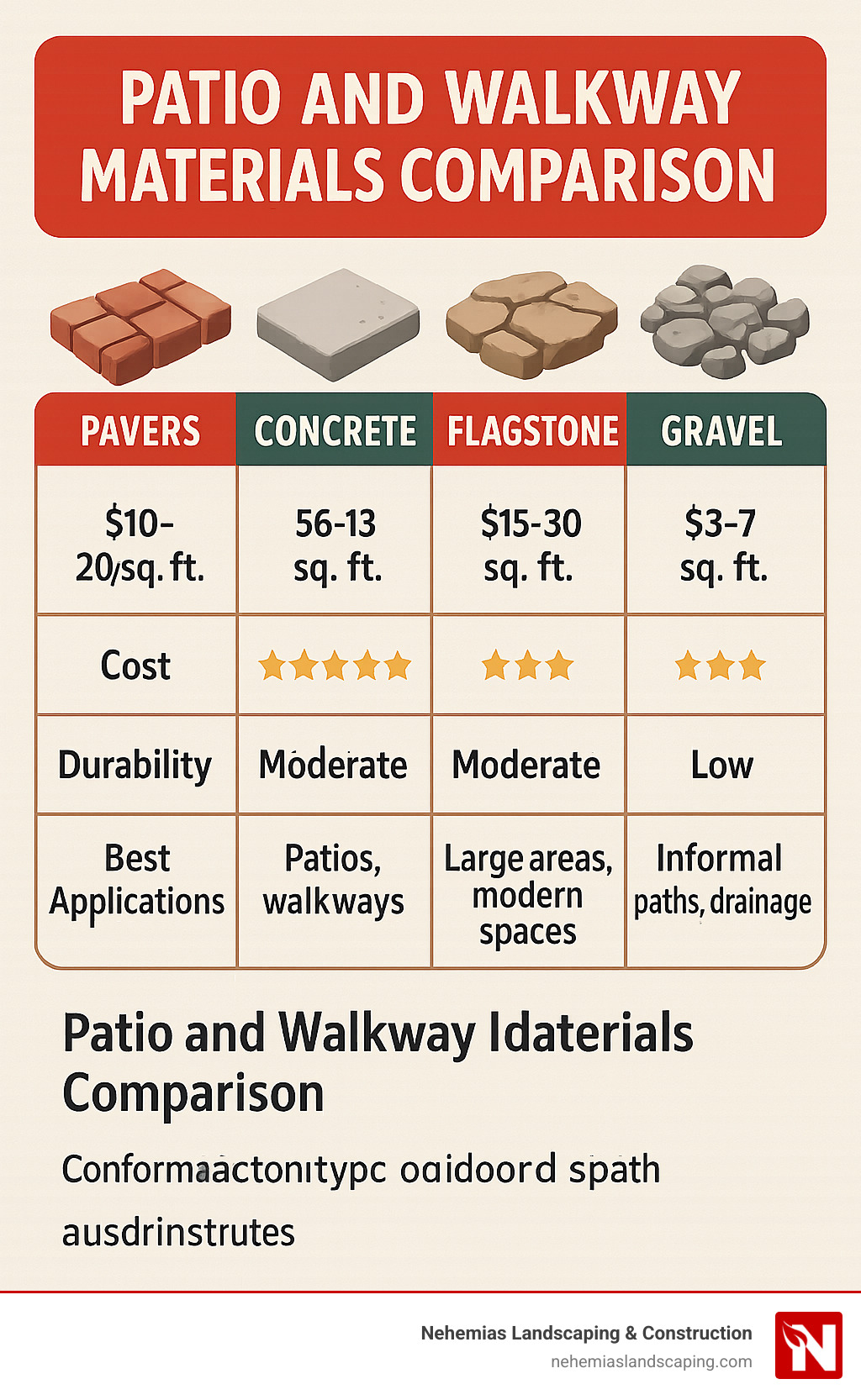
Basic Patio and walkway ideas glossary:
– Backyard hardscaping ideas
– Flagstone patio installation
– Beautiful outdoor living spaces
Patio and Walkway Ideas for Every Climate & Budget
Choosing the right materials for your Essex County home isn’t just about looks—it’s about creating outdoor spaces that can handle our New England weather while fitting your vision and budget. The best patio and walkway ideas find that sweet spot where beauty meets practicality.
As we often tell our clients at Nehemias Landscaping & Construction, “Your pathway isn’t just a way to get from point A to point B—it’s an opportunity to make a statement with your landscape design.” Whether you’re looking to create a welcoming entrance to your home or a cozy backyard retreat, the materials you choose matter.
When budgeting for your project, pavers typically represent only about 20% of your total costs. Most of your investment goes toward proper base preparation and professional installation—the hidden elements that ensure your patio or walkway lasts for decades. While concrete pavers might run $8-15 per square foot installed, premium natural stones could range from $20-60 per square foot depending on the variety and complexity of installation.
| Material | Cost Range | Durability | Maintenance | Best For |
|---|---|---|---|---|
| Concrete Pavers | $8-15/sq ft | High | Low-Medium | Versatility, patterns |
| Natural Stone | $20-60/sq ft | Very High | Medium | Timeless appeal |
| Poured Concrete | $6-12/sq ft | Medium | Low | Modern designs |
| Gravel | $3-8/sq ft | Medium | Medium-High | Budget-friendly paths |
Patio and walkway ideas for cold climates
Here in Essex County, we face some serious winter challenges. Freeze-thaw cycles can wreak havoc on poorly designed hardscaping, leaving you with cracked, heaved surfaces by spring.
For our local clients, we strongly recommend concrete pavers with high PSI ratings that can withstand the pressure of expanding ice. Unlike poured concrete (which tends to crack after a few winters), properly installed pavers flex slightly with ground movement, maintaining their integrity year after year.
Bluestone and granite are excellent natural stone options for our climate, as their low water absorption rates help them resist cracking during freezes. I’ve seen traditional bluestone patios in Beverly homes that have weathered beautifully for decades.
Snow removal becomes much easier with the right surface. Smooth, even surfaces make shoveling a breeze, while slightly textured materials provide essential traction during our icy winters. For high-traffic areas like front walkways, we sometimes suggest installing snow-melt systems beneath the pavers—a luxury that quickly becomes a necessity during those February blizzards!
Patio and walkway ideas for hot climates
While Essex County isn’t Phoenix, our summer months can deliver some scorchers. For comfortable bare-foot patio experiences even on hot July afternoons, material selection matters.
Light-colored materials reflect heat rather than absorbing it, making a dramatic difference in surface temperature. We’ve measured dark pavers reaching 140°F in direct sun, while similar light-colored versions stayed below 100°F—a difference you’ll definitely feel underfoot!
Travertine and limestone have become increasingly popular choices for our clients seeking cool-to-the-touch surfaces. These natural stones have microscopic air pockets that help dissipate heat, keeping them remarkably comfortable even during heatwaves.
For drought-conscious designs, we often incorporate permeable paver systems that allow rainwater to seep through rather than run off. These systems help direct precious moisture to your plants’ roots while reducing puddling and erosion. Combining these with drought-resistant plantings along the borders creates beautiful, sustainable pathways that thrive with minimal watering.
Porcelain pavers represent the newest innovation in outdoor surfaces, offering exceptional heat resistance while mimicking the look of natural stone or wood. Their non-porous surface makes them virtually maintenance-free—a quality many of our busy Essex County homeowners appreciate.
By carefully matching materials to our unique New England climate, we help ensure your outdoor investment remains beautiful and functional throughout our diverse seasons. The right patio and walkway ideas don’t just improve your property’s appearance—they create outdoor living spaces that truly work for your lifestyle and location.
Paver Power – From Classic Brick to Modern Interlock
Pavers have become the superstar of patio and walkway ideas in Essex County homes, offering incredible versatility that ranges from charming clay brick to sleek modern interlocking systems. What makes pavers so popular with our clients? Their modular nature is a game-changer – if one gets damaged, you can replace just that piece without tearing up the entire walkway.

Concrete pavers give you the most bang for your buck, delivering outstanding durability without breaking the bank. We’ve installed countless concrete paver walkways throughout Beverly and Danvers where homeowners are amazed by the rainbow of colors, shapes, and sizes available. Many of our clients are pleasantly surprised to find how today’s concrete pavers can convincingly mimic more expensive natural stone.
There’s something timelessly appealing about brick pavers, especially in our New England neighborhoods. Their rich terracotta hues and textured surfaces create pathways that seem to tell stories of the past while improving with age. As one Marblehead homeowner told us after her installation: “My brick pavers don’t just complement my colonial home – they make it feel more authentic.”
For environmentally-conscious homeowners, permeable pavers have become the go-to choice. These specialized pavers feature wider joints or built-in channels that allow rainwater to filter naturally into the ground rather than running off into storm drains. In areas like Salem and Ipswich where flooding can be a concern, these systems are both practical and responsible.
One installation tip we always share: never skip proper edging! “Edge restraints are required wherever pavers border open areas to prevent creeping,” our installation team explains. These borders are the unsung heroes that keep your beautiful paver pattern perfectly aligned for years to come.
More info about Paver Walkways
Patterns that Pop
The pattern you choose dramatically transforms the character of your paver installation:
Herringbone patterns create a dynamic zigzag effect that’s not just visually interesting – it’s also structurally superior for high-traffic areas. We often recommend this pattern for driveways where pavers need to resist shifting under vehicle weight.
Basket-weave designs give your space a warm, woven appearance that pairs beautifully with traditional New England architecture. It’s particularly charming for garden pathways and cottage-style homes.
Running bond patterns (where pavers are offset like a brick wall) offer a clean, simple look that’s both timeless and visually elongating for narrow spaces. It’s also one of the most DIY-friendly patterns for homeowners who enjoy weekend projects.
Soldier course borders – where pavers stand “at attention” end to end – create strong, defined edges that frame your patio or walkway beautifully. We often use these as borders around more intricate interior patterns.
Don’t underestimate the power of a good border! A contrasting edge in a different color or material can completely transform your paver installation from ordinary to eye-catching. For a recent project in Swampscott, we paired light sandstone-colored pavers with a chocolate brown border that perfectly complemented the home’s exterior color scheme.
Patio and walkway ideas with paver accents
Want to take your paver project from basic to breathtaking? Consider these accent techniques that our Essex County clients love:
Inset “rugs” create defined areas within your patio by changing the paver pattern or color in a rectangular section. This technique works wonders for defining outdoor dining spaces or conversation areas without physical barriers.
Contrasting colors do more than just look pretty – they can serve practical purposes too. We recently completed a project in Ipswich where darker pavers subtly guide visitors from the driveway to the front door, eliminating any confusion for first-time guests.
Angled layouts add dynamic energy to otherwise straightforward pathways. As our lead designer often tells clients, “Angled laying patterns guide visitors’ eyes toward the front door and add visual interest that straight patterns just can’t match.”
One of our favorite high-end techniques is the “paver rug” approach we’ve implemented in several Salem and Marblehead homes. By using premium decorative pavers as an inset focal point within a larger patio of standard pavers, we create a stunning centerpiece without the expense of using luxury materials throughout the entire space. It’s like having the perfect area rug that never needs vacuuming!
Stones with Stories – Flagstone, Slate & Bluestone
When it comes to creating truly remarkable outdoor spaces, natural stone pathways and patios stand in a class of their own. Each stone brings its own personality to your landscape through unique color variations, textures, and those beautiful “imperfections” that make natural materials so captivating.
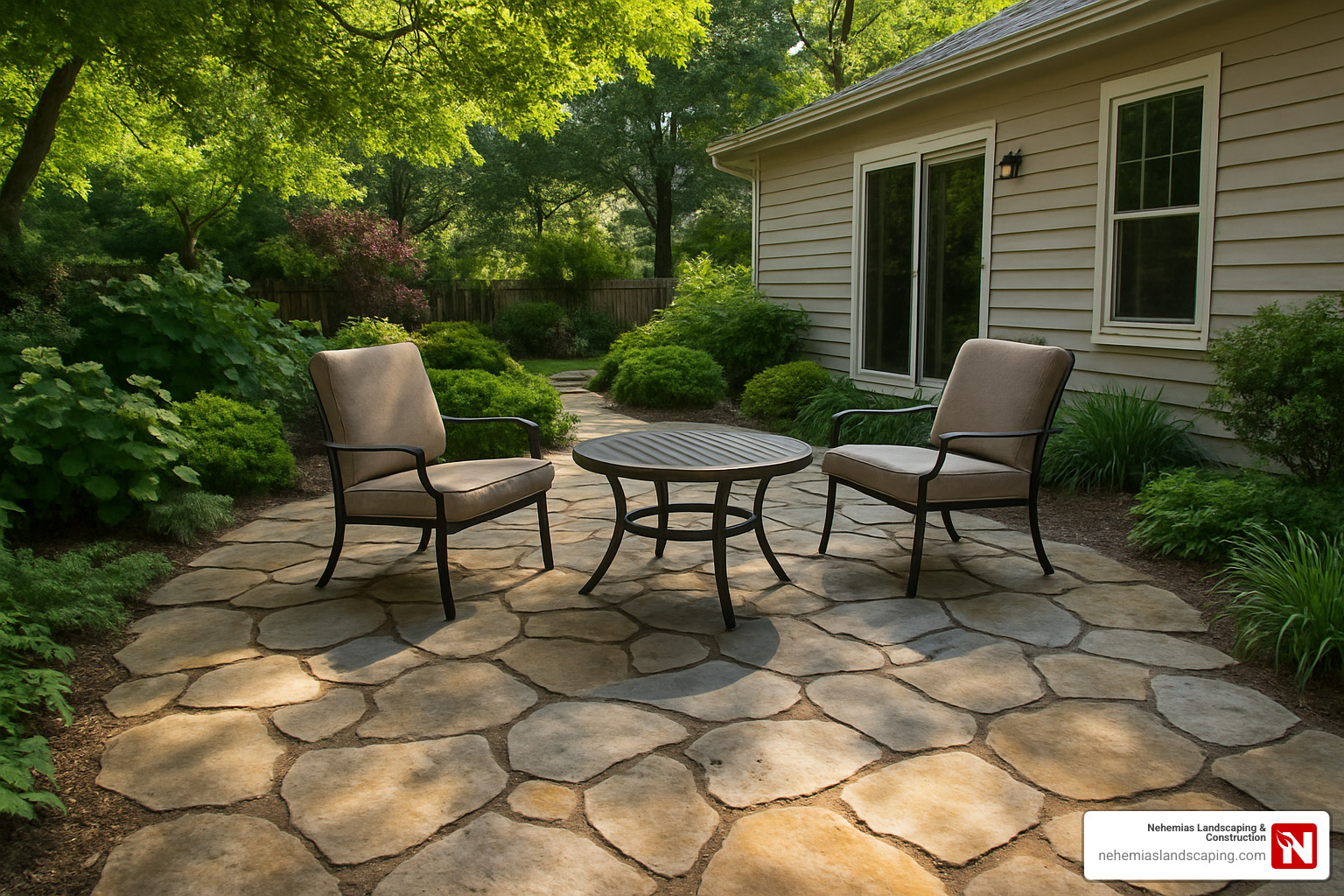
Flagstone truly shines as perhaps the most versatile natural stone for patio and walkway ideas. We love how its irregular shapes create flowing, organic paths that seem to have grown naturally from the Essex County landscape. Our clients often marvel at the earthy color palette – from warm buff and tan tones to rich rust hues and sophisticated blue-grays. What makes flagstone so special is its chameleon-like ability to work beautifully in both formal courtyard settings and casual garden paths.
Here in New England, bluestone has earned its place as a regional favorite. Primarily quarried in Pennsylvania and New York, its consistent blue-gray coloration perfectly complements our classic New England architecture while offering exceptional durability against our sometimes harsh climate. We can install bluestone in either irregular, natural-edge pieces or precisely cut rectangular shapes, giving you the flexibility to create either formal patios or more naturalistic pathway designs.
For homeowners looking to make a more dramatic statement, slate delivers with its stunning color options – from deep purples and greens to classic blacks and fascinating multicolored varieties. The layered structure of slate creates interesting surface textures that catch the light beautifully throughout the day. We typically recommend slate for covered areas or lower-traffic pathways, as it can become somewhat slippery when wet.
Flagstone Walkway Install Guide
Pros & Cons of Natural Stone
We believe in honest conversations with our clients about what to expect with natural stone installations:
Pros:
– These materials offer truly exceptional longevity – many installations last 50+ years when properly installed
– Each installation is genuinely unique, with one-of-a-kind appearance impossible to replicate
– Natural stone significantly increases property value and creates instant curb appeal
– Unlike manufactured materials, natural stone ages gracefully, developing character over time
Cons:
– The initial investment is higher than manufactured alternatives ($20-60 per square foot installed, with premium stones and complex installations reaching the upper range)
– Installation requires more labor and expertise than manufactured pavers
– The irregular shapes of natural stone demand skilled cutting and fitting for a polished result
– Some varieties can become slippery when wet, requiring thoughtful placement and surface treatment
As our design team often explains to clients: “Flagstone’s natural cracks and spaces aren’t flaws – they contribute to that organic aesthetic that’s so appealing, and they’re actually quite low-maintenance.” Many of our Essex County homeowners tell us they chose natural stone precisely because it harmonizes so beautifully with our region’s landscape and architectural heritage.
Inspiration Gallery
We’ve found that seeing completed projects often sparks the imagination better than any description could. That’s why we encourage our clients to explore images showcasing the incredible range of possibilities – from formal courtyard patios to whimsical garden paths that meander through lush plantings.
One of our favorite recent projects in Gloucester features a flagstone path where we planted fragrant thyme between the stones. As the delighted homeowner told us, “The staggered stonework pattern keeps the pathway from feeling too narrow, and when the purple thyme blooms in summer, it adds both color and the most wonderful fragrance when you brush against it.”
From our experience working throughout Essex County, we’ve seen how natural stone creates outdoor spaces that feel simultaneously timeless and deeply personal. While these materials require a greater initial investment, the results truly stand the test of time – becoming more beautiful with each passing season.
Gravel & Alternative Surfaces for Budget-Savvy Paths
Looking for wallet-friendly patio and walkway ideas that don’t sacrifice style? Gravel and alternative materials might be your perfect match. At around $5 per square foot for DIY installation, gravel delivers serious bang for your buck while creating charming, natural-looking pathways.
“Gravel is one of the most budget-friendly backyard pathway ideas and is also one of the easiest DIY projects to take on,” our installation team often tells hesitant homeowners. Don’t let the simplicity fool you – this humble material comes in a surprising variety of sizes and colors, from delicate pea gravel to substantial river rocks, each creating its own distinctive look and feel underfoot.
For something a bit more stable, decomposed granite offers the perfect middle ground. It compacts better than traditional gravel while still allowing rainwater to permeate through. Its warm, rusty-tan color works beautifully in both formal garden designs and casual, relaxed landscapes throughout Essex County.
Your budget-friendly options don’t end there. Rubber pavers made from recycled tires provide excellent shock absorption (perfect near play areas), while wood-look porcelain tiles deliver the warmth of timber without the maintenance headaches. For eco-conscious homeowners, grass pavers – concrete or plastic grids that support vehicle weight while allowing grass to grow through – create green driveways and pathways with minimal environmental impact.
DIY Friendly Installation Steps
Many of our Essex County clients have successfully installed their own gravel pathways following these straightforward steps:
- Mark your path: Grab a garden hose or spray paint to outline your design – curves are easy with gravel!
- Excavate: Dig down 4-6 inches, removing all grass and roots for a clean slate.
- Install edging: Metal, plastic, or stone borders will keep your gravel from wandering into the lawn.
- Lay weed barrier: Don’t skip this crucial step – it prevents the frustration of weeds popping through.
- Add base material: Spread a 2-3 inch layer of #5 (1″) gravel and tamp it down firmly.
- Top with final gravel: Add 2-3 inches of your chosen decorative gravel and rake until smooth.
“A paver walkway base should be 4-6 inches deep for best results, while driveways need at least 6-8 inches of stone base,” explains our team. We can’t stress enough how proper base preparation makes all the difference between a pathway that lasts for years and one that quickly develops problems.
Patio and walkway ideas that mix gravel and stone
Some of our most stunning installations combine gravel with other materials for truly eye-catching results. The contrast between textures creates visual interest that single-material installations simply can’t match.
Checkerboard grids pair large square pavers set in a geometric pattern with gravel filling the spaces between. As our design team likes to say, “Treat pea gravel like grout to create a checkerboard pattern with large pavers.” This approach provides the stability of solid surfaces with the drainage benefits and cost savings of gravel.
Stepping stones nestled in gravel create a playful, journey-like experience through the garden. We recently completed a project in Ipswich using irregular bluestone pieces surrounded by small river pebbles – the combination of colors and textures was simply magical.
Grass infill techniques alternate sections of gravel with living turf for a textured pathway that brings nature right into your hardscaping. One client in Hamilton created a stunning backyard feature using large concrete pavers in a grid with pea gravel filling the gaps. The modern, clean-lined patio cost significantly less than a solid paver installation while offering unique visual appeal that guests always comment on.
When properly installed with quality materials, these budget-friendly pathways can last for years while adding distinctive character to your Essex County property. Sometimes the most affordable options end up being the most charming!
Green & Clean – Eco-Friendly & Permeable Solutions
Environmentally conscious patio and walkway ideas are increasingly popular among Essex County homeowners. These approaches not only look beautiful but also help manage stormwater, reduce runoff, and support local ecosystems.
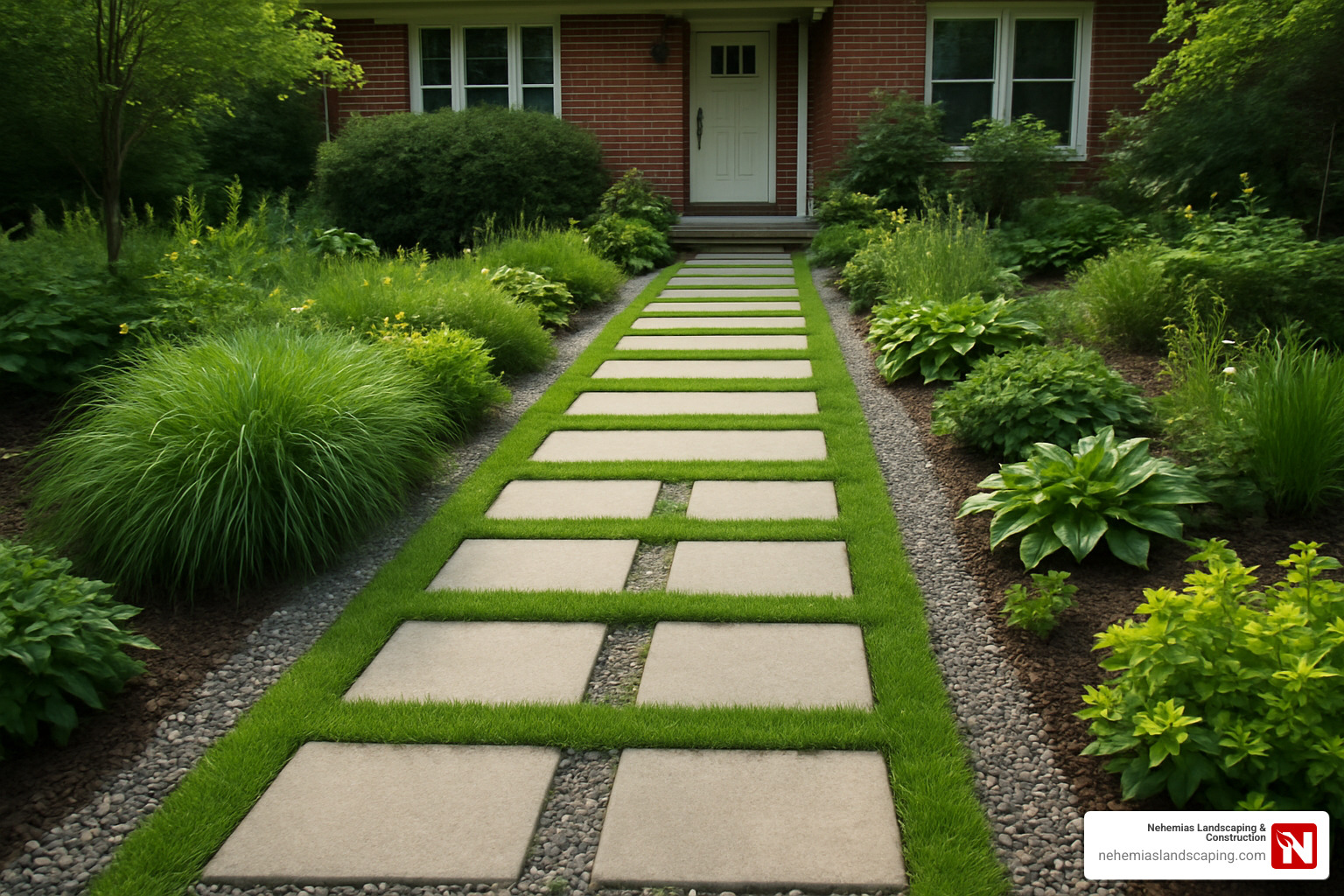
When I visit clients in Beverly or Salem, I often hear concerns about puddles forming on traditional hardscaping after heavy rains. That’s where permeable pavers shine! These clever systems feature wider joints or built-in channels that allow rainwater to filter naturally into the ground instead of rushing into storm drains. Your yard becomes part of the solution to water management, not part of the problem.
“My permeable paver driveway has completely eliminated the puddles we used to get,” shared one Marblehead homeowner. “Plus, it looks identical to traditional pavers – visitors can’t even tell the difference!”
Beyond permeable pavers, we’ve seen growing interest in several earth-friendly options:
Recycled pavers give materials a second life, reducing landfill waste while creating beautiful outdoor spaces. Made from reclaimed concrete, brick, or even plastic, these pavers tell a sustainability story while performing beautifully.
Grass pavers offer the best of both worlds – a sturdy surface that can handle occasional vehicle traffic while allowing grass to grow through a concrete or plastic grid system. Perfect for overflow parking areas or emergency access paths that you want to keep visually green.
Shellstone has become a favorite for coastal properties from Gloucester to Rockport. This material incorporates crushed shells for a beach-inspired look that feels right at home near the water. When sourced locally, it reduces transportation emissions too.
Here’s a money-saving tip: Many municipalities, including several in Essex County, offer tax credits or stormwater fee reductions for properties with permeable surfaces. These incentives can help offset the 10-20% higher installation costs of these eco-friendly systems. Check with your local conservation commission for details!
Building for Sustainability
Creating truly sustainable hardscaping goes beyond material selection. When we design eco-friendly paths and patios, we consider the entire environmental footprint.
Local sourcing makes a significant difference. Materials quarried or manufactured within 500 miles dramatically reduce transportation emissions. At Nehemias Landscaping, we prioritize Massachusetts and New England sources whenever possible.
Heat island reduction matters more than you might think. Dark surfaces absorb and radiate heat, making your yard warmer in summer. Light-colored materials reflect rather than absorb heat, creating more comfortable outdoor spaces while reducing cooling needs for nearby buildings.
Native planting integration transforms ordinary walkways into wildlife corridors. By incorporating beds for native plants along your pathway edges, you create habitat for local pollinators and birds. Plus, these plants typically require less watering once established.
I’ll never forget the clever system we created for an Ipswich family last year. Their permeable paver driveway channels rainwater to an adjacent rain garden filled with native black-eyed Susans, coneflowers, and switchgrass. During heavy downpours, you can actually watch the water disappear through the pavers instead of running down the street. The homeowners report seeing more butterflies and birds than ever before!
“Permeable systems don’t just manage water—they clean it,” explains our installation team leader. “The layers of stone beneath filter out pollutants before water reaches waterways.” This filtration benefit is especially valuable for properties near the ocean, rivers, or wetlands—which describes much of Essex County!
According to scientific research on permeable surfaces, these systems can remove up to 80% of sediments, 60% of phosphorus, and 80% of nitrogen from rainwater runoff. Those numbers translate to cleaner waterways and healthier ecosystems for everyone to enjoy.
Design Playbook – Layout, Flow & Function
Creating a truly exceptional outdoor space isn’t just about choosing beautiful materials—it’s about thoughtful design that transforms ordinary patio and walkway ideas into living extensions of your home. Think of your yard as a series of outdoor rooms, each with its own purpose but flowing naturally together.
When planning your Essex County landscape, start by considering traffic patterns. Main walkways—like the path from your driveway to your front door—should be generously sized at 4 feet wide or more. This allows couples to walk comfortably side-by-side and accommodates wheelchairs or strollers. Garden paths that meander through flower beds can be more intimate at 2-3 feet wide, encouraging a slower pace to enjoy the surroundings.
“Your pathways tell a story about how to experience your property,” explains our design team. “They shouldn’t just be functional—they should create moments of findy and delight.”
Creating distinct zones helps organize your outdoor space for different activities. Consider placing your dining area close to the house for easy food service, a conversation area around a cozy fire pit, and perhaps a quieter reading nook tucked into a garden corner. These zones can be defined subtly through changes in materials or more obviously with different levels or structures.
Sight lines—what catches your eye as you move through the space—deserve special attention. Curved paths create a sense of mystery and anticipation, revealing new views with each step. Straight paths feel more formal and purposeful, drawing the eye directly to a focal point like a sculpture or specimen tree. Both have their place, depending on your home’s architecture and your personal style.
Small yards present special challenges, but with clever design tricks, even modest spaces can feel expansive:
– Laying pavers in diagonal patterns makes areas appear larger than they are
– Creating multi-purpose areas that transform based on your needs (dining by day, lounge by night)
– Using vertical elements like pergolas or trellises to draw the eye upward, creating the illusion of more space
Creative Hardscaping Ideas for Small Outdoor Spaces
Must-Have Features
Today’s outdoor spaces often include special features that improve both enjoyment and functionality. A thoughtfully designed fire pit can transform your patio into a three-season gathering spot, extending your outdoor living well into the cooler months. We’ve created everything from simple stone rings to elaborate gas-powered installations with built-in seating.
Outdoor kitchens have evolved from basic grilling stations to sophisticated cooking areas with countertops, refrigeration, and even pizza ovens. “The right outdoor kitchen keeps the cook part of the party,” notes our design team, “instead of shuttling back and forth to the house.”
Seating walls offer a brilliant two-for-one solution in any landscape design. These low walls (typically 18-24 inches high) define the edges of your patio while providing overflow seating for larger gatherings. Often built from matching pavers or natural stone, they create a cohesive look that’s both practical and attractive.
Water features add a dimension of tranquility to any outdoor space. The sound of water masks neighborhood noise and creates a soothing atmosphere. Options range from simple bubbling fountains to elaborate waterfall features that become the centerpiece of your landscape.
“The purpose of a walkway isn’t just getting from point A to point B,” explains our design team. “It’s about creating an experience that improves your daily life and makes ordinary moments feel special.”
Lighting & Safety Extras
The magic of a well-designed outdoor space doesn’t end when the sun goes down. Thoughtful lighting extends your enjoyment into the evening hours while ensuring safety for family and guests.
LED path lights placed strategically along walkways provide gentle illumination without the harsh glare of floodlights. Modern fixtures direct light downward, highlighting the path without light pollution. For a truly seamless look, consider step lights recessed into risers or walls that illuminate changes in elevation without visible fixtures.
For atmosphere and ambiance, nothing beats the warm glow of ambient lighting. String lights draped above a patio create an instant party atmosphere, while uplighting trees adds drama and dimension to your nighttime landscape. “Lighting transforms your garden into a completely different experience after dark,” our designers often tell clients.
Safety considerations should never be an afterthought. Select materials with appropriate texture for slip resistance, especially around pool areas or in locations that get morning dew or frequent rain. Proper drainage prevents puddles and ice formation, while smooth transitions between different surfaces prevent tripping hazards.
For Essex County homeowners dealing with our snowy winters, consider snow-melt systems for high-traffic walkways. These heating elements installed beneath your pavers eliminate the need for shoveling and prevent dangerous ice buildup. They’re especially valuable for elderly homeowners or those with mobility challenges.
“Illuminate your walkway with paver lighting,” recommends our team. Today’s systems can be installed directly into or underneath pavers, creating a magical effect that seems to make the path glow from within—perfect for guiding guests safely while creating an unforgettable impression.
DIY vs. Pro – Planning, Prep & Installation Basics
Whether you’re considering tackling a project yourself or hiring professionals like our team at Nehemias Landscaping & Construction, understanding the basics of patio and walkway installation helps you make informed decisions.

The foundation of any successful patio and walkway ideas is quite literally the foundation itself. Here in New England, where freeze-thaw cycles are a fact of life, proper base preparation isn’t just recommended—it’s essential. For standard walkways, you’ll need 4-6 inches of compacted gravel base, while driveways or heavy-traffic areas require a more substantial 6-8 inch base to prevent settling and shifting over time.
“The most common DIY mistake we see is skimping on base materials,” shares our installation team. “When homeowners try to save money by reducing base depth, they end up with uneven surfaces within a season or two.”
If you’re brave enough to tackle your own installation, you’ll need to gather the right tools for the job. Safety equipment comes first—good gloves, eye protection, and hearing protection when using power equipment. For layout, you’ll need measuring tapes, string, stakes, and levels to ensure everything is properly aligned. The heavy work requires shovels, wheelbarrows, and a plate compactor (which can typically be rented). Don’t forget cutting tools for pavers and finishing implements like brooms and rubber mallets.
Before breaking ground in Essex County, check with your local building department about permit requirements. Most municipalities require permits for major hardscaping projects, especially those that might affect drainage patterns or include structural elements like retaining walls over a certain height.
Professional installation pricing varies based on materials, complexity, and site conditions. Based on publicly available internet data (not Nehemias Landscaping & Construction pricing), typical ranges include:
– Basic concrete paver walkways: $15-45 per square foot
– Natural stone patios: $25-75 per square foot
– Gravel pathways with proper base and edging: $8-24 per square foot
Looking for step-by-step guidance? Check out our detailed guide on How to Install Brick Steps.
When to Call the Experts
While many homeowners successfully tackle simple pathway projects, there are definite situations where professional expertise becomes invaluable:
Properties with significant slopes require proper drainage engineering to prevent erosion and water damage. One Danvers client learned this lesson the hard way after a DIY patio installation led to water pooling against their foundation during heavy rains.
Heavy load areas like driveways and retaining walls demand technical knowledge to ensure they can handle vehicle weight or soil pressure without failing. “A retaining wall isn’t just stacked stone,” our team explains. “It’s an engineered structure that needs proper drainage and often reinforcement.”
Complex designs that integrate multiple elements—steps, lighting, drainage systems, and level changes—benefit tremendously from professional planning. The difference between a good outdoor space and a great one often comes down to these thoughtful details.
As one client in Peabody candidly shared after attempting a DIY patio: “After laying sand and red stone, the sand washed away leaving the stones loose and uneven. What I thought would save money ended up costing more when I had to hire professionals to fix it.”
Budget-Friendly Tips
Whether working with professionals or DIYing, smart planning can help manage costs without sacrificing quality:
Break your project into phases rather than trying to complete everything at once. Start with the most essential elements—perhaps the main walkway from driveway to door—and add additional features like seating areas or fire pits in subsequent seasons as your budget allows.
Consider using salvaged materials where appropriate. Reclaimed brick or stone often costs less than new materials while adding unique character and patina that new products simply can’t match. We’ve helped several Beverly homeowners incorporate antique brick from old mill buildings into stunning walkways that tell a story.
Schedule your project during slower periods when contractors may offer better rates. Fall and winter planning can often lead to early spring installation at better prices than waiting until everyone is thinking about outdoor projects.
“Don’t let cost cloud your paver decision,” advises our team. “The cheapest option is rarely the best; quality pavers pay dividends in durability and aesthetics.” This wisdom applies to both materials and installation—cutting corners on either typically leads to higher long-term costs through maintenance and premature replacement.
One creative approach we’ve seen work well is mixing premium materials in high-visibility areas with more budget-friendly options in secondary spaces. This strategy delivers maximum impact where it matters most while keeping overall project costs manageable.
Care & Keeping – Maintenance & Longevity
Investing in beautiful patio and walkway ideas is just the beginning—proper maintenance ensures your outdoor spaces remain stunning and functional for decades to come. Think of your hardscape elements as outdoor furniture that needs regular attention to stay in top condition.
Different materials need specific care approaches, but all benefit from consistent TLC. For concrete pavers and brick, a simple routine of sweeping debris weekly prevents organic matter from staining surfaces or sprouting weeds in joints. Occasionally using a pressure washer (always on low setting!) helps restore their original appearance without damaging the surface.
Natural stone requires a gentler touch. “I always tell my Essex County clients to avoid acidic cleaners on their bluestone or flagstone,” shares our maintenance specialist. “A simple solution of mild soap and water does the job beautifully without risking damage to these investment pieces.” The natural beauty of stone actually improves with age when properly maintained.
For gravel pathways, an occasional raking refreshes the surface and redistributes stones that may have shifted. You’ll need to add new material every few years to maintain proper depth—typically about 2-3 inches for comfortable walking.
Sealing is worthwhile protection for most hardscape materials. “Reseal pavers every 3–5 years with high-quality sealers,” suggests our maintenance team. A good sealer not only improves colors but creates a protective barrier against stains from fallen leaves, barbecue drips, and other outdoor messes. Some sealers also stabilize joint sand, reducing maintenance needs.
Weed control remains an ongoing battle for many homeowners, particularly with paths that have sand or gravel joints. Pre-emergent herbicides applied in spring can prevent problems before they start. For those preferring natural approaches, regular applications of vinegar-based weed killers work well, though they require more frequent application. The best defense? Regular hand-weeding before problems have a chance to spread.
Winter in Essex County brings special challenges. “Use calcium-based deicers or rock salt and plastic shovels to protect paver surfaces,” recommends our team. Metal shovels can chip or scratch pavers and stone, causing damage that’s difficult to repair. When removing snow, push it rather than lifting when possible to minimize surface contact.
Seasonal Maintenance Calendar
For local homeowners, we’ve developed this seasonal approach to hardscape care:
Spring:
The thaw reveals winter’s effects on your outdoor spaces. This is the time to inspect for settled areas or loose pavers—small issues are much easier to address before they become major problems. A thorough cleaning removes winter grime, followed by joint sand replenishment where needed. Early spring is also perfect for applying pre-emergent weed control before problems take root.
Summer:
Warm months call for periodic cleaning to remove stains from outdoor living and dining. This is typically when sealing happens if needed (remember, most surfaces only need resealing every 3-5 years). Stay vigilant with weed control, as summer heat and occasional rain create perfect conditions for unwanted growth between pavers.
Fall:
As trees shed their foliage, prompt leaf removal prevents staining and slippery conditions. Before the first frost, clean and store outdoor furniture to prevent damage to both the furniture and your hardscape surfaces. This is also the time to verify that drainage systems are working properly before winter precipitation begins.
Winter:
The key to winter care is using appropriate deicing products sparingly—excess salt can damage both your hardscape and surrounding plant life. Clear snow with plastic shovels rather than metal ones, and try to prevent the freeze-thaw cycle that can cause significant damage over time.
Troubleshooting Common Issues
Even perfectly installed hardscapes may develop issues over time. Here’s how our team addresses the most frequent problems:
When pavers begin settling, the fix involves removing the affected area, adding and compacting additional base material, then reinstalling the pavers at the proper height. This relatively simple repair prevents trip hazards and drainage problems from developing.
Drainage issues often manifest as puddles or ice patches. Good hardscapes should slope away from structures at approximately ¼ inch per foot. If problems develop, consider adding a French drain alongside trouble spots, or verify that downspouts direct water away from paved areas rather than toward them.
Moss growth divides homeowners—some love its charming, aged appearance while others view it as a problem to solve. If you’re in the latter camp, improving sunlight access by trimming overhanging vegetation often solves the issue naturally. For more immediate results, a solution of 1 part bleach to 9 parts water removes moss effectively, though you’ll need to be careful around adjacent plantings.
As one of our veteran landscapers often reminds clients, “Behind every opportunity is a disaster in waiting.” This bit of wisdom perfectly captures why regular maintenance matters—small investments of time throughout the year prevent costly repairs down the road.
With proper care, the patio and walkway ideas you implement today will continue enhancing your home’s beauty, value, and functionality for generations to come.
Frequently Asked Questions about Patio and Walkway Projects
What is the most durable material for high-traffic areas?
When it comes to withstanding Essex County’s seasonal changes and heavy foot traffic, not all hardscaping materials are created equal. Concrete pavers and granite consistently outperform other options in our New England climate.
Concrete pavers offer impressive strength—typically 8,000+ PSI—making them remarkably resistant to cracking and wear. One of their biggest advantages is repairability; if a single paver becomes damaged or stained, you can simply replace that piece without disturbing the entire walkway.
Granite deserves special mention for areas that see constant use. “Granite pavers withstand high traffic due to their hardness and durability,” our installation team often explains to clients. While you’ll pay more upfront for granite, many homeowners find the investment worthwhile when they’re still enjoying the same beautiful surface decades later without replacement costs.
For front entrances, steps, and primary walkways that connect your driveway to your home, these durable materials prove their value through years of reliable service.
How deep should my patio or walkway base be?
Base depth is where many DIY projects go wrong, yet it’s the foundation that determines how long your hardscape will last. In Essex County’s freeze-thaw climate, proper base preparation is non-negotiable.
For standard walkways around your home, aim for 4-6 inches of compacted stone base. Patios, which often hold furniture and gatherings, need more support—typically 6-8 inches of properly prepared base material. Driveways face the toughest conditions and require 8-12 inches of carefully compacted base to support vehicle weight.
“A paver walkway base should be 4-6 inches deep for best results, while driveways require at least 6-8 inches of stone base,” our installation specialists regularly remind clients. This isn’t an area to cut corners.
Your soil type also affects these requirements. Clay soils, which are common in parts of Essex County, often need additional depth and drainage considerations. Sandy soils may allow for slightly less base material, but we rarely recommend reducing below these minimums.
What’s the easiest material for a weekend DIYer?
If you’re looking to tackle a project yourself, some materials are definitely more beginner-friendly than others. Gravel paths with proper edging top our list for DIY success. They’re forgiving of minor mistakes in leveling, and the loose material can be raked and adjusted as needed.
Manufactured concrete pavers in uniform sizes also work well for first-time installers. Unlike natural stone with irregular shapes that require puzzle-solving skills, these predictable units make layout much simpler. As our team often advises, “Small, manufactured pavers (8″×8″ or smaller) in square or rectangular shapes are easiest for DIY installations.”
For the simplest approach of all, consider precast concrete stepping stones. These ready-made pieces can be placed directly on a prepared sand bed to create a basic pathway in just an afternoon.
Regardless of which material you choose, don’t skimp on base preparation. Even the most DIY-friendly materials need proper drainage and support to perform well over time. Many homeowners find it worthwhile to invest in quality tools like a plate compactor (which can often be rented) to ensure their weekend project stands the test of time.
Conclusion
The right patio and walkway ideas don’t just change how your yard looks—they transform how you live in your outdoor space. These hardscape elements create structure, function, and beauty while boosting your property’s value and, more importantly, your daily enjoyment of home.
Throughout Essex County, we’ve watched families fall in love with their yards all over again. From the salty breezes of Marblehead and Gloucester to the leafy neighborhoods of Middleton and Peabody, a thoughtfully designed outdoor space becomes part of your everyday life. That new patio becomes the place where summer dinners stretch into evening conversations under string lights. The winding walkway that once was just a muddy path now guides visitors through your garden’s seasonal highlights.
“Friends and family will want to take a second trip up the walkway just to take in the view,” as one delighted client told us after their project was complete. That’s the real magic of exceptional hardscaping—it doesn’t just create surfaces, it creates experiences and memories.
Curb appeal matters, of course. A beautiful front walkway makes that crucial first impression and sets the tone for your entire property. But the real value comes in those quiet moments when you step outside with your morning coffee and feel a sense of pride in your surroundings.
Whether you’re considering a weekend DIY project or dreaming of a complete outdoor change, we hope these ideas have sparked your imagination. At Nehemias Landscaping & Construction, we’re passionate about crafting beautiful, functional hardscapes that improve homes throughout Essex County. We believe that quality outdoor living shouldn’t be a luxury—it should be accessible to every homeowner who values their outdoor space.
Ready to bring your patio and walkway ideas to life? We’d love to help you transform your outdoor dreams into daily reality with the craftsmanship and attention to detail that’s become our hallmark throughout Essex County.
More info about Hardscaping Services