
Mason Repair Near Me: Top 5 Trusted Solutions 2025
When Your Home’s Masonry Needs Expert Attention
If you’re searching for mason repair near me, here’s what you need to know about finding quality masonry repair services in your area:
| Quick Guide: Finding Mason Repair Services |
|---|
| 1. Check for licenses and insurance (essential for liability protection) |
| 2. Look for specialists in your specific material (brick, stone, concrete) |
| 3. Get at least 3 quotes to compare pricing ($35-$100/hour or $20-$60/sq ft) |
| 4. Verify experience through reviews and photos of past projects |
| 5. Ask about warranties (typically 1-5 years for quality work) |
Every crack in your brick wall, every crumbling mortar joint, and every leaning stone structure tells a story. Unfortunately, it’s often a story of water damage, freeze-thaw cycles, or simple aging that threatens both your home’s appearance and structural integrity.
Masonry repair isn’t just about aesthetics. It’s about preserving your property’s value, preventing costly structural damage, and ensuring the safety of your home. Whether you’re dealing with crumbling bricks, deteriorating mortar joints, or a chimney in desperate need of repointing, finding the right mason for repairs is crucial.
Signs your masonry needs professional attention include:
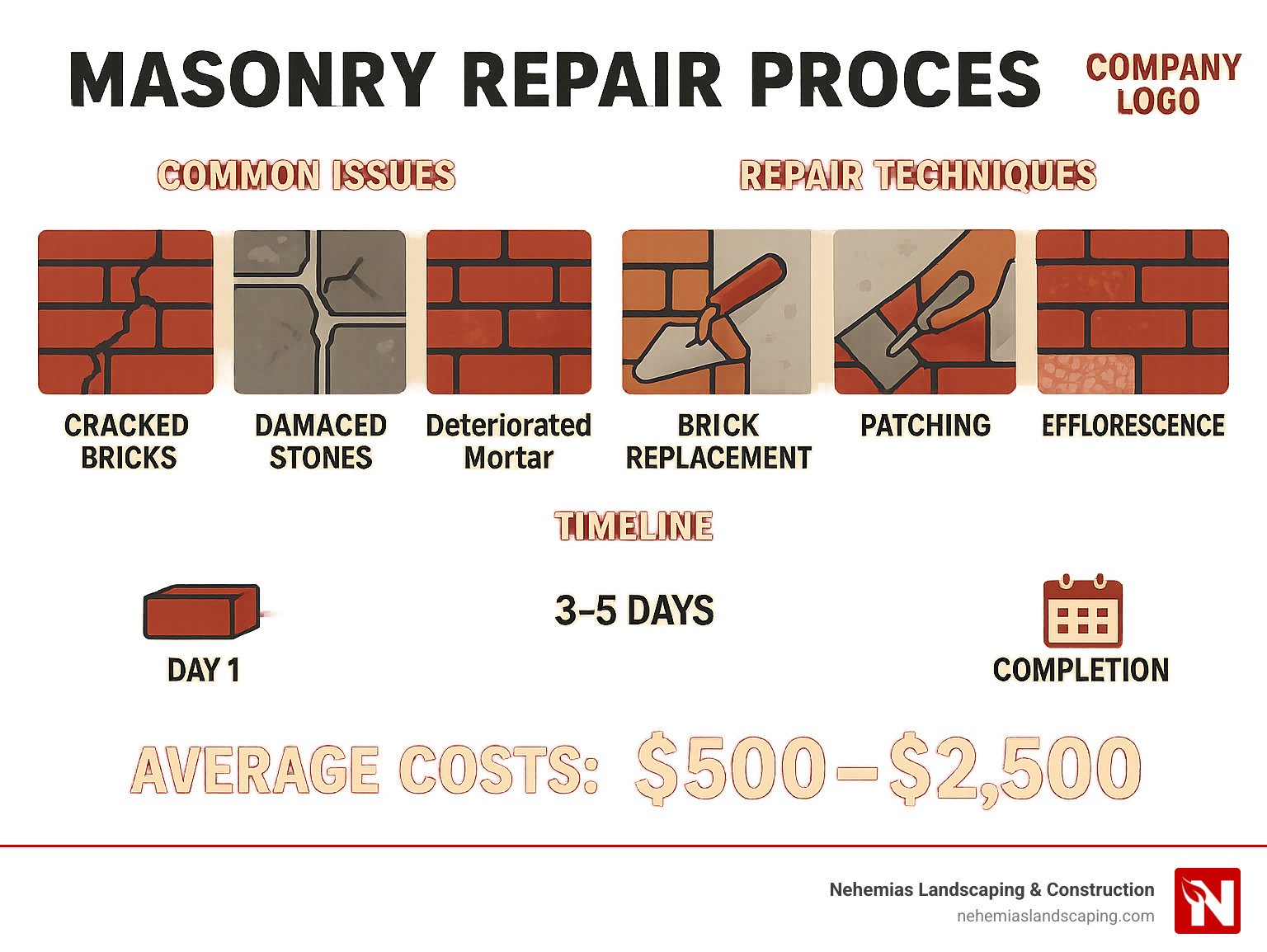
- Cracked or crumbling bricks and stones
- Missing or deteriorating mortar joints
- White powdery substance (efflorescence) on surfaces
- Bulging or leaning walls
- Water stains or moisture inside your home
- Rusting elements near masonry
Most residential masonry repairs cost between $500 and $2,500, though complex projects involving structural issues can run significantly higher. Reputable masons typically charge between $35 and $100 per hour, with material costs adding to the total.
Quality masonry work is an investment. While it might be tempting to choose the lowest bid, experienced masons with proper credentials provide repairs that last decades rather than just a few seasons.
Glossary for mason repair near me:
– brick and mortar near me
– masonry restoration massachusetts
– stone and masonry restoration
1. Brick & Mortar Repointing
There’s something special about brick and stone structures—they bring character, strength, and timeless beauty to our homes. But even the sturdiest masonry needs some TLC over time. That’s where repointing comes in—the careful art of removing deteriorated mortar and replacing it with fresh material to keep your masonry strong and water-resistant.
If you’ve noticed crumbling mortar between your bricks, it’s not just an aesthetic issue. Those tiny cracks create pathways for moisture to penetrate your walls, potentially causing serious structural damage over time. Repointing is the essential maintenance that preserves your masonry’s integrity and extends its lifespan by decades.
A homeowner in Ipswich recently finded the transformative power of professional repointing. After noticing mortar deterioration on their colonial home’s exterior, they called for mason repair near me and were amazed by the results.
“I thought we might need to replace entire sections of our wall,” they shared. “But the mason showed us how repointing could restore everything. The difference is remarkable—it looks fresh and solid again, and we saved thousands compared to replacement.”
Brick Masonry Repair Near Me specialists like our team at Nehemias Landscaping & Construction address several common brick issues:
- Cracked bricks that compromise your wall’s integrity
- Deteriorating mortar joints that weaken the entire structure
- Efflorescence (those chalky white deposits signaling moisture problems)
- Color matching challenges for aesthetically pleasing repairs
- Structural concerns that could affect your home’s safety and value
Why Repointing Matters
Here in Essex County, Massachusetts, our masonry faces a tough enemy: the freeze-thaw cycle. When water seeps into tiny mortar cracks, it expands as it freezes, forcing those cracks wider. Come spring thaw, more water enters those enlarged spaces, and the cycle continues—gradually turning small cracks into serious structural issues.
Professional repointing creates an effective barrier against this moisture intrusion. By removing damaged mortar and replacing it with fresh material, we essentially reset the clock on your masonry’s lifespan.
“Most homeowners don’t realize that mortar is designed to be the sacrificial component in masonry,” explains our lead mason. “It’s actually supposed to deteriorate before your bricks or stones do—acting as a buffer that protects the more expensive materials. Regular repointing is simply renewing that protective system.”
Beyond structural protection, proper repointing also improves your home’s waterproofing capabilities, prevents costly repairs down the road, and maintains your property’s value and curb appeal.
Process at a Glance
Professional repointing follows a methodical process to ensure lasting results:
Mortar removal begins with carefully extracting damaged mortar to a depth of approximately ¾ inch without harming the surrounding bricks or stones. This requires skill and the right tools—rushing or using improper techniques can damage your masonry.
Next comes joint preparation, where we clean all debris from the exposed joints and lightly dampen them to ensure the new mortar bonds properly. This step is critical for a lasting repair.
The joint filling stage is where craftsmanship really shines. Fresh mortar is skillfully applied to match not just the color of your existing mortar, but also the original joint style and profile. This attention to detail makes the difference between repairs that blend seamlessly and those that stand out awkwardly.
Finally, curing time allows the new mortar to reach its full strength—typically 3-7 days depending on weather conditions. During this period, the mortar may need occasional misting to prevent it from drying too quickly and developing weakness.
“The biggest mistake we see with DIY repointing is rushing the curing process,” notes our masonry specialist. “Proper curing is essential for developing the strength and durability of the mortar. Skipping this step virtually guarantees premature failure.”
Professional Stone and Masonry Restoration ensures every step is handled with care and expertise, from selecting the perfect mortar mix for your specific masonry to allowing proper curing time for lasting results.
2. Chimney & Fireplace Restoration
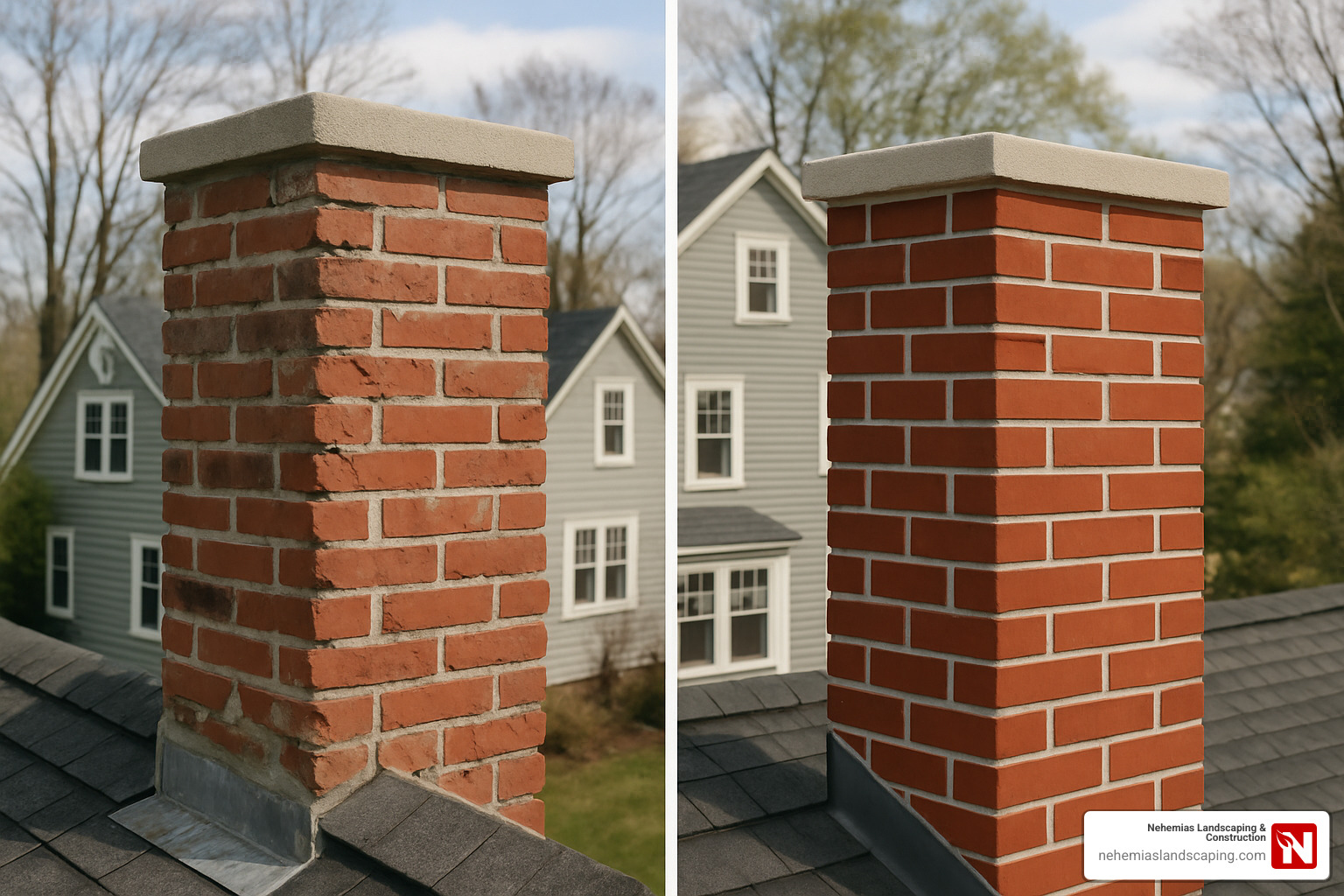
Chimneys are real workhorses, standing guard on your roof through wind, rain, ice, and snow. Because they’re always exposed, they face the full force of New England’s weather—making routine maintenance and timely repairs a must. According to the National Fire Protection Association (NFPA), it’s smart to have your chimney inspected once a year, but all too often, this vital checkup gets skipped.
If you notice spalling bricks (where the brick faces are flaking away), cracking mortar, or a crumbling crown at the top, your chimney is calling out for help. Flue damage can sneak up on you, too, letting dangerous gases like carbon monoxide slip into your home. And a missing or damaged chimney cap? That’s just an open invitation for water, animals, and debris!
Let’s not forget about creosote—that stubborn, flammable residue that builds up inside chimneys and fireplaces. Left unchecked, creosote is a serious fire risk.
As one safety expert puts it, “A chimney is basically your home’s exhaust system. If it’s not working right, you risk everything from water stains to life-threatening carbon monoxide leaks.”
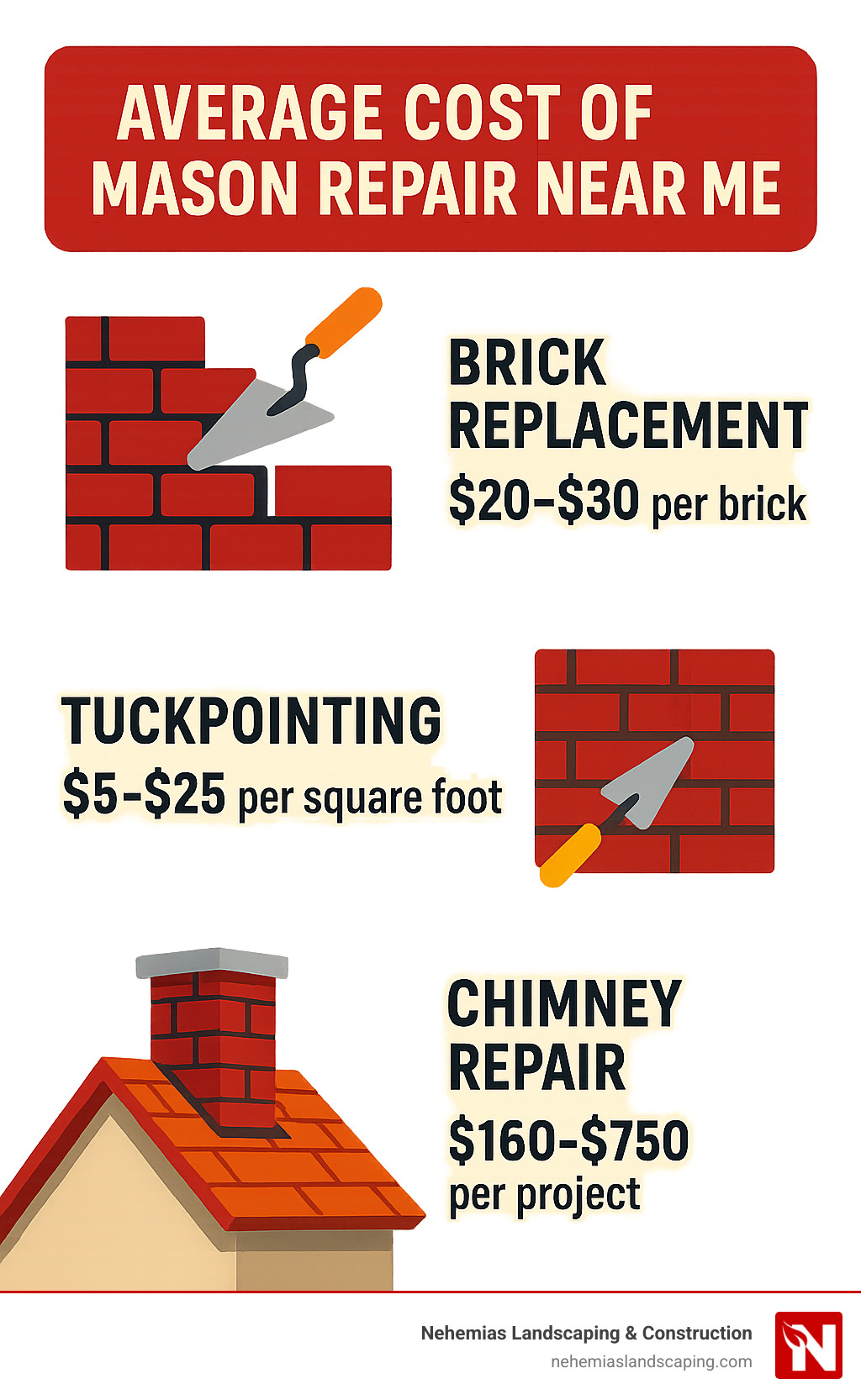
When it comes to price, chimney repair costs can have a pretty wide range. Based on internet averages, smaller repairs might run from $160 to $750, while rebuilding or restoring large, severely damaged chimneys can climb to $1,500–$3,500 or more. (These are average costs based on internet data, not actual prices from Nehemias Landscaping & Construction.)
Common Repairs
Some of the most typical jobs our masonry team tackles include crack sealing and crown rebuilding. Even tiny cracks can let water sneak in, freeze, and do major damage, so we use flexible sealants that expand and contract with the weather. The chimney crown—that sloped “roof” on top—needs attention, too. If it’s cracked or poorly built, water will quickly find its way inside. A solid, well-built crown should have an overhang and a drip edge to guide water away, but sadly, many chimneys are missing these key features.
Preventive Maintenance
When it comes to chimneys, an ounce of prevention is truly worth a pound of cure. The NFPA recommends annual chimney sweeps to clear out creosote and spot small issues before they grow. And while waterproofing might sound like overkill, using a vapor-permeable sealer is one of the best things you can do for your chimney’s lifespan. These professional-grade products keep rain out, but still let trapped moisture escape, stopping the cycle of spalling and brick damage.
As specialists at Nehemias Landscaping & Construction like to say, “You want your chimney to breathe—not soak!” That means picking the right products and trusting a skilled mason who knows the difference.
If you’re searching for mason repair near me for your chimney or fireplace, don’t wait for a small problem to become a costly headache. Regular inspections, quick repairs, and the right preventive care will keep your fireplace safe, your home dry, and your chimney standing tall through every Essex County season. For a full breakdown of chimney repair prices, check out Chimney repair costs. And if you’re ready to restore, rebuild, or just get some friendly advice, Nehemias Landscaping & Construction is here to help—your trusted partner for quality masonry and peace of mind.
3. Stone Patio & Walkway Revivals

There’s something magical about a beautiful stone patio or walkway—until it’s not so beautiful anymore. Over time, even the most expertly installed stone surfaces can fall victim to Mother Nature’s persistence. Settling soil, frost heave, and erosion conspire to transform your once-level patio into a wobbly, uneven hazard.
Just last month, a family in Essex County reached out to us after their gorgeous bluestone patio had become downright dangerous. Several stones had lifted, creating trip hazards, while others had sunk, creating puddles after every rainfall. What was once their favorite gathering space had become an eyesore they avoided. After our team completed a professional restoration, they couldn’t believe the change—not just in appearance, but in functionality and safety.
“We’d forgotten how much we used to love this space,” the homeowner told us. “Now we’re out here every evening again!”
Whether you have classic flagstone, neat bluestone, or modern pavers, these outdoor elements face unique challenges. At Nehemias Landscaping & Construction, our patios and walkways restoration services address the most common issues:
Uneven stones create dangerous trip hazards, especially for elderly family members or guests.
Deteriorating mortar joints between stones allow weeds to flourish and water to penetrate.
Poor drainage causes water pooling that accelerates deterioration and creates slippery surfaces.
Stained surfaces from leaf tannins, rust, or organic growth diminish your hardscape’s beauty.
Cracked stones not only look unsightly but can worsen quickly if not addressed.
Our Professional Masonry Services team brings these tired surfaces back to life, ensuring they remain beautiful, functional, and safe for years to come.
Repair Steps
When we tackle a stone revival project, we follow a methodical process that addresses not just the symptoms but the underlying causes:
Lifting stones: We carefully remove affected stones without damaging them or surrounding materials. This precision work requires experience—it’s not simply prying up stones with a crowbar.
Base regrading: The real magic happens beneath the surface. We properly prepare the base material, often adding or compacting crushed stone to create proper slope and support. As our foreman likes to say, “A patio is only as good as what you can’t see underneath it.”
Polymeric sand application: For patios with joints, we apply specialized polymeric sand that hardens when wet. This prevents weed growth and ant infestations while maintaining the flexibility needed to withstand seasonal ground movement.
“I can always tell when a homeowner has tried to fix their own patio,” shares one of our masonry experts. “They just reset the wobbly stones without fixing what made them wobbly in the first place. Without addressing drainage and base issues, they’ll be doing the same repair again next spring.”
Sealing & Stain Protection
The final step in any stone revival is proper sealing—the protective shield that extends the life and beauty of your investment:
Penetrating sealers work differently than cheap topical sealers. Rather than creating a film that can peel or yellow, quality penetrating sealers protect stone from within while preserving its natural appearance and texture.
Slip resistance is a critical safety consideration we never overlook. Professional-grade sealers maintain or even improve the slip resistance of stone surfaces, especially important for pool decks and areas that get regular foot traffic.
“We recommend resealing natural stone patios every 2-3 years,” advises our head mason at Nehemias Landscaping & Construction. “It’s a small investment that pays big dividends—extending the life of your patio by years and keeping it looking its best through New England’s challenging seasons.”
With proper restoration and maintenance, your stone patio or walkway can remain a beautiful, functional part of your outdoor living space for decades to come. When searching for mason repair near me, restoring your existing stonework is often more economical than replacement—and maintains the character that drew you to natural stone in the first place.
4. Retaining Wall & Hardscape Reinforcement

Retaining walls silently battle enormous pressure every day, holding back tons of soil to create usable space on your sloped property. When they perform well, you hardly notice them. But when they begin to fail? That’s a different story entirely.
A homeowner in Andover recently called us about a stone retaining wall that had begun to bulge outward after heavy spring rains. “I was worried the whole thing might collapse onto my driveway,” she told us. After we installed proper drainage solutions and reinforced the structure, she was amazed at the difference. “It not only looks better, but I can sleep at night knowing it’s secure.”
According to research published by Forbes, well-maintained retaining walls can boost your property value by up to 15% by improving both landscape functionality and curb appeal. However, that same wall can quickly transform from asset to liability when problems arise.
Warning signs that your retaining wall needs attention include bulging or leaning sections, visible cracks across the face, soil washing out from behind the structure, water seeping through rather than draining properly, and frost heave causing sections to rise unevenly. If you’re noticing any of these issues, it’s time to call in professionals.
Our Masonry Services Massachusetts team specializes in diagnosing and addressing retaining wall problems before they lead to complete failure and potentially costly property damage.
Repair vs. Rebuild
“The million-dollar question with every failing retaining wall is whether it can be saved or needs to be completely rebuilt,” says our lead mason. The answer depends on several critical factors.
The wall lean degree offers important clues. Generally, walls leaning less than 10 degrees can often be reinforced rather than replaced entirely. We’ve saved many walls that homeowners thought were beyond repair.
When it comes to footing failure, the news is less optimistic. If the wall’s foundation is compromised, a complete rebuild is usually necessary. However, if the footing remains sound and issues stem from poor drainage or excessive soil pressure, strategic repairs can often extend the wall’s life by decades.
“Last year, we saved a homeowner in Beverly nearly $8,000 by reinforcing their existing wall rather than rebuilding it,” our project manager recalls. “The wall had begun to lean, but the foundation was solid. We installed proper drainage, added reinforcement, and it’s now good for another 20+ years.”
Waterproofing Tips
Proper water management isn’t just important for retaining walls—it’s absolutely critical for their survival. In Essex County’s freeze-thaw climate, this becomes even more essential.
Geo-grid installation works wonders for taller walls. This synthetic mesh material is layered into the soil behind the wall during construction or major repairs, effectively distributing soil pressure and preventing the bulging that leads to failure. Think of it as a reinforcement system that works invisibly to strengthen the entire structure.
Weep holes might look simple, but they’re engineering marvels. These drainage openings allow water to escape from behind the wall, preventing the buildup of hydrostatic pressure that can push over even the sturdiest structures. After a heavy rain, you might notice water trickling from these holes—that’s the system working exactly as designed!
Proper sealant application prevents water from being absorbed into the masonry materials themselves. This is particularly important for natural stone walls, as water absorption can lead to cracking during freeze-thaw cycles.
“I can’t emphasize enough that the number one cause of retaining wall failure is poor drainage,” notes our senior mason at Nehemias Landscaping & Construction. “Water creates tremendous pressure behind a wall, especially when the ground freezes. A properly designed drainage system isn’t a luxury add-on—it’s absolutely essential for the wall’s survival.”
Looking for a free assessment of your retaining wall’s condition? Our mason repair near me services include thorough evaluations to help you understand your options before problems escalate. With the right repairs and preventive measures, your hardscape investments can deliver decades of trouble-free performance and continued property value improvement.
5. Concrete Steps, Driveways & Foundations
The concrete elements of your home—steps, driveways, and foundations—face challenges that differ from traditional brick and stone masonry. While concrete structures appear solid and unyielding, they’re surprisingly vulnerable to the elements, especially in New England’s harsh freeze-thaw cycles.
Just last month, a homeowner in Andover contacted us about their increasingly dangerous front steps. Years of winter salt and moisture had caused the concrete to spall and crumble at the edges. What started as a small cosmetic issue had become a genuine safety concern—exactly the kind of situation where timely mason repair near me searches can prevent accidents.
Common concrete issues we address include:
- Hairline cracks that invite water (and eventually, bigger problems)
- Spalled concrete where the surface flakes away like pastry
- Exposed rebar that’s begun to rust, threatening structural integrity
- Uneven slabs creating both trip hazards and water pooling issues
Our Brick Contractors Near Me services extend beyond traditional masonry to include expert concrete repair and restoration. We believe in addressing problems early, before minor cracks become major headaches.
| Masonry vs. Concrete Comparison | Masonry | Concrete |
|---|---|---|
| Composition | Individual units (brick, stone) with mortar | Poured mixture of cement, sand, aggregate, water |
| Flexibility | More flexible, can accommodate minor movement | Less flexible, more prone to cracking |
| Repair approach | Can often replace individual units | Often requires patching or resurfacing |
| Water resistance | Varies by material, often needs sealing | Generally more water-resistant but still porous |
| Aesthetic options | Wide variety of materials, patterns, colors | Limited to finishes and coloring agents |
| Typical lifespan | 100+ years with proper maintenance | 30-50 years depending on conditions |
Patch & Resurface
For concrete that’s structurally sound but showing its age, our resurfacing approach brings new life without full replacement:
Grinding and cleaning is where the magic begins. Think of it as preparing a canvas—we remove loose material, contaminants, and create a slightly rough surface that gives the new material something to grip. Skimp here, and nothing else matters.
Bonding agent application creates the critical link between old and new concrete. “This isn’t something you can pick up at the big box store,” explains our senior mason. “Professional-grade bonding agents chemically unite the existing concrete with the new layer. Without this step, you might as well write an expiration date on your repair.”
Overlay mix application is where skill and artistry meet. We use specialized concrete formulations designed specifically for thin applications, often as little as 1/4 inch thick. These can transform aging concrete without the expense and disruption of replacement.
“I’ve seen homeowners try to resurface their own driveways with regular concrete mix,” shares one of our team members. “Six months later, they’re calling us to do it right after watching their DIY attempt pop off in chunks.”
Expansion Joint Care
Concrete naturally expands and contracts with temperature changes—a fact many homeowners don’t realize until they see cracks form. Proper joints aren’t flaws; they’re engineered solutions:
Control joints are essentially planned cracks. By creating these intentional weak points, we direct where concrete will crack as it shrinks, keeping these breaks straight and manageable rather than jagged and spreading.
Caulk selection matters tremendously for joint maintenance. We use professional-grade polyurethane sealants specifically designed for concrete expansion joints. These provide the flexibility to compress and expand through seasonal changes while maintaining a watertight seal.
“Expansion joints might look like simple gaps, but they’re actually sophisticated engineering features,” notes our concrete specialist at Nehemias Landscaping & Construction. “They’re the difference between concrete that lasts decades and concrete that fails prematurely.”
With proper maintenance and timely repairs, your concrete features can remain safe, functional, and attractive for decades. And when you need expert help, our team is just a mason repair near me search away.
Mason Repair Near Me: Cost, Timeline & Hiring Guide
Looking for mason repair near me services can feel overwhelming, but understanding what to expect helps you make confident decisions. Whether you’re facing crumbling mortar or a leaning retaining wall, knowing about costs, timelines, and how to find qualified professionals ensures your masonry project succeeds.
Average Cost of Mason Repair Near Me
When budgeting for masonry repairs, several factors influence the final price tag. Based on industry averages (not specific to Nehemias Landscaping & Construction), here’s what most homeowners can expect to pay:
Professional masons typically charge between $35-$100 per hour depending on their experience and your location. For project-based pricing, expect around $20-$60 per square foot for most standard repairs.
Most residential masonry projects fall between $500-$8,000, though complex structural repairs or historic restoration work can easily range from $8,000-$25,000 or more. These higher costs often reflect specialized skills and materials needed for more demanding projects.
“The initial sticker shock sometimes surprises homeowners,” explains a masonry specialist from Essex County, “but quality masonry is truly an investment in your property. A repair done right might cost more upfront but can last decades longer than a budget fix.”
Material choice significantly impacts your bottom line too. Natural stone typically commands premium prices compared to manufactured products, and specialty materials for historic properties can drive costs even higher.
Timeline for Mason Repair Near Me
Understanding the timeline for masonry repairs helps set realistic expectations for your project:
The process typically begins with an initial site visit within 1-3 days of contacting a mason. This assessment allows them to evaluate the damage and provide an accurate quote.
If your project requires permits, factor in 1-4 weeks of lead time depending on your local building department’s efficiency. Large or complex projects often need this regulatory approval before work can begin.
Weather plays a crucial role in masonry work. Ideal conditions fall between 40-90°F, which is why scheduling can be seasonal in New England. As a specialist at Nehemias Landscaping & Construction notes, “In Essex County, we consider April through November our prime masonry season. Winter work isn’t impossible, but it requires special techniques and materials that can affect both timeline and budget.”
For the actual work, small repairs typically take 1-3 days, medium projects run 3-7 days, and larger renovations might require 2-4 weeks or more. But the timeline doesn’t end when the mason packs up their tools.
“The most overlooked part of the timeline is proper curing,” explains a masonry expert. “New mortar needs 3-7 days under controlled conditions to develop proper strength. Rushing this critical phase virtually guarantees premature failure.”
How to Hire Certified Local Masons
Finding qualified mason repair near me professionals requires some homework, but the effort pays dividends in quality results:
Get at least three quotes from different contractors. Compare not just the bottom-line price but also the scope of work, materials specified, and their approach to solving your particular masonry issue.
Verify credentials thoroughly before hiring. This includes checking for proper licensing, insurance coverage (both liability and workers’ compensation), and professional affiliations like membership in the Mason Contractors Association of America.
For visible repairs, request a color match test before committing. A skilled mason should be able to closely match your existing mortar color and texture, which is crucial for repairs that will be seen.
Establish a clear payment schedule tied to completion milestones. Reputable masons typically request a deposit of 25-33%, with remaining payments as work progresses. Be wary of contractors demanding full payment upfront—this is often a red flag.
“The relationship with your mason should feel like a partnership,” says a specialist at Nehemias Landscaping & Construction. “They should take time to explain options, listen to your concerns, and communicate clearly throughout the process.”
For Essex County homeowners, our Masonry Contractor Near Me services provide local expertise with professionals who understand regional building codes, climate challenges, and architectural styles common to our area.
Frequently Asked Questions about Masonry Repair
What’s the difference between masonry and concrete work?
Though they’re cousins in the construction world, masonry and concrete work are distinct crafts with their own personalities and purposes.
Masonry is like building with Legos – it uses individual units (bricks, stones, or blocks) joined together with mortar. When your child’s brick wall gets damaged, you can often replace just the broken pieces. Similarly, masonry structures allow for targeted repairs without disturbing the entire structure. The mortar joints between units actually serve as intentional “weak points” – designed to fail before the more expensive bricks or stones do. This might seem counterintuitive, but it’s smart engineering! Masonry can either bear structural loads or simply serve as a beautiful veneer.
Concrete work, on the other hand, creates unified structures by pouring a mixture of cement, sand, aggregate, and water into forms. Think of it as making a giant sandcastle with wet sand – once it hardens, it becomes one solid piece. When damaged, concrete typically needs patching rather than piece-by-piece replacement. While concrete boasts impressive compressive strength, it needs reinforcement (usually steel rebar) to handle tension forces.
“Many homeowners call asking for a ‘mason’ when they actually need concrete work, or vice versa,” explains a specialist at Nehemias Landscaping & Construction. “Understanding the difference helps you find the right expert for your specific project.”
How long do typical masonry repairs last?
The lifespan of your masonry repairs depends on three key factors:
Material quality makes an enormous difference in longevity. Premium materials might cost more upfront but often provide decades of additional service. For instance, in Essex County’s challenging climate, using type S mortar instead of type N can significantly extend the life of your repairs, especially in areas exposed to severe weather.
Climate considerations play a huge role too. Here in Essex County, where freeze-thaw cycles put masonry through the wringer, properly executed repairs using climate-appropriate materials should last 25-30 years for repointing work. Quality brick or stonework, when properly installed, can easily last 50+ years, often outliving the person who installed it!
Maintenance schedule is perhaps the most overlooked factor. Think of masonry like your teeth – regular checkups prevent major problems. Annual inspections to catch small cracks or water issues early can dramatically extend your repair’s lifespan. Many costly rebuilds could have been simple fixes if caught years earlier.
“The most successful repairs I’ve seen in my career aren’t just about fixing what’s broken,” shares a masonry expert at Nehemias. “They’re about understanding and addressing why it broke in the first place. A leaking gutter above your crumbling brick wall is actually your primary problem.”
What warranties or guarantees should I expect?
When investing in professional masonry repair, you should expect clear protection for your investment:
Labor warranties typically range from 1-5 years, covering defects in workmanship. The industry standard hovers around 2 years for most repairs, though more extensive structural work might carry longer guarantees. This covers issues that arise from improper installation techniques or poor craftsmanship.
Material warranties come directly from manufacturers and vary considerably. Some manufactured stone products carry 10-year guarantees, while certain premium brick lines offer limited lifetime warranties. Your mason should be able to provide these warranty details for all materials used.
Written contracts are absolutely essential. A handshake might feel neighborly, but a proper contract protects everyone. Your warranty should clearly spell out what’s covered, what’s excluded, and exactly how to make a claim if problems arise.
“Be especially careful with contractors offering ‘lifetime guarantees’ without specifics,” cautions a specialist at Nehemias Landscaping & Construction. “I always tell clients to ask ‘whose lifetime?’ and ‘covering exactly what?’ A reputable mason repair near me professional will provide written terms, not vague promises that evaporate when problems appear.”
Even the best warranty can’t replace quality workmanship. The most valuable guarantee is often a mason’s longstanding reputation in the community and portfolio of successful projects.
Conclusion

Finding reliable mason repair near me services isn’t just about fixing what’s broken—it’s about changing your outdoor space into something that brings joy for years to come. Throughout Essex County, homeowners are finding how quality masonry work improves not just their property’s appearance, but its fundamental value and structural integrity.
The beauty of masonry is its permanence. Unlike many home improvements that fade or deteriorate quickly, properly executed brick, stone, and concrete work stands the test of time—often outlasting the very homeowners who commissioned it. That’s why choosing the right mason matters so much.
“We hired Nehemias after seeing their work at our neighbor’s home,” shares a Beverly homeowner. “What impressed us most wasn’t just how beautiful our new retaining wall looked when finished, but how they took the time to explain every step of the process—from drainage solutions to material selection. Two years later, it still looks brand new despite our harsh winters.”
At Nehemias Landscaping & Construction, we understand that Essex County’s unique climate presents special challenges for masonry structures. Freeze-thaw cycles, coastal salt exposure, and seasonal temperature swings all affect how materials perform over time. Our local expertise means we don’t just apply generic solutions—we tailor our approach to New England’s specific environmental demands.
From the historic brick homes of Salem to the stunning stone walls of Manchester-by-the-Sea, our team brings the same attention to detail whether we’re repointing a garden wall or constructing an elaborate outdoor kitchen. We believe that every project, regardless of size, deserves craftsmanship that stands the test of time.
What truly sets our approach apart is our commitment to addressing root causes, not just symptoms. When we repair spalling brick, we don’t just replace the damaged units—we identify and fix the water infiltration issues that caused the problem in the first place. This comprehensive approach saves our clients money in the long run by preventing recurring damage.
For homeowners considering masonry projects, quality work is an investment that pays dividends through improved curb appeal, structural integrity, and the simple pleasure of enjoying beautiful outdoor spaces. Whether you’re restoring a historic chimney or creating a new stone patio, choosing experienced professionals makes all the difference.
For more information about our comprehensive masonry services, visit our More info about our full masonry services page or contact us for a consultation. We’re ready to help you preserve and improve your property’s masonry features, brick by brick.
Nehemias Landscaping & Construction—bringing Essex County homeowners lasting beauty and structural peace of mind.