
How to Install Railing on Brick Steps: Top 5 Proven Tips
How to install railing on brick steps is a common question among homeowners aiming to improve both safety and aesthetic appeal in their outdoor spaces. Here’s a quick guide to get started:
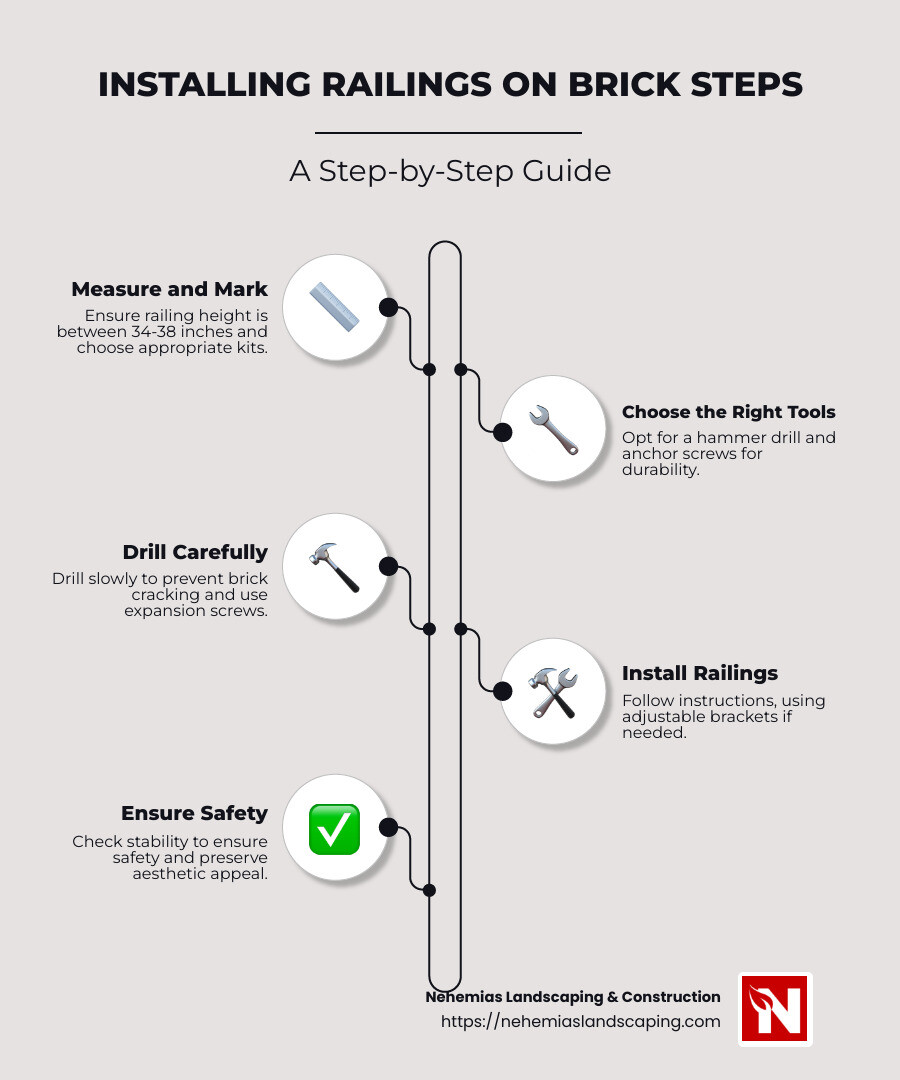
- Measure and Mark: Ensure railing height is between 34-38 inches. Choose railing kits that fit the number of steps.
- Choose the Right Tools: Use a hammer drill and anchor screws for durability.
- Drill Carefully: Prevent cracks by drilling slowly and using expansion screws.
- Install: Follow the railing instructions carefully, using adjustable brackets if needed.
Brick steps offer a classic and neat look, but installing handrails on them can be tricky. Without the proper approach, you risk damaging the bricks, leading to costly repairs. Safety is paramount, especially when these structures support family members and guests. With the right techniques, anyone can securely install a handrail on their brick steps, combining durability with style.
For those seeking a quick change, investing in quality products like adjustable handrail kits and using correct installation methods is essential. Not only will this ensure the safety of your steps but also preserve the beauty of your home.
Whether you’re in Beverly or Peabody, Nehemias Landscaping & Construction is here to guide you through securing your steps efficiently, combining traditional charm with modern safety standards.
Important how to install railing on brick steps terms:
– Brick Stairs Installation
– how to install handrail on brick steps
– install vinyl railing on brick steps
Understanding Brick Steps
Brick steps add a timeless charm to any home, but they come with their own set of challenges when it comes to installing railings. Let’s explore the different types of bricks, their durability, and the potential problems you might encounter during installation.
Brick Types
Bricks are primarily made from clay, but they can also include sand, lime, or ash. This composition affects their strength and how they respond to drilling. High-quality bricks are more robust and less prone to cracking, while lower-quality bricks might crumble easily.

Material Durability
Bricks are known for their durability and can withstand various weather conditions. However, they can be more fragile than materials like concrete, especially when drilled into. The durability of bricks makes them a popular choice for steps, but it also demands careful handling during any modifications, such as installing railings.
Installation Challenges
When installing railings on brick steps, the primary challenge is avoiding damage to the bricks. Drilling into bricks can cause them to crack or crumble if not done carefully. This is especially true for older or lower-quality bricks.
To prevent these issues, use the right tools and techniques. A hammer drill with a masonry bit is ideal for creating clean holes without excessive vibration that could damage the brick. Additionally, using anchor screws specifically designed for masonry can provide a secure hold without compromising the integrity of the bricks.
By understanding the characteristics of your brick steps and using the proper tools, you can overcome these challenges and ensure a successful handrail installation. The key is to balance the aesthetic appeal of brick with the functional need for safety, creating a harmonious blend that improves your home’s exterior.
Next, let’s dive into the step-by-step process of installing railings on your brick steps, ensuring both safety and style.
How to Install Railing on Brick Steps
Installing railings on brick steps can be daunting, but with the right tools and techniques, you can achieve a professional and secure installation. Let’s take a closer look at how to install railing on brick steps effectively.
Choosing the Right Tools
Hammer Drill: A hammer drill is essential for drilling into brick. Unlike regular drills, it combines rotation with a hammering action, making it easier to penetrate tough materials like brick. This tool reduces the risk of cracking by minimizing vibration and ensuring a clean hole.
Anchor Screws: These screws are designed to expand within the drilled holes, providing a strong hold in masonry. They’re crucial for securing the railing posts without damaging the brick.
Fortress® Steel Posts: Opt for durable steel posts like those from Fortress®. They offer strength and longevity, crucial for the safety and stability of your railing.
Step-by-Step Installation Guide
- Measure Accurately: Start by measuring the height and spacing for your railings. Ensure uniform measurements to maintain a balanced look and meet safety standards. Railings should be 34–38 inches above the stair nosing line.
- Drilling Techniques:
- Use a hammer drill with a masonry bit to create holes in the brick.
- Drill 1/4–1/2 inch deeper than the length of your anchor screws. This depth allows space for debris and ensures a secure fit.
- Mark the desired depth on your drill bit with tape to avoid over-drilling.
- Install Anchor Screws:
- Clear the drilled holes of dust using a leaf blower or shop vac.
- Insert anchor screws into the holes. If necessary, use a rubber mallet to gently tap them in.
- Tighten the screws with a wrench or ratchet until secure. This step ensures the sleeve expands and holds firmly against the brick.
- Attach Adjustable Brackets:
- Use brackets with adjustable angles to accommodate the slope of your stairs. This flexibility simplifies installation and ensures a snug fit.
- Secure the Posts:
- Position your Fortress® steel posts over the anchor screws.
- Reinsert and tighten the screws through the post brackets. Ensure the posts are upright and aligned with your measurements.
- Install the Railings:
- Attach the bottom railing first for added stability. If spacing is tight, temporarily loosen a post to fit the railing.
- Secure the top railing, ensuring it aligns with the bottom railing for a cohesive look.
By following these steps and using the right tools, you can install a sturdy and attractive railing on your brick steps. This process not only improves safety but also adds a touch of elegance to your home’s entrance.
Next, we’ll explore tips for a successful installation, ensuring your project is both smooth and stress-free.
Tips for Successful Installation
To ensure a smooth and secure installation of railings on brick steps, focus on avoiding brick cracking, using quality products, and making necessary adjustments during the installation process. Here are some key tips to help you succeed:
Avoiding Brick Cracking
- Choose the Right Drill: As mentioned earlier, a hammer drill is your best friend when working with brick. Its combined rotation and hammering action reduce the risk of cracking by minimizing vibrations.
- Drill Slowly and Steadily: Rushing can lead to mistakes. Drill at a slow and steady pace to maintain control and prevent damage to the brick.
- Use the Correct Drill Bit: Make sure you’re using a masonry bit that’s sharp and in good condition. A dull bit can cause excessive force, leading to cracks.
Quality Products Matter
Investing in high-quality materials is crucial for both safety and durability. Here’s what to focus on:
- Anchor Screws: Opt for top-notch anchor screws that are designed to expand within the drilled holes. This ensures a strong hold without compromising the brick’s integrity.
- Fortress® Steel Posts: These are highly recommended for their strength and longevity. They provide a strong foundation for your railings, ensuring they remain secure over time.
- Adjustable Brackets: These brackets allow you to adjust the angle of the railing to match the slope of your stairs. This flexibility not only simplifies installation but also ensures a perfect fit.
Installation Adjustments
- Uniform Measurements: Before drilling, double-check your measurements. Ensure that the height and spacing of your railings are consistent. This not only improves aesthetics but also meets safety standards.
- Handle with Care: When inserting anchor screws, use a gentle touch. If you encounter resistance, don’t force the screw. Instead, check for debris in the hole or consider re-drilling.
- Post Alignment: After securing the posts, verify that they are perfectly upright and aligned. Misaligned posts can lead to an unstable railing.
- Final Touches: Once the railings are installed, add any final trim or escutcheons to cover bolts and provide a polished look. This step not only improves aesthetics but also adds an extra layer of protection.
By following these tips, you can avoid common pitfalls and ensure a successful installation of railings on your brick steps. This not only boosts safety but also improves the overall appearance of your home.
Next, we’ll tackle some frequently asked questions about installing railings on brick steps.
Frequently Asked Questions about Installing Railings on Brick Steps
How do I prevent bricks from cracking during installation?
Preventing brick cracking is a common concern when installing railings. Here are some strategies to help you avoid this issue:
- Use a Hammer Drill: A hammer drill is essential. Its hammering action minimizes vibrations, reducing the risk of brick cracking.
- Drill Slowly: Take your time. Drilling too quickly can increase the chance of cracks. A slow, steady pace ensures better control.
- Sharp Masonry Bit: Ensure your drill bit is sharp and designed for masonry. A dull bit requires more force, which can lead to cracking.
- High-Quality Anchor Screws: Opt for anchor screws that expand gently within the drilled holes. This provides a secure hold without stressing the bricks.
What is the recommended height for handrails on brick steps?
The height of your handrails is crucial for safety and compliance with building codes. Here’s what you need to know:
- Handrail Height: The top of the handrail should be 34–38 inches above the floor or nosing line. This is the diagonal slope of the steps, measured by connecting the outer edges of the stair treads.
- Uniformity: Ensure that the height is consistent across all sections of the railing. This not only meets safety standards but also provides a uniform look.
Can I install railings without drilling into the bricks?
While drilling is the most secure method for installing railings on brick steps, there are alternatives if you want to avoid it:
- Surface-Mounted Posts: These can be mounted on the step surface without penetrating the brick. However, ensure they are securely fastened to prevent wobbling.
- Adhesive Solutions: Some strong construction adhesives can be used for lighter railings. Ensure the adhesive is suitable for outdoor use and can withstand weather changes.
- Freestanding Railings: These do not require attachment to the steps. Instead, they are supported by heavy bases. While not as secure as drilled railings, they can be an option for temporary installations.
Choosing the right method depends on your specific needs and the conditions of your brick steps. Always prioritize safety and durability in your decision-making process.
Conclusion
At Nehemias Landscaping & Construction, we believe that every detail matters when it comes to creating safe and beautiful outdoor spaces. Installing railings on brick steps is no exception. Our team is dedicated to delivering exceptional craftsmanship and ensuring that your brick steps are not only attractive but also secure.
We understand that quality is non-negotiable. That’s why we use only the best materials and proven techniques to ensure that your railings stand the test of time. Whether you’re looking to improve the safety of your home or add a touch of elegance to your entryway, our experts are here to guide you every step of the way.
Affordability is also a key part of our promise. We strive to offer competitive pricing without compromising on quality. While average costs for installing railings can range widely based on internet data, with some estimates going as high as three times the average, we focus on providing value that fits your budget.
Ready to transform your outdoor space? Let us bring your vision to life with our quality craftsmanship and attention to detail. Contact us today to learn more about our brick stairs installation services and how we can help you secure your steps beautifully and affordably.