
How to Install Railing on Brick Stairs: Top 5 Proven Tips
How to install railing on brick stairs can seem intimidating, but with the right approach, it becomes straightforward. Here’s how you can achieve a successful handrail installation with ease:
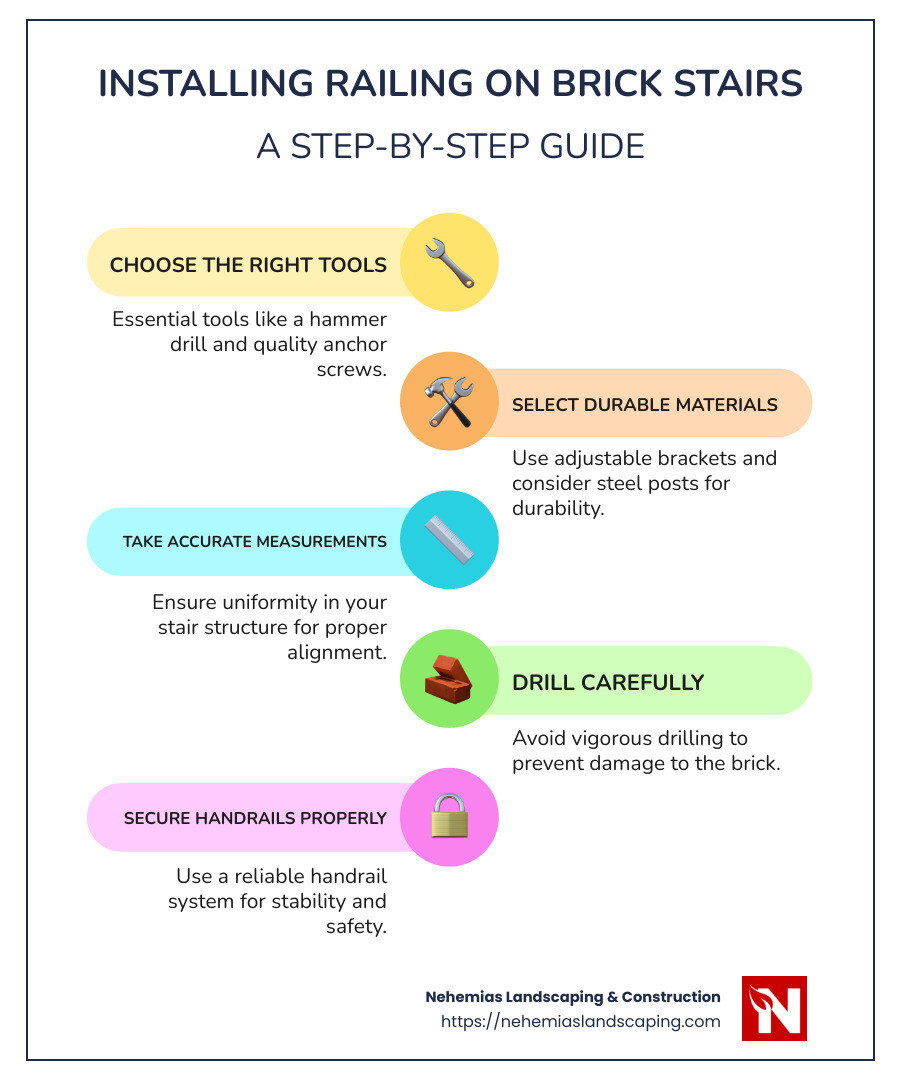
- Choose the Right Tools: A hammer drill and quality anchor screws are essential.
- Select Durable Materials: Use adjustable brackets and consider steel posts for durability.
- Take Accurate Measurements: Ensure uniformity in your stair structure.
- Drill Carefully: Avoid vigorous drilling to prevent brick damage.
- Secure Handrails Properly: Use a reliable handrail system for stability.
Nehemias Landscaping & Construction has been enhancing homes in the Massachusetts area with quality hardscape services, including installing safe and attractive railing systems on brick stairs. Brick stairs are a charming and durable option for any home but can pose challenges when it comes to installing handrails. Crumbling or cracking bricks are common issues when improper methods are used. Our team understands these challenges and is equipped to handle them with precision and expertise.
With professional-level guidance and a bit of DIY spirit, you can add a touch of safety and elegance to your stairs. From the busy communities of Essex County to the serene neighborhoods of Marblehead, let us handle your railing installation needs with care and efficiency.
Understanding Brick and Its Challenges
Brick is a popular choice for stairs due to its classic look and durability. However, it comes with its own set of challenges, especially when installing handrails. Understanding these challenges is the first step in mastering how to install railing on brick stairs.
Brick Types
Not all bricks are created equal. Most bricks are made from clay, but they can also include sand, lime, or ash. The composition affects their strength and how they react to drilling. Lower-quality bricks are more prone to “blowout,” where the back of the brick cracks during drilling. Knowing the type of brick you’re working with can help you choose the right tools and techniques.
Drilling Issues
Drilling into brick can be tricky. The material is less forgiving than wood or concrete. If you drill too aggressively, the brick might crack or crumble. This is why using a hammer drill is recommended. It allows for precise and controlled drilling, reducing the risk of damage. Also, ensure to use the correct drill bit size and type for the anchors you plan to use.
Material Durability
While bricks are generally durable, their integrity can be compromised if not handled properly. Weather conditions, age, and the method of installation can all affect brick durability. When installing handrails, it’s crucial to use anchor screws designed for brick. These screws provide a secure hold without causing undue stress on the brick itself.
By understanding the types of bricks and the potential issues with drilling, you can better prepare for a smooth railing installation process. This knowledge, combined with the right tools and techniques, ensures that your handrail is not only secure but also improves the beauty and safety of your brick stairs.
Tools and Materials Needed
When you’re ready to tackle the task of how to install railing on brick stairs, having the right tools and materials is crucial. Here’s a simple breakdown of what you’ll need to get the job done right.
Hammer Drill
A hammer drill is your best friend when working with brick. Unlike regular drills, a hammer drill combines rotary drilling with a hammering action. This dual action makes it much easier to penetrate hard materials like brick without causing cracks or “blowout.” Many people find them surprisingly easy to handle, thanks to built-in shock absorption that reduces strain on your wrists and arms. Remember to use the correct drill bit size for the screws and anchors you plan to use.
Anchor Screws
Anchor screws are essential for securing the handrail to the brick. These screws expand within the drilled hole, creating a strong hold. When selecting anchor screws, choose ones specifically designed for masonry work to ensure they grip the brick securely. A good practice is to pre-drill your holes slightly deeper than the length of the screw, which allows room for debris and ensures a snug fit.
Adjustable Brackets
Using adjustable brackets can simplify the installation process significantly. These brackets can adapt to the angle of your stairs, making it easier to align the handrail correctly. They are especially useful if your stairs have any irregularities in rise or run. Adjustable brackets also allow for some flexibility during installation, helping you avoid unnecessary stress on the brick.
By equipping yourself with the right tools and materials, you set the stage for a successful handrail installation. Proper preparation ensures that your railing is both sturdy and aesthetically pleasing, enhancing the safety and appearance of your brick stairs.
Step-by-Step Guide on How to Install Railing on Brick Stairs
Preparing the Area
Before you begin installing a handrail on your brick stairs, it’s crucial to prepare the area properly. Start by taking accurate measurements of your stairs. Ensure that the height of your top and bottom posts is consistent, and remember that handrails should be between 34-38 inches above the stair nosing line. Uniformity is key for both safety and aesthetics.
Next, check for any variances in the rise of each step. Bricklaying can sometimes lead to slight differences, so make sure your measurements account for these. This will help you maintain a level and secure installation.
Safety is paramount. Clear the area of any debris or obstacles that might cause injury. Wear safety goggles and gloves to protect yourself during the drilling and installation process.
Drilling and Anchoring
Now that the area is prepped, it’s time to start drilling and anchoring. Use a hammer drill to create holes in the brick. This tool is essential as it combines rotary drilling with a hammering action, making it easier to penetrate brick without causing damage. Remember to pre-drill holes slightly deeper than your anchor screws to allow room for debris.
When drilling, avoid putting too much pressure on the brick to prevent cracking or “blowout.” Use anchor screws specifically designed for masonry work. These screws expand within the hole, providing a strong grip. This step is crucial for ensuring your handrail will be securely attached to the brick.
Installing the Handrail
With the anchors in place, you can now move on to installing the handrail. Use adjustable brackets to attach the handrail to the posts. These brackets are particularly useful if your stairs have any irregularities, as they can adapt to the angle of your stairs.
Consider using a handrail system that comes with adjustable brackets to simplify the process. These systems often provide a more seamless fit and reduce the risk of putting unnecessary stress on the brick.
Finally, select a post design that complements your home’s style. Fortress® steel posts, for example, are known for their durability and aesthetic appeal. They can be anchored with screws that work well with both concrete and brick, ensuring a sturdy installation.
By following these steps, you can successfully install a handrail on your brick stairs, combining both safety and style.
Tips for a Successful Installation
When it comes to how to install railing on brick stairs, choosing the right products and tools is crucial for a smooth and successful installation. Here are some essential tips to ensure your handrail project is a success:
Quality Products
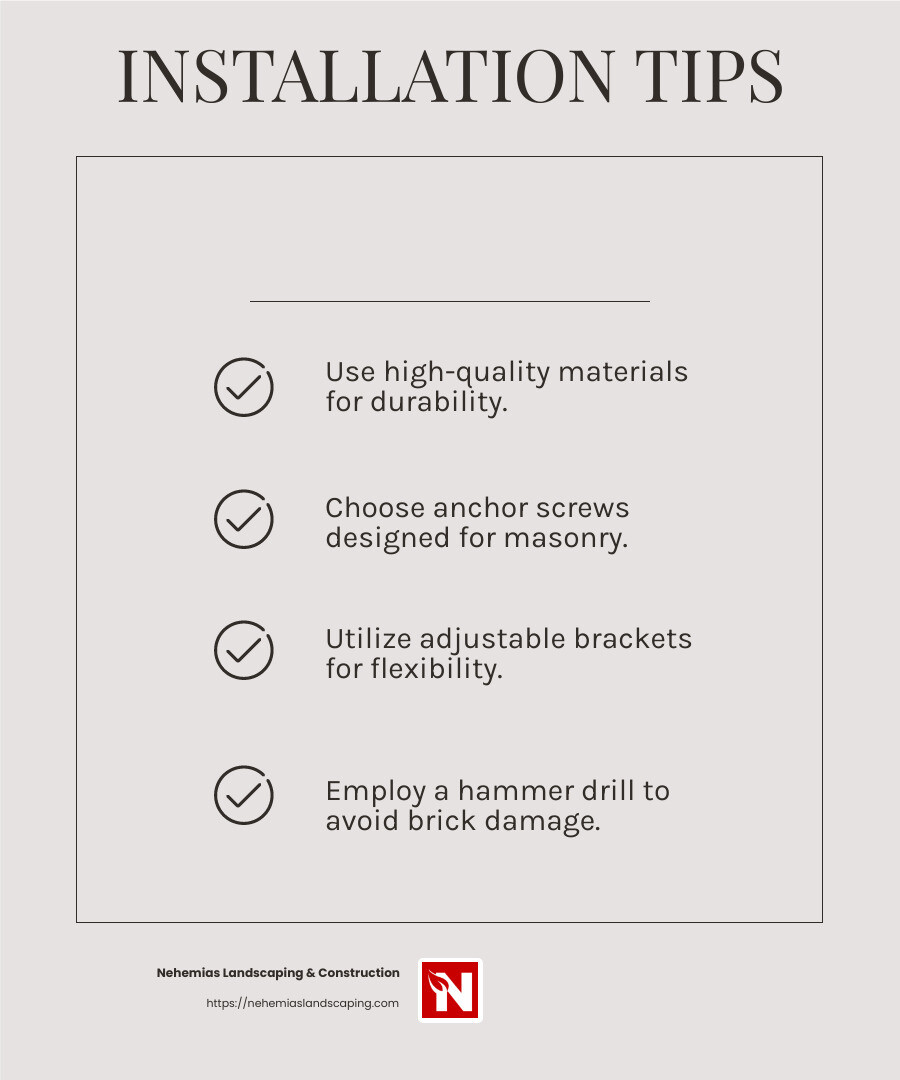
Investing in high-quality materials is key. Opt for durable handrail systems that are designed to withstand the elements and daily use. For instance, Fortress® steel posts are a great choice due to their strength and attractive design. These posts can handle the stress of daily use and provide a solid foundation for your railing.
Hardware Selection
The right hardware makes all the difference. Use anchor screws specifically designed for masonry work to ensure a secure fit. These screws expand in the drilled holes, providing a strong hold that keeps your handrail in place. Additionally, consider using adjustable brackets that can adapt to the angle of your stairs. This flexibility can help accommodate any irregularities in your brickwork.
Tool Recommendations
Using the right tools can prevent damage to your brick and make the installation process much easier. A hammer drill is essential for drilling into brick, as it combines rotary drilling with a hammering action to penetrate the material without causing cracks or blowouts. Ensure your drill bits are suitable for masonry work to avoid unnecessary wear and tear.
Additional Tips
- Measure Twice, Drill Once: Double-check your measurements before drilling to ensure accuracy and uniformity. This will help prevent mistakes and ensure a smooth installation.
- Safety First: Always wear safety gear, such as goggles and gloves, to protect yourself during the installation process. Keep the work area clear of debris to avoid accidents.
By focusing on quality products, selecting the right hardware, and using appropriate tools, you can achieve a successful and long-lasting installation. These tips will not only make the process easier but also ensure that your handrail is secure and visually appealing.
Frequently Asked Questions about Installing Railing on Brick Stairs
How to Attach Railing to Brick Stairs?
Attaching a railing to brick stairs involves a few key steps to ensure a secure and stable installation. The first essential tool is a hammer drill. This tool combines drilling and hammering actions, making it perfect for penetrating tough materials like brick without causing damage.
Once you have your hammer drill, you’ll need wall anchors or expansion screws designed specifically for masonry. These screws expand within the drilled hole to create a tight grip, preventing the railing from becoming loose over time.
To start, mark the spots where you’ll drill on the brick surface. Use your hammer drill to make holes slightly deeper than the length of your wall anchors. After drilling, clean out any debris to ensure a snug fit for the anchors. Insert the anchors into the holes, then attach the railing using bolts that secure into the anchors. Tighten them with a wrench or ratchet to ensure a firm hold.
How to Fix Railings to a Brick Wall?
Fixing railings to a brick wall follows a similar process to attaching them to stairs. Begin by identifying the locations where the railing will be mounted. Use a hammer drill to create holes in the brick, ensuring they align with the mounting brackets of your railing.
For a strong and lasting installation, use bolt down posts. These posts are secured with bolts that pass through the railing brackets and into the wall anchors. This method provides excellent stability, especially for railings that will experience frequent use or bear weight.
After drilling, insert your wall anchors into the holes. Position the railing brackets over the anchors, and use bolts to secure the brackets to the wall. Tightening these bolts with a socket tool will ensure that your railing is firmly attached and safe to use.
How to Attach Wood Post to Brick Steps?
Attaching a wood post to brick steps requires careful consideration to avoid damaging the brick. Start by choosing the right location for your wood post. Use a hammer drill to create holes in the brick where the post will be anchored.
For securing the wood post, socket tools are highly recommended. These tools allow for precise tightening of bolts, ensuring that the wood post is firmly attached to the brick steps. Use expansion screws or wall anchors in the drilled holes to provide a strong base for the post.
Place the wood post over the anchors, ensuring it is level and correctly positioned. Insert bolts through the post base and into the anchors, then use a socket tool to tighten them. This method ensures that the wood post is stable and ready to support the railing.
By following these steps and using the right tools, you can successfully attach railings and wood posts to brick structures, ensuring both safety and durability.
Conclusion
Installing railings on brick stairs can transform your outdoor space, making it both beautiful and functional. At Nehemias Landscaping & Construction, we pride ourselves on delivering exceptional craftsmanship and attention to detail. Our team is dedicated to turning your vision into reality, enhancing your home’s curb appeal and safety with expertly installed railings.
Brick stairs present unique challenges, but with the right tools and techniques, a secure and attractive railing installation is achievable. By using quality products and following a careful installation process, you ensure long-lasting results. Our skilled professionals guide you through every step, ensuring your project meets the highest standards.
Whether you’re upgrading an existing space or starting on a complete outdoor renovation, our expertise in hardscaping and masonry will help create an inviting environment. We serve numerous locations across Essex County, Massachusetts, and are committed to providing affordable solutions that exceed your expectations.
Ready to improve your brick stairs with a stunning railing? Let us help you achieve the perfect balance of beauty and functionality. Contact Nehemias Landscaping & Construction today to start your project and experience the difference our craftsmanship can make.