
Looking to understand exactly what a residential snow removal contract entails? Let’s break it down so you can decide what works best for your home:
- What it is: A residential snow removal contract is a legal document outlining the snow clearing services provided to a homeowner.
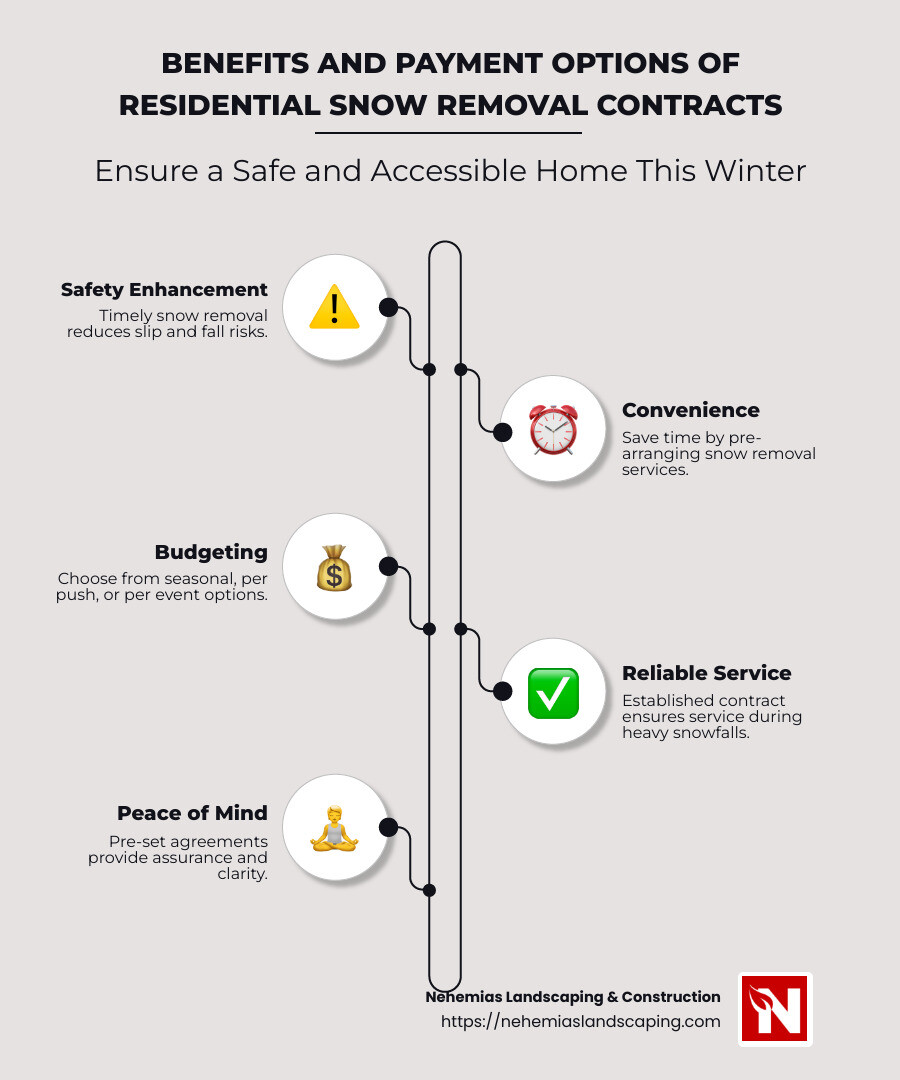
- Why you need it: Ensures timely snow and ice removal from driveways and walkways, enhancing safety and accessibility.
- Payment options: Choose from seasonal, per push, or per event contracts to find a solution that fits your budget and snowfall predictions.
For busy suburban homeowners focused on work and family, maintaining a safe and accessible home in winter is crucial. Enter the residential snow removal contract, a tool that helps ensure your property stays safe, no matter how harsh the weather. This contract not only outlines the services provided, such as plowing or de-icing, but also helps simplify the process of keeping your home functional and secure during snow seasons.
Contracting for snow removal services can save you time and stress during winter storms. Without a snow removal contract, you might find yourself scrambling to find someone to clear your driveway after a heavy snowfall. With a contract, all the details are agreed upon ahead of time—response times, types of services, and payment structures—giving you peace of mind when the snow starts to fall.
Understanding Residential Snow Removal Contracts
Key Components of a Snow Removal Contract
If you’re considering a residential snow removal contract, know what it should include to protect both you and the service provider. Here’s a breakdown of the key components:
Business Information
Start with the basics. The contract should clearly state the name, address, and contact details of the snow removal company. This ensures you know exactly who is responsible for the services.
Customer Information
Similarly, your details as the homeowner should be included. This part of the contract will list your name, address, and contact information. It helps both parties stay connected and clear about the service location.
Property Address
While it might seem obvious, specifying the exact property address where services will be rendered is crucial. This eliminates any confusion, especially if you own multiple properties.
Terms of Agreement
This section outlines the duration of the contract. Are you signing up for a single winter season or multiple years? Knowing the term helps both parties manage expectations and plan accordingly.
Payment Terms
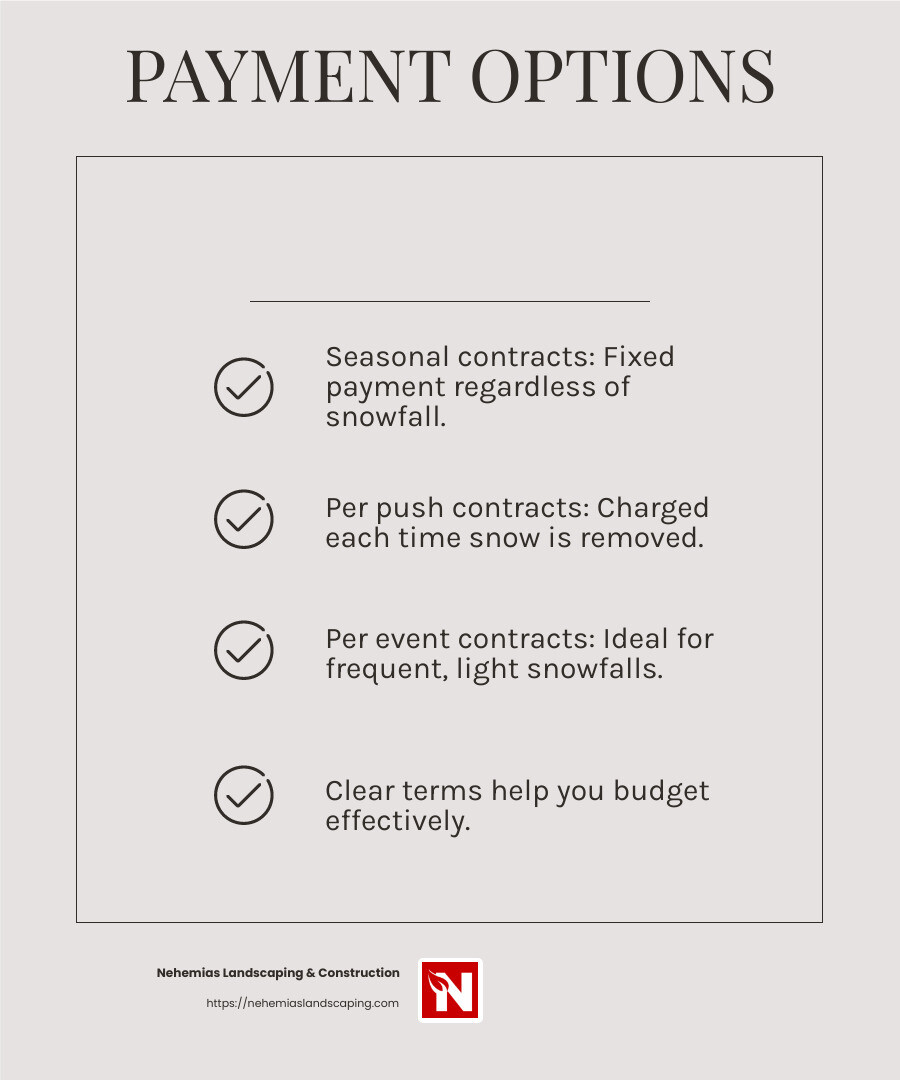
How will you pay for the services? Payment terms in a snow removal contract can vary:
- Seasonal contracts ensure you pay a fixed amount regardless of snowfall frequency.
- Per push contracts charge you each time snow removal is performed.
- Per event contracts are ideal if you expect frequent but light snowfalls.
Clear payment terms help you budget and avoid surprises.
Scope of Services
What exactly will the snow removal company do? The scope of services should detail everything from plowing, shoveling, and snow blowing to de-icing. This part of the contract ensures you know what to expect and can hold the company accountable for these specific tasks.
Terms and Conditions
Finally, the terms and conditions section covers the finer details. This includes response times, what happens during unusually heavy snowfalls, and any liability clauses. It’s essential to read this section carefully to understand your rights and responsibilities.
A well-drafted residential snow removal contract simplifies the process of keeping your home safe and accessible during winter. By clearly outlining each party’s responsibilities, it reduces the stress of winter storms and helps you enjoy the season without worry.
Why Snow Plowing Insurance is Expensive
Snow plowing might seem straightforward, but the insurance costs can be surprisingly high. Let’s dig into why this is the case.
Insurance Costs
The primary reason for expensive snow plowing insurance is liability exposure. Snow removal is a high-risk job. There are numerous opportunities for accidents, such as slip-and-fall incidents, which can lead to costly lawsuits. Insurance companies charge higher premiums to cover these potential risks.
Lawsuits
Lawsuits are a significant concern in the snow plowing industry. When snow isn’t removed correctly, it can lead to icy surfaces and dangerous conditions. If someone slips and falls, the snow removal company might face legal action. These lawsuits can be expensive, not just in terms of settlements, but also in legal fees.
Regulations
There are specific regulations that snow removal businesses must follow. These regulations can vary by location but often include guidelines on how quickly snow must be removed after a storm, and the methods that should be used. Failing to comply with these regulations can lead to fines and increased insurance premiums.
Exposure
The exposure in snow plowing doesn’t just refer to the cold weather. It also means being exposed to various environments and conditions that can be unpredictable. From residential driveways to large commercial lots, each job presents its own set of challenges. This variability adds to the complexity and risk of the job, which in turn impacts insurance costs.
Understanding these factors can help you appreciate the high cost of snow plowing insurance. It’s a necessary expense to protect both the business and its clients from potential risks.
The Profitability of Snow Plowing
Snow plowing can be a lucrative business, especially for those who understand its unique dynamics. Let’s explore the profit potential, seasonal earnings, and smart business strategies that make snow plowing a viable venture.
Profit Potential
Snow plowing offers significant profit potential, particularly in regions with frequent snowfall. The demand for snow removal services spikes during winter months, providing businesses with opportunities to generate substantial income. A well-structured residential snow removal contract can ensure regular cash flow, as homeowners are willing to pay for the convenience and safety of a clear driveway.
Seasonal Earnings
Earnings in the snow plowing business are highly seasonal. The bulk of the revenue typically comes in the winter months. However, this doesn’t mean a snow plowing business can’t be profitable year-round. By offering seasonal contracts, businesses can secure income even during milder winters. These contracts guarantee payment regardless of the snowfall, providing a steady revenue stream.
- Seasonal Contracts: Ensure income stability by agreeing on a fixed price for the entire snow season.
- Per-Push Contracts: Charge clients each time snow removal is necessary, which can be beneficial in areas with unpredictable snowfall.
- Per-Event Contracts: Offer a flexible option for areas with frequent but light snowfalls.
Business Strategy
A successful snow plowing business requires a strategic approach. Here’s how to maximize profitability:
- Diversify Services: Offer additional services like salting, sanding, and de-icing. This not only increases revenue but also attracts more clients who prefer a one-stop solution.
- Invest in Equipment: High-quality and efficient equipment can reduce operation time and costs. It also allows you to handle larger contracts, such as commercial properties, which can be more profitable.
- Build Strong Relationships: Cultivate trust with clients by offering reliable and timely services. Happy customers are more likely to renew contracts and refer your services to others.
- Optimize Routes: Plan efficient routes to minimize travel time and fuel costs. This can significantly increase the number of jobs completed in a day, boosting overall earnings.
By understanding the profit potential, preparing for seasonal variations in income, and implementing effective business strategies, snow plowing businesses can thrive, even in the face of challenges like high insurance costs.
Indemnification Clause in Snow Removal Contracts
When it comes to residential snow removal contracts, the indemnification clause is a key component that protects both parties involved. This section of the contract is all about liability, indemnification, and negligence—terms that might sound complex but are crucial for clear responsibilities.
Understanding Liability
In simple terms, liability refers to who is responsible if things go wrong. In snow removal contracts, liability can include anything from damage to property to personal injuries caused during snow removal activities. For instance, if a contractor accidentally damages a mailbox while plowing a driveway, who is responsible for the repair? This is where the indemnification clause comes into play.
What Does Indemnify Mean?
To indemnify means to compensate someone for harm or loss. In the context of snow removal, the contractor might agree to indemnify the client against any claims arising from negligence in performing their duties. This means if the contractor fails to clear snow properly and someone gets hurt as a result, the contractor might cover legal fees or damages.
Negligence: What You Need to Know
Negligence is a failure to take proper care in doing something. In snow removal, it could mean not applying enough de-icer on a slippery walkway, leading to a slip-and-fall incident. To minimize risks, contractors should clearly outline their responsibilities and the expected scope of work in the contract. This helps prevent misunderstandings and protects both parties from potential legal issues.
Contractor Responsibilities
Contractors have several responsibilities under a snow removal contract. They must:
- Perform Services Safely: Ensure all snow and ice removal is done in a manner that minimizes risk to people and property.
- Maintain Equipment: Regularly inspect and maintain equipment to prevent accidents or property damage.
- Communicate Clearly: Keep clients informed about service schedules, especially during heavy snowfalls.
Including a well-defined indemnification clause in your residential snow removal contract not only clarifies responsibilities but also builds trust with clients. It reassures them that you are committed to providing safe and reliable services while protecting your business from unforeseen liabilities.
Frequently Asked Questions about Residential Snow Removal Contracts
How to Create Snow Plowing Contracts?
Creating a residential snow removal contract involves several key components to ensure clarity and protection for both the contractor and the client. Here’s a breakdown of what you need to include:
- Business Information: Start with the basics—your business name, address, and contact details. This establishes your identity and makes it easy for clients to reach you.
- Property Address: Clearly specify the address of the property where services will be provided. This eliminates any confusion about the location and scope of work.
- Customer Information: Include the client’s name, contact details, and any other relevant information. This ensures both parties are on the same page.
- Terms of Agreement: Define the duration of the contract, including start and end dates. This section should also outline the conditions under which the agreement can be terminated.
- Payment Terms: Clearly state how and when payments are to be made. Whether it’s a flat fee, per-event charge, or seasonal rate, make sure it’s spelled out to avoid disputes.
- Scope of Services: Detail the specific services you will provide, such as plowing driveways, de-icing walkways, or removing snow from rooftops. This helps manage expectations and ensures both parties understand what is included.
- Terms and Conditions: Include any additional terms that govern the contract, such as weather conditions that trigger service, response times, and any exclusions.
By including these components, you create a comprehensive contract that protects your business and provides peace of mind to your clients.
What is the Indemnification Clause in a Snow Removal Contract?
The indemnification clause is a critical part of any residential snow removal contract. It addresses liability and provides a safety net for both parties involved.
- Liability: This clause specifies who is responsible for damages or injuries that may occur during snow removal. For instance, if a contractor damages a client’s property, the indemnification clause outlines who will cover the repair costs.
- Indemnify: To indemnify means to protect against loss or damage. In snow removal contracts, this often means the contractor agrees to cover any legal costs or damages if their negligence leads to an accident.
- Negligence: This refers to a failure to exercise reasonable care. The clause ensures that if negligence occurs, the responsible party will bear the consequences.
Including an indemnification clause not only clarifies responsibilities but also helps build trust with clients by showing a commitment to accountability.
How Profitable is Snow Plowing?
Snow plowing can be a lucrative business, but its profitability depends on several factors:
- Profit Potential: The potential for profit is high, especially in regions with frequent snowfall. Contracts can be structured to ensure income even during lighter snow seasons.
- Seasonal Earnings: Snow plowing is inherently seasonal, with most earnings concentrated in the winter months. However, with the right strategy, businesses can maximize profits during this period.
To boost profitability, consider offering additional services like de-icing or post-snowstorm clean-ups. Diversifying your offerings can help increase revenue and keep your business thriving throughout the season.
By understanding these aspects of snow removal contracts, you can better steer the complexities of the industry and ensure a successful and profitable operation.
Conclusion
At Nehemias Landscaping & Construction, we understand the importance of a well-crafted residential snow removal contract. Our commitment to quality services ensures that your outdoor spaces remain accessible and safe, no matter how harsh the winter.
Operating in Essex County, Massachusetts, we pride ourselves on changing outdoor environments into beautiful, functional areas. Our skilled team is dedicated to delivering exceptional craftsmanship and attention to detail, whether we’re plowing your driveway or de-icing your walkways.
Our contracts are designed to protect both our clients and our business. We include all essential elements, from payment terms and service scope to indemnification clauses, ensuring transparency and peace of mind. By clearly outlining responsibilities and expectations, we build trust and foster long-lasting relationships with our clients.
If you’re looking for reliable snow removal services in Essex County, look no further than Nehemias Landscaping & Construction. Let us help you steer the winter months with ease and confidence. Contact us today to learn more about our quality services and how we can transform your outdoor space.